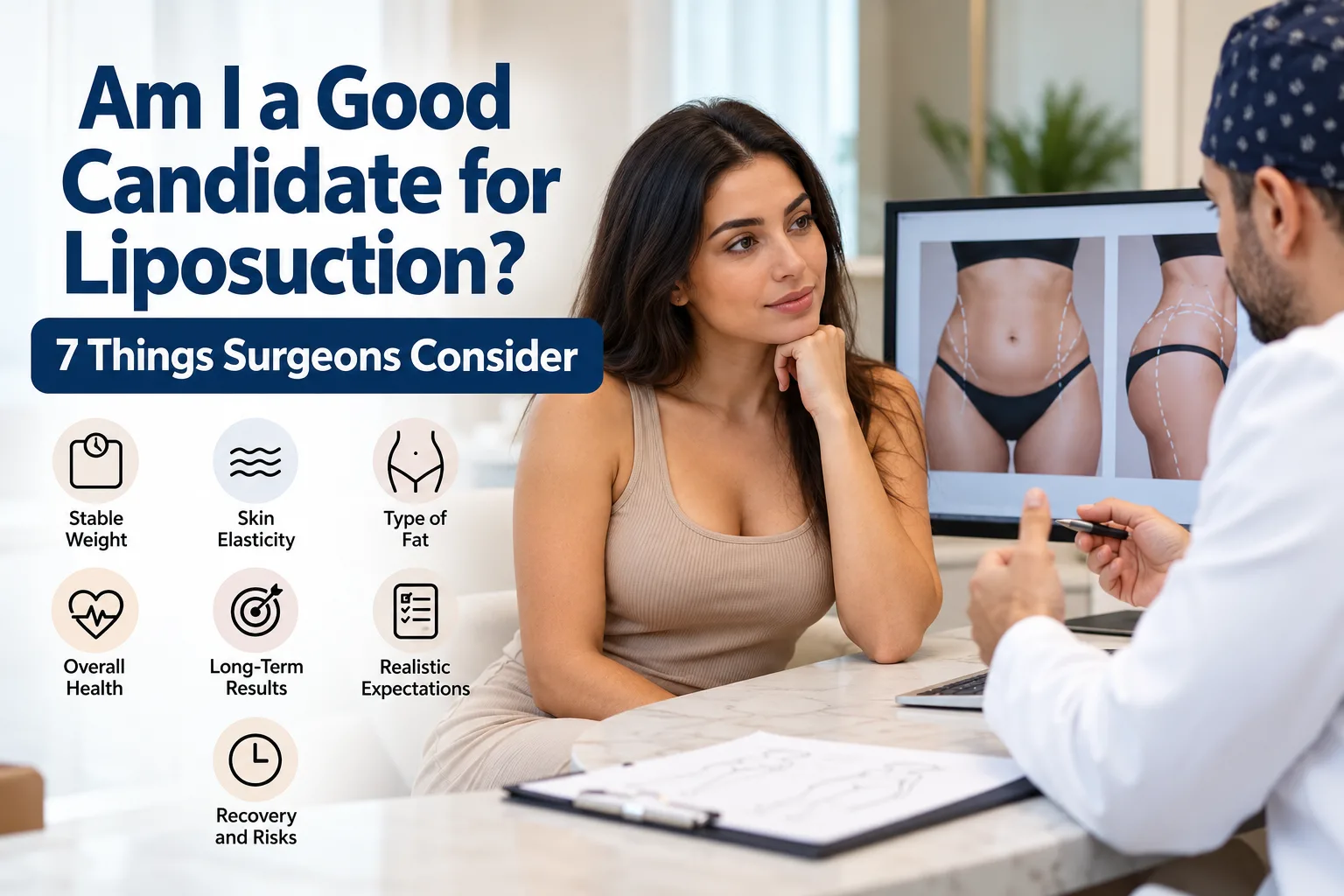
Liposuction may help if you are close to your target weight but still have stubborn fat around your abdomen, thighs, arms, or flanks. But if you expect surgery to fix weight gain, loose skin, or every uneven contour, you may be disappointed with the result.
So, how do you know if you are a good candidate for liposuction? A plastic surgeon looks at more than your weight. Your skin, health, fat distribution, and expectations all affect whether surgery is likely to help.
1. Are You Close to Your Target Weight?
Liposuction works best for people who are relatively close to a stable, healthy weight. It removes localised fat deposits that remain despite a sensible diet and regular exercise.
For example, you may have lost 8–10 kg and maintained your weight, yet still have a noticeable bulge around your lower abdomen. If that fat is suitable for removal, liposuction may help improve the area's shape.
But there is a catch. Liposuction is not a weight-loss procedure, and it is not a treatment for obesity.
A surgeon will assess your weight in relation to your height, overall health, and fat distribution. Your BMI may be part of that assessment, but it does not tell the whole story.
A useful question to ask yourself: Am I looking to remove a specific fat deposit, or am I hoping surgery will help me lose a significant amount of weight?
If your main goal is substantial weight loss, it is usually better to address that first.
2. Is Your Skin Firm Enough to Adjust After Surgery?
This is one of the biggest factors people overlook.
Liposuction removes fat beneath the skin. It does not remove large amounts of loose skin or reliably tighten it. After fat is removed, the skin needs enough elasticity to adapt to the body's new shape.
Imagine two people having liposuction on their abdomen. One has firm skin with good elasticity. The other has loose skin following a 25 kg weight loss. Even if both have similar amounts of fat, their results may look very different.
The first person may achieve a smoother abdominal contour. The second may still have folds of loose skin after surgery.
Your plastic surgeon will examine your skin quality, stretch marks, and the amount of excess skin before recommending treatment. If loose skin is the main concern, a tummy tuck may be more suitable than liposuction alone. In some cases, combining procedures may be an option.
The key point: removing more fat does not automatically produce tighter skin. It can make existing looseness more noticeable.
3. Is the Fat Under Your Skin or Deeper Inside Your Abdomen?
Not every abdominal bulge comes from the same type of fat.
Liposuction targets subcutaneous fat, which sits just beneath the skin. It cannot directly remove visceral fat, which lies deeper inside the abdomen and surrounds internal organs.
ISAPS+1
This difference matters if you have a prominent belly despite having relatively little fat you can pinch between your fingers.
For example, someone with a soft, localised lower-abdominal bulge may be suitable for liposuction. Someone whose abdomen protrudes mainly because of deeper visceral fat may see little change from the procedure.
A physical examination helps the surgeon assess where the fat is located and whether removing it is likely to improve your shape.
Do not assume that a larger abdomen means more fat can be safely removed. The location of the fat matters just as much as the amount.
4. Are You Healthy Enough to Undergo Surgery?
Liposuction is a surgical procedure, even when the incisions are small. Your general health affects both the safety of the operation and your recovery.
During your consultation, the surgeon will ask about your medical history, current medications, previous operations, and any conditions that could affect healing.
Certain issues need particular attention, including:
- Uncontrolled diabetes or significant heart or lung disease.
- Bleeding disorders or medicines that affect blood clotting.
- Previous blood clots or an increased risk of developing them.
- Smoking or nicotine use, which can interfere with healing.
Having a medical condition does not automatically mean you cannot have liposuction. The decision depends on its severity, how well it is controlled, and your overall surgical risk.
You may need further tests, changes to medication under medical supervision, or treatment to improve your health before surgery. In some cases, postponing or avoiding elective surgery is the safer choice.
Never stop prescribed medication on your own to prepare for liposuction. Discuss it with your surgeon and the clinician responsible for your care. The American Society of Plastic Surgeons outlines the main risks and safety considerations in its liposuction safety guidance.
American Society of Plastic Surgeons
5. Can You Maintain Your Weight After Liposuction?
Liposuction removes fat cells from the treated area, but it does not prevent future weight gain.
If your weight increases substantially after surgery, the remaining fat cells can enlarge. Your body shape may change again, even in areas that were treated.
That is why surgeons generally prefer patients whose weight has been stable and who have a realistic plan for maintaining it.
You do not need to follow a perfect diet or spend hours in the gym. What matters is having habits you can sustain, such as regular physical activity and a balanced eating pattern.
Timing matters, too. If you are planning a major weight-loss programme or expect significant body changes in the near future, discuss whether it makes sense to wait.
The goal is to choose a time when you are ready for the procedure and can give the results a reasonable chance of lasting.
6. Are Your Expectations Realistic?
A good candidate understands what liposuction can change and what it cannot.
You may want a more defined waist, slimmer thighs, or less fullness around your upper arms. These are specific body-contouring goals that liposuction may help achieve when the fat deposits and skin quality are suitable.
But expecting a completely flat stomach, perfectly symmetrical curves, or a particular body shape regardless of your anatomy is unrealistic.
Liposuction also does not reliably eliminate cellulite or stretch marks. If you have these concerns, ask your surgeon whether the procedure is likely to improve them or leave them largely unchanged.
NHS+1
Before surgery, explain exactly what bothers you. If your concern is your lower abdomen, point out the area. If your waist looks wider from the sides, discuss that too.
Your surgeon should explain what changes are achievable in your case, including any limits imposed by your skin, anatomy, and the amount of fat that can safely be removed.
You should also feel comfortable choosing surgery for yourself, rather than because of pressure from a partner, family member, or social media.
7. Have You Considered Recovery and the Risks?
Being medically suitable for liposuction is only part of the decision. You also need to be prepared for recovery.
Bruising, swelling, and temporary changes in sensation are common after surgery. Swelling can take several months to settle, so your final contour will not be visible immediately.
NHS+1
Depending on the area treated and the extent of surgery, you may need to wear a compression garment for several weeks. You will also need to limit strenuous activity until your surgeon says it is safe to resume.
Think about your schedule before booking. Can you take time away from work if needed? Will you have help at home during the initial recovery period? Can you attend follow-up appointments?
Liposuction also carries risks, including infection, fluid accumulation, blood clots, anaesthesia-related complications, and uneven contours. The level of risk depends on your health, the procedure, and the amount of fat removed.
Ask your surgeon what recovery is likely to look like for your specific procedure, when you can return to work, and what symptoms should prompt urgent medical attention.
A surgeon who discusses complications openly is helping you make an informed decision. Be cautious of anyone who promises a risk-free procedure or guaranteed results.
How Do You Know If You Are Ready for Liposuction?
You may be a suitable candidate if you have localised fat deposits, a reasonably stable weight, adequate skin elasticity, and good overall health. You should also have a clear idea of what you want to change and understand the limits of surgery.
However, no online checklist can confirm your suitability. That requires an individual assessment.
If you are considering Liposuction in Riyadh, arrange a consultation with a qualified plastic surgeon in Riyadh who has experience in body-contouring procedures.
During the appointment, ask three direct questions:
- Which areas of my body are suitable for liposuction?
- Will my skin adapt after fat removal, or could I be left with loose skin?
- What result is realistic for my body, and what are the main risks in my case?
The answers should be specific to you, not a standard sales pitch.
Your next step: Before your consultation, write down the areas you want to change, your current weight and how long it has been stable, any medical conditions, and the medications you take. This gives your surgeon a useful starting point for deciding whether liposuction is appropriate.