Losing most of the upper or lower teeth no longer forces people to juggle loose plates or nightly adhesive rituals. Advances in implant design now let a dentist secure a full bridge on just four titanium fixtures, giving patients a fixed smile that functions like natural teeth. If you are weighing up your choices, the information below unpacks how the technique works, the candidacy checkpoints, and what recovery feels like in real-world terms.
How Four Implants Can Secure a Whole Arch
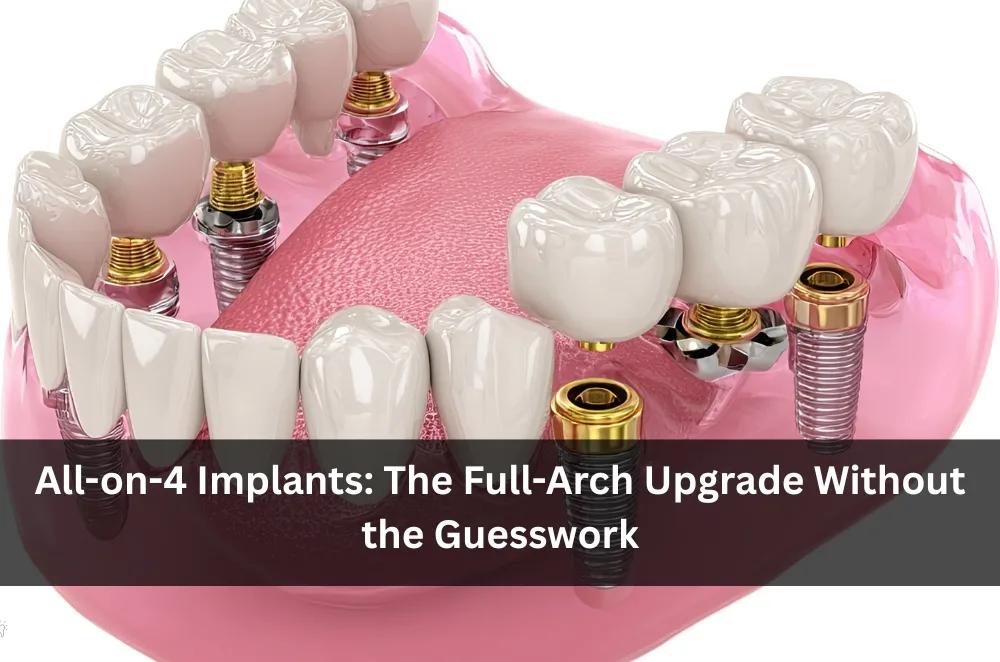
Traditional implants use one fixture per missing tooth. In contrast, the All-on-4 concept angles the two rear fixtures and positions the front pair vertically, spreading the load across strong bone zones. That configuration supports a full bridge without relying on the sinuses in the upper jaw or the nerve canal in the lower jaw.
A growing number of Melburnians choose modern All-on-4 implant options because the surgery can usually be completed in a single day, with a provisional bridge attached before the patient heads home. Over the following months, the bone bonds with the titanium—a process known as osseointegration—before the final ceramic bridge is fitted.
Bone Health Sets the Ground Rules
Being told you have “not enough bone” used to end the conversation. That barrier has shifted. Angled posterior implants can reach denser bone near the jaw’s underside, often eliminating grafting. Even so, the dentist still checks three factors during assessment:
- Residual bone height and width on a 3D CBCT scan
- Density (D1–D4 scale) and distribution along the arch
- Proximity to vital structures such as the maxillary sinus or the inferior alveolar nerve
Poorly controlled diabetes, heavy smoking and untreated gum disease can slow or sabotage healing. Addressing those issues first gives the implants a fighting chance to fuse properly and last decades rather than years.
The Day-One Experience and the Weeks That Follow
Expect the surgery to feel closer to a long appointment than an ordeal. Local anaesthetic combined with IV sedation keeps patients comfortable while the dentist removes any failing teeth, places the four fixtures, and attaches a reinforced temporary bridge. Mild swelling peaks around the 48-hour mark then eases. Most people return to desk work within a week; physically demanding roles may need a little longer.
A soft-food plan—think omelettes, steamed fish, mashed veggies—protects the interface while bone cells knit around the titanium threads. The provisional bridge does more than look presentable; it guides gum shaping so the final ceramic bridge blends seamlessly with the soft tissue.
How All-on-4 Measures Up Against Traditional Dentures
Dentures have served many Australians well, yet they can rub, slip and speed up bone loss because the jaw no longer receives chewing pressure. The table summarises the main contrasts.
AspectAll-on-4 ImplantsConventional DentureStability during eatingFixed; resists movementRelies on suction and adhesiveBite strengthSimilar to natural teeth once integratedSignificantly reduced, especially with tough foodsBone preservationStimulates bone, slows resorptionNo stimulation; bone continues to shrinkDaily cleaningBrush bridge like natural teeth, floss underneathRemove, brush, soak overnightLong-term maintenancePeriodic check-ups and bridge polishRelines or full remake every few yearsFor readers who want a deeper dive into the surgical flow, the clinic’s earlier piece offers a step-by-step look at the All-on-4 procedure including anaesthetic choices and lab turnaround times.
Setting Realistic Expectations Around Sensation and Longevity
Feeling the bridge press against the freshly grafted gum is normal for the first week. Sharp or worsening pain, however, is not—contact the provider promptly if that occurs. With diligent oral hygiene and six-monthly check-ups, the fixtures themselves can last for decades. Ceramic bridges, like any dental material, eventually face wear; expect a polish or replacement roughly every 10–15 years, depending on grinding habits and diet.
Osseointegration failure is rare when the surgical plan respects bone biology, yet it remains possible. Smokers and poorly controlled diabetics sit in the higher-risk group. Temporary fixtures safeguard the site if one implant needs replacement before the final bridge phase.
The Bigger Picture: Oral and General Health Intertwine
Replacing missing teeth is not simply about aesthetics. Studies link reduced chewing efficiency to changes in nutrition and, downstream, to cardiovascular health. Meanwhile, chronic infection from deteriorating roots can elevate systemic inflammation markers. The Victorian public health system frames tooth retention as a quality-of-life indicator for good reason.
Guidelines on the federal site Healthdirect Australia note that implant-supported restorations have higher initial costs but markedly better functional outcomes over time compared with removable plates. Their overview of implant success rates, complication management and maintenance underscores the importance of a personalised treatment plan that factors in age, medications and lifestyle.
Ready to take the next step? Visit our Learn more to find out more.
Choosing a Path That Fits Your Life
A full-arch implant bridge represents a sizeable investment, yet for many it restores the confidence to order steak, laugh without worrying about plates shifting, and speak clearly in client meetings. Not everyone is a candidate; bone density, medical history and personal priorities steer the decision. Booking a 3D scan and consultation with an experienced provider will clarify whether four well-placed fixtures can carry the load—or whether staged grafting or a different approach makes more sense.
Reclaiming easy chewing and a steady smile changes day-to-day living in ways that are hard to capture on a quote sheet. If the idea resonates, explore the clinical evidence, weigh the maintenance commitments, and decide whether this fixed solution lines up with how you want to eat, talk and present yourself in 2026 and beyond.