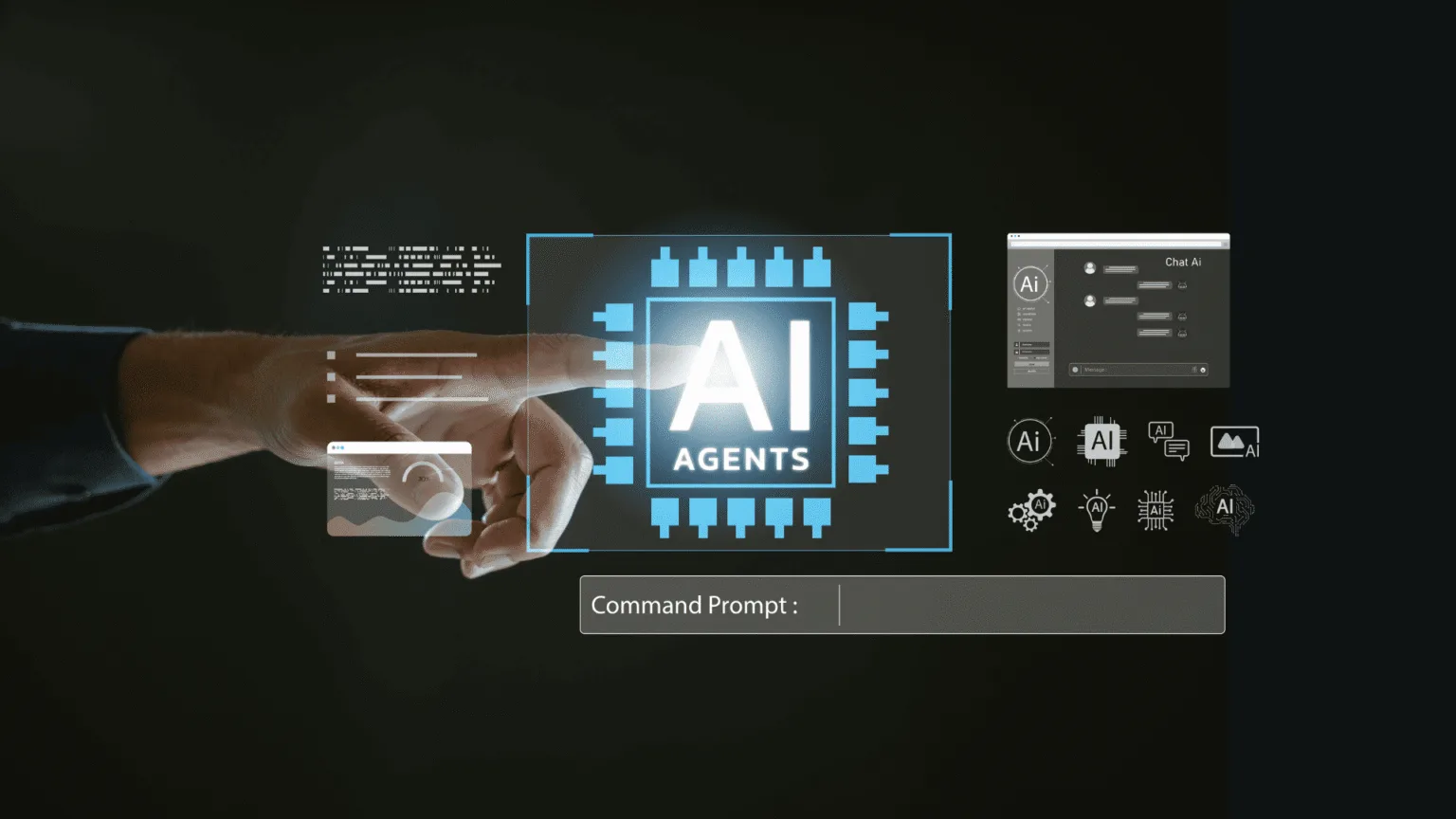
What Is Agentic AI in an LMS?
Traditional AI in an LMS can generate content, answer questions, summarize information, or recommend courses.
Agentic AI goes further. It can analyse learner data, identify gaps, make decisions within defined rules, and initiate actions such as assigning training, triggering reminders, recommending learning paths, or escalating compliance issues.
The key difference is simple:
Traditional AI assists. Agentic AI can act.
But the value depends on how well those actions are connected to real business and learning needs.
Why Do We Need Agentic AI in Education and Industry?
Education and industry are becoming more complex. Employees and learners have different roles, skills, experience levels, locations, schedules, and training requirements.
A traditional LMS often follows predefined workflows:
Assign → Learn → Assess → Track
Agentic AI can make the process more adaptive:
Analyse → Identify → Recommend → Act → Monitor → Improve
This can reduce repetitive work and make learning more relevant. However, automation alone is not the goal. The technology must improve learner outcomes, operational efficiency, or business performance.
In this blog, we will explore whether implementing an agentic AI-enabled LMS makes sense for the manufacturing industry, where safety, equipment training, compliance, SOPs, certifications, ILT, and workforce skills all matter.
Does Every LMS Need Agentic AI?
Not necessarily.
An organization should implement agentic AI when it can solve a real problem better than existing LMS automation or workflows.
For some companies, traditional LMS rules and automation may be sufficient. For large and complex organizations, agentic AI may provide greater value by connecting data, identifying gaps, and initiating appropriate actions.
The real question is not:
“Does our LMS have agentic AI?”
It is:
“What measurable problem will agentic AI solve for our customers and business?”
We will explore whether implementing an agentic AI-powered LMS is the right choice for the manufacturing industry.
Manufacturing is a strong example because training directly connects with safety, equipment, compliance, productivity, quality, and operational continuity.
1. Safety Training
Traditional LMS:
Employees receive safety courses based on their roles, and the system tracks completion.
With Agentic AI:
AI can analyse roles, assessment results, training history, and changing requirements to identify gaps and recommend or initiate relevant training.
Potential value:
- Reduces training gaps
- Provides more relevant learning
- Reduces repetitive L&D work
- Helps organizations respond proactively to safety needs
This is one of the strongest use cases because identifying a training gap before it becomes an operational problem can create real value for both employees and organizations.
2. Employee Onboarding
Traditional LMS:
Employees receive a predefined onboarding curriculum.
With Agentic AI:
AI can personalize the learning journey using role, previous knowledge, skills, and assessment results.
Potential value:
- Faster onboarding
- Less irrelevant training
- More personalized learning
- Faster progression toward productivity
However, personalization should never remove essential onboarding. Every employee still needs to understand important organizational policies, safety requirements, responsibilities, and expectations.
3. Machine & Equipment Training
Traditional LMS:
Employees complete videos, courses, assessments, and documentation related to equipment.
With Agentic AI:
AI can determine what an employee should learn next based on role, skill level, completed training, and assessment performance.
Potential value:
- Targeted equipment training
- Better skill-gap identification
- Continuous technical development
- Clearer learning paths
Specialization matters here. A machine operator and maintenance engineer should not necessarily follow the same learning journey.
4. Compliance Training
Traditional LMS:
Managers assign mandatory training and monitor completion and certification dates.
With Agentic AI:
AI can monitor requirements and initiate reminders, assignments, renewals, or escalation workflows.
Potential value:
- Less administration
- Fewer missed deadlines
- More proactive compliance management
This is useful, but not every organization needs agentic AI for compliance. Well-designed LMS automation may already solve the problem.
5. SOP Training
Traditional LMS:
Employees access SOP documents and complete related training.
With Agentic AI:
When an SOP changes, AI can help identify affected employees and initiate appropriate training or acknowledgement workflows.
Potential value:
- Faster communication
- Targeted training
- Fewer knowledge gaps
- Better alignment with current procedures
This can be particularly valuable when manufacturing processes change frequently.
6. Certification Management
Traditional LMS:
The system stores certifications and sends expiration reminders.
With Agentic AI:
AI can monitor requirements and initiate renewal training workflows according to predefined rules.
Potential value:
- Reduced certification risk
- Less administrative work
- Easier compliance management at scale
7. Instructor-Led Training (ILT)
Traditional LMS:
Training managers manually schedule sessions, assign learners, and track attendance.
With Agentic AI:
AI can help match employees with sessions based on prerequisites, roles, availability, location, and training requirements.
Potential value:
- Easier scheduling
- Better classroom utilization
- Reduced administrative workload
- More relevant session recommendations
However, human intervention remains important. AI can support scheduling and recommendations, while instructors remain responsible for delivery, practical learning, and professional judgment.
8. Multi-Location Training
Traditional LMS:
The same courses are distributed across different factories or locations.
With Agentic AI:
AI can personalize recommendations based on each facility's workforce, roles, skills, equipment, and training requirements.
Potential value:
- Consistent training standards
- Location-specific learning
- Better workforce visibility
- Scalable training
This is an added capability that becomes more valuable as organizations grow and training complexity increases.
9. Training Analytics
Traditional LMS:
Managers review dashboards showing completion rates, scores, training hours, and other metrics.
With Agentic AI:
AI can analyze those signals and highlight potential training gaps, trends, and recommended actions.
Potential value:
- Faster decision-making
- More actionable insights
- Easier identification of training problems
- Better alignment between learning and workforce needs
This is one of the most important areas because analytics can connect training activity with decisions and outcomes.
Does Agentic AI Increase Business Revenue?
Not automatically.
- Adding an AI agent to an LMS does not guarantee more revenue.
- The potential business impact comes from the outcomes the technology creates:
- Better onboarding → Faster productivity → Lower onboarding costs
- Better safety training → Fewer gaps → Lower operational risk
- Better equipment training → Stronger skills → Potentially better productivity
- Better compliance workflows → Fewer missed requirements → Lower administrative and compliance risk
- Better analytics → Better decisions → More effective training investment
Therefore, companies should measure agentic AI by business outcomes, not by the number of AI features inside the LMS.
The Human + AI Balance
Agentic AI can automate workflows, but learning still requires human judgment.
Training involves coaching, feedback, practice, context, motivation, collaboration, and decision-making areas where human involvement remains important.
Training Journal's 2026 analysis similarly argues that L&D should move AI into real workflows while preserving human judgment, trust, culture, and measurable outcomes. It also highlights the shift toward human-plus-AI collaboration and the need to connect learning investments with business results.
This is why the strongest model may not be:
AI replaces people
but:
AI handles repetitive work + humans handle judgment and learning.
The Bottom Line
Agentic AI can bring meaningful value to an LMS, particularly in complex manufacturing environments.
But implementation should not happen simply because agentic AI is trending.
The right approach is to identify the biggest operational or learning problems first, determine whether AI can solve them better than existing workflows, introduce appropriate human oversight, and measure the results.
The technology is not the outcome. The outcome is the value delivered to the customer.
For manufacturing, agentic AI may be worth implementing where it can identify safety gaps, personalize learning, manage changing SOPs, support certification workflows, optimize ILT scheduling, and turn training analytics into actionable decisions.
But if a simple LMS workflow already solves the problem effectively, adding an AI agent may create complexity without enough additional value.
The future of LMS technology therefore isn't about using the most AI.
It is about using the right intelligence to create measurable value.
FAQs
1. Should manufacturing companies implement agentic AI in their LMS?
They should consider it when their training environment is complex enough to benefit from intelligent recommendations and automated workflows. Manufacturing organizations with multiple locations, changing SOPs, large workforces, certification requirements, safety training, and significant skill gaps may benefit more than organizations with simple training needs.
2. Does agentic AI automatically improve LMS ROI?
No. Agentic AI can improve ROI when it reduces administrative work, improves training effectiveness, accelerates employee productivity, reduces compliance risks, or helps organizations make better workforce decisions. Companies should measure these outcomes rather than whether AI implementation itself creates ROI.