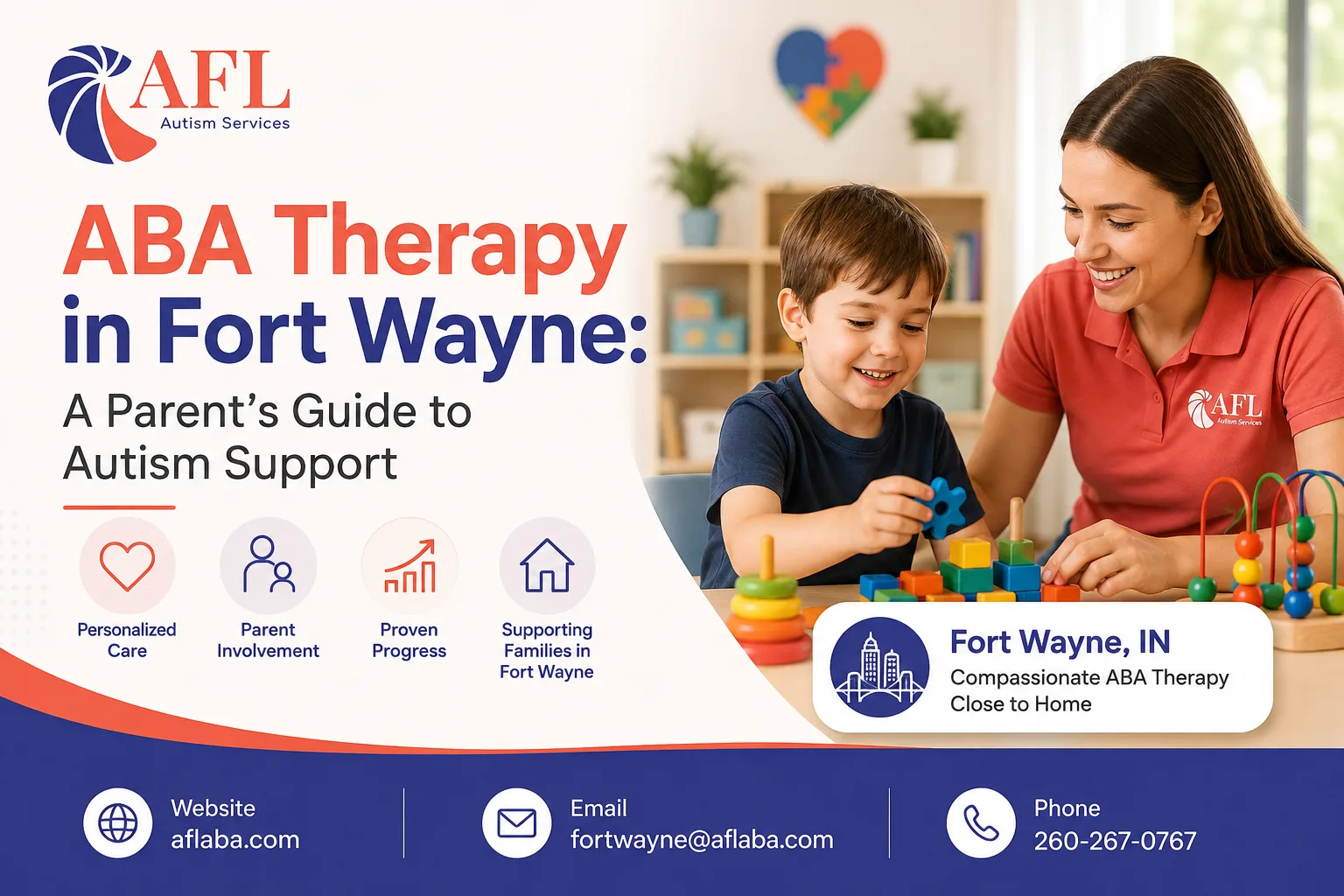
If your child was recently diagnosed with autism, or if you've been navigating this road for a while and are looking for support closer to home, you've probably come across the term ABA therapy. It's one of the most talked-about approaches in autism care, and for good reason. But it can also feel overwhelming to research, especially when you're trying to find the right fit for your family in your own city.
This guide is meant to help Fort Wayne parents understand what ABA therapy actually is, what to expect from the process, and how to find the right services locally.
What Is ABA Therapy?
ABA stands for Applied Behavior Analysis. It's a therapy approach rooted in the science of learning and behavior, and it's been used with autistic children for decades. The core idea is that behavior is influenced by the environment, and by understanding those influences, therapists can help children build new skills and reduce behaviors that get in the way of learning or daily life.
In practice, that might look like teaching a child to communicate their needs, helping them develop self-care skills, or supporting them in social situations. ABA is highly individualized. What one child works on can look completely different from what another child works on, even if they share an autism diagnosis.
The therapy is typically delivered by a Board Certified Behavior Analyst (BCBA), who designs and oversees the treatment plan, and Registered Behavior Technicians (RBTs), who work directly with the child during sessions. At Adapt For Life, BCBAs build individualized plans based on what each child likes and needs, focusing on skills that make everyday life easier rather than just changing surface-level behaviors.
Why Families in Fort Wayne Seek ABA Services
Fort Wayne is Indiana's second-largest city, but families here sometimes feel the squeeze of limited specialists that can come with living outside the Indianapolis metro. That makes finding qualified, local ABA providers genuinely important rather than just a matter of convenience.
Early intervention matters. Research consistently supports starting therapy as early as possible, and delays in access, whether from waitlists, insurance issues, or not knowing where to look, can mean lost time during a critical developmental window.
Beyond that, having a provider close to home reduces stress for everyone. A therapy schedule often involves multiple sessions per week, sometimes every day. Traveling long distances for those sessions is hard on kids and harder on working parents. AFL Autism Services in Fort Wayne is located at 4118 North Clinton Street and operates Monday through Friday, keeping services accessible for Allen County families.
What to Expect From the ABA Process
If you're new to ABA, the process might seem opaque. Here's a general overview of how it typically unfolds.
Initial Assessment
Before therapy begins, a BCBA will conduct an evaluation to understand your child's current skills, strengths, and areas where they need support. This assessment informs the treatment plan. It may involve structured observation, conversations with you as a parent, and standardized tools designed for this purpose.
Treatment Planning
Based on the assessment, the BCBA will develop a plan that sets specific, measurable goals. These goals are tailored to your child, not taken from a generic template. You should have a clear understanding of what your child is working toward and why.
Sessions and Progress Monitoring
ABA sessions can happen in a clinic, at home, or in the community. The setting often depends on your child's needs and what the provider offers. Throughout therapy, progress is tracked carefully. BCBAs review data regularly and adjust the plan as your child grows and their needs change.
Parent Involvement
Good ABA providers don't treat parents as passive bystanders. Parent guidance is typically part of the process. You'll learn strategies to support your child's goals at home, which helps skills transfer beyond the therapy setting and into real daily life.
Therapy Settings: Clinic-Based vs. Home-Based
One of the first practical questions families face is where therapy will happen. Different settings work better for different kids.
Clinic-Based ABA TherapyClinic-based ABA therapy takes place in a structured, dedicated environment designed for learning. For many children, this consistency makes a real difference. A clinic setting offers clear daily routines, consistent expectations, peer interaction, and structured support with transitions between activities.
It can be especially helpful for children who are preparing for school, working on social skills, or who tend to learn better when the environment is calm and predictable. AFL's Fort Wayne center is designed to feel engaging and warm, not stiff or sterile.
Home and Community-Based ABAIn-home ABA therapy delivers support in your child's natural environment. Instead of separating therapy from daily life, therapists work within existing routines like mealtime, play, and transitions between activities. This can help children apply strategies immediately, which tends to improve how well skills stick over time.
Community-based sessions extend that further, taking children into real-world settings like parks, grocery stores, or libraries to practice skills where they actually need them.
Note for parents: Home and community-based ABA at the Fort Wayne location is currently subject to clinical capacity. Contact AFL directly at 260-267-0767 or [email protected] to ask about current availability.
Choosing an ABA Provider in Fort Wayne
Not all ABA providers are the same. Here's what to look at when evaluating your options.
Credentials
Confirm that the therapists working with your child are credentialed. BCBAs should be board certified, which you can verify through the Behavior Analyst Certification Board (BACB) website. RBTs should be registered through the same organization.
Experience with Your Child's Profile
Autism is a spectrum, and providers may have more experience with certain age groups, severity levels, or co-occurring conditions. Ask directly about experience with children similar to yours.
Supervision Structure
Find out how much time a BCBA spends directly involved in your child's sessions versus delegating to technicians. Both are normal in ABA, but understanding the supervision model helps you know what to expect.
Insurance and Waitlists
Most major insurers in Indiana are required to cover ABA therapy for autism. That said, navigating authorizations and coverage can still be complicated. Ask providers upfront about the insurance plans they accept and whether there's a waitlist. Many providers in Indiana do have waitlists, so it's worth reaching out early.
Communication and Fit
This matters more than it sounds. You'll be working closely with these people for months or years. How responsive are they? Do they explain things clearly? Do you feel like your input is valued? Your instincts here count.
ABA Alongside the Rest of Fort Wayne's Support System
ABA therapy rarely exists in a vacuum. Many families combine it with other supports.
Early Intervention Programs
For children under three, Indiana's First Steps program provides early intervention services that may include developmental therapy, speech therapy, and occupational therapy. If your child is approaching school age, it's worth understanding how to transition from First Steps into school-based services.
Fort Wayne Community Schools
Children with autism diagnoses are entitled to an Individualized Education Program (IEP) through the public school system. Fort Wayne Community Schools has special education services in place, though the specific supports available vary by school. Good coordination between your child's BCBA and their school team can make a real difference in carrying skills across settings.
Support Groups and Community Resources
Autism Society of Indiana has resources and connections for families statewide, and there are local parent groups in the Fort Wayne area worth finding. Connecting with other parents who've navigated the same system is often more practically useful than any website.
What Makes a Strong ABA Program
Since you'll be evaluating providers, here are a few markers of quality to look for beyond the basic credentials.
Naturalistic Teaching
Modern ABA doesn't just happen at a table with flashcards. Quality programs incorporate naturalistic developmental approaches, meaning therapy happens in the context of play and real-life activities, not just repetitive drills.
Assent and Dignity
There has been meaningful evolution in how ABA is practiced. A good provider prioritizes the child's comfort and treats them with genuine respect throughout. If a provider can't speak clearly to this, that's worth paying attention to.
Functional Goals
Ask what the goals of therapy actually are. Strong programs focus on skills that improve your child's quality of life and independence. At Adapt For Life, the focus is on practical, everyday skills children can use at home, school, and in their community.
Family Collaboration
You know your child better than any therapist does. A quality ABA program treats that knowledge as a resource and actively incorporates your input into goal-setting and planning. Families should receive regular, plain-language updates so they always know what their child is working on and why.
Frequently Asked Questions
How do I know if my child needs ABA therapy?
ABA is most commonly recommended for children with an autism diagnosis, though it's used for other developmental needs as well. If your child has been diagnosed, a conversation with your pediatrician or a developmental specialist can help you understand whether ABA is appropriate and what level of services to consider.
Does insurance cover ABA therapy in Indiana?
Indiana has a mandate requiring most insurance plans to cover ABA therapy for autism. However, coverage details, co-pays, and authorization processes vary by plan. Contact your insurance provider directly to confirm your benefits. Providers like Adapt For Life typically help families navigate the insurance process as part of getting started.
What's the difference between a BCBA and an RBT?
A BCBA (Board Certified Behavior Analyst) holds a master's degree or higher, has completed supervised clinical hours, and passed a national certification exam. They design and oversee treatment. An RBT (Registered Behavior Technician) is a paraprofessional who works directly with the child under the supervision of a BCBA. Both roles are essential.
How long does ABA therapy typically last?
There's no universal answer. Some children receive intensive services for a few years during early childhood; others receive less intensive support over a longer period. Goals, progress, and your child's needs all influence the timeline. Regular reviews with your child's BCBA will help you understand where things stand.
A Note on Finding the Right Fit
There's no single "best" ABA provider. The right fit depends on your child's specific profile, your family's schedule and preferences, and the quality of the team you're working with. Take the time to ask questions, sit in on an intake conversation, and trust your gut about how a provider communicates with you.
Fort Wayne has growing access to autism services, and families here have more options than they did even a few years ago. The key is knowing what to look for and not being afraid to advocate for your child throughout the process.
If your child has recently been diagnosed or you suspect they may be on the spectrum, talking to your pediatrician about a referral is usually the best first step. From there, reaching out to local ABA providers to understand their process and availability will help you plan ahead.
You can reach AFL's Fort Wayne team at 260-267-0767 or [email protected] to ask questions, understand what the intake process looks like, and get a sense of whether it's a good fit for your family.
This article is intended for informational purposes only. It does not constitute medical or clinical advice. Every child is different, and therapy decisions should be made in consultation with qualified healthcare and behavioral health professionals.