
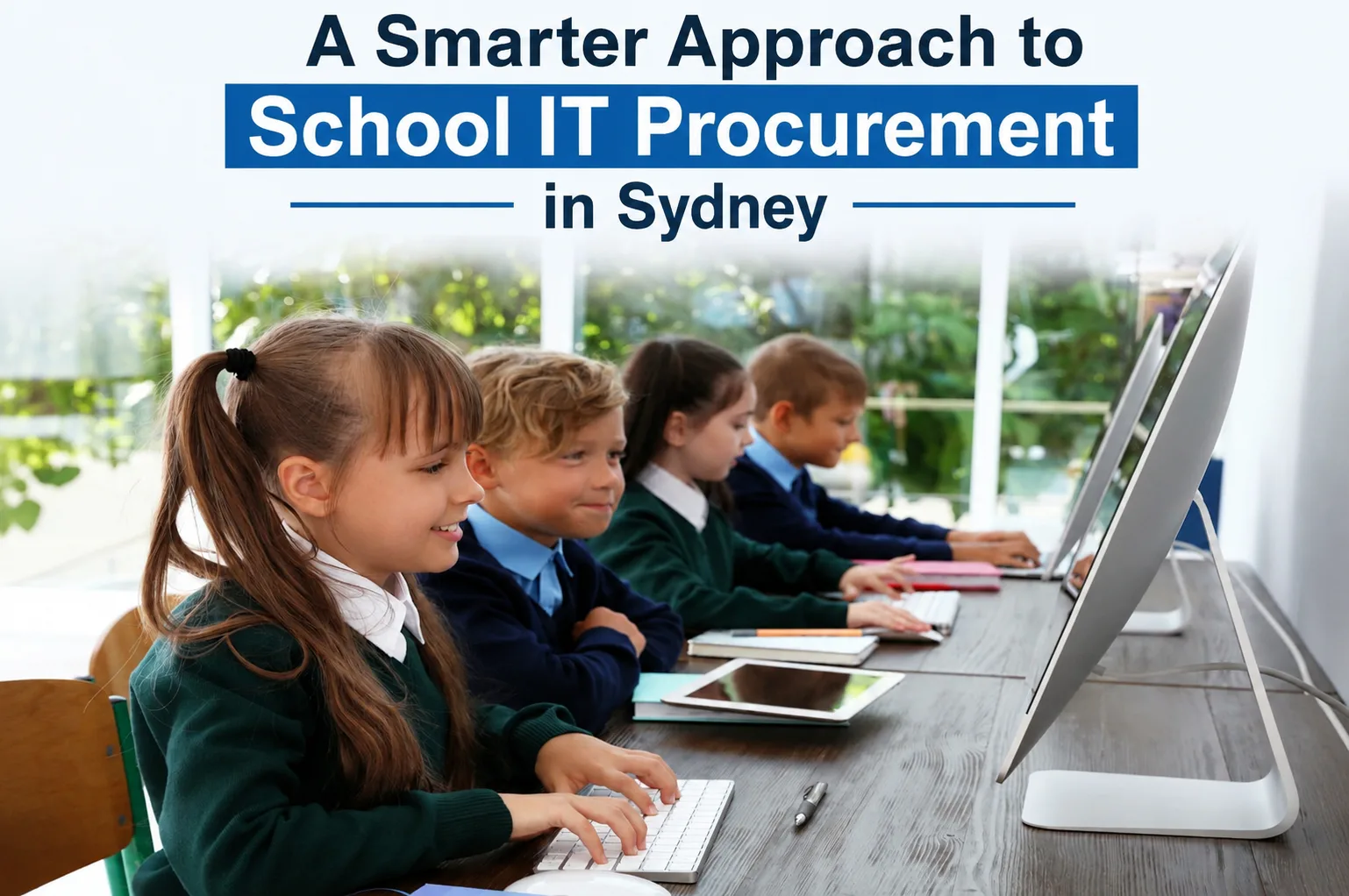
IT procurement in schools is no longer a matter of buying the cheapest laptops or renewing a licence when it expires. Sydney schools, whether independent, Catholic systemic, or public, are now managing complex digital ecosystems that span student devices, learning management systems, network infrastructure, and increasingly sensitive student data. A poor procurement decision does not just waste budget; it can leave a school locked into unsuitable systems, exposed to cyber risk, or unable to scale as enrolment and curriculum needs change. Getting procurement right requires a structured process, not ad hoc purchasing driven by whichever vendor pitches the loudest.
Why IT Procurement Deserves a Formal Process
Most schools operate with fixed annual budgets, limited technical staff, and governance obligations to boards or diocesan bodies. Under these constraints, informal procurement, such as a single staff member sourcing quotes and signing off on a purchase, tends to produce inconsistent outcomes. Devices end up incompatible with existing systems, support contracts are missed, and cybersecurity requirements are addressed after the fact rather than built in from the start. A formal procurement process forces schools to define requirements before approaching vendors, compare options on consistent criteria, and document decisions in a way that satisfies audits and funding bodies.
Start with a Genuine Needs Assessment
Before any vendor conversation, schools should map out what the technology actually needs to achieve. This includes the number of devices required per year level, the software the curriculum depends on, existing infrastructure that must be supported or replaced, and any compliance obligations tied to state or federal education frameworks. Skipping this step is the most common cause of procurement regret; schools frequently discover mid-rollout that a system does not integrate with their student information system or that bandwidth requirements were underestimated.
Evaluate Vendors on Total Cost of Ownership, Not Sticker Price
The lowest quote rarely represents the lowest long-term cost. Total cost of ownership includes licensing renewals, warranty terms, replacement cycles, staff training, and the cost of technical support when something fails during term time. Schools should request itemised, multi-year pricing from vendors rather than a single upfront figure, and factor in how quickly a vendor can respond to an outage. A slightly higher-priced solution with responsive local support often costs less over a three-to-five-year period than a cheaper option that requires constant workarounds.
Build Cybersecurity and Compliance into the Selection Criteria
Schools hold some of the most sensitive personal data of any institution, including records on minors, health information, and family circumstances. Procurement decisions should assess whether a vendor's systems align with recognised security baselines, support multi-factor authentication, and provide clear data residency and breach-notification commitments. Cybersecurity should be a scored criterion during vendor evaluation, not a question raised after a contract is signed.
For schools working through this process, NetStrategy's IT procurement services for schools are built specifically around Sydney school environments, helping leadership teams translate curriculum and compliance requirements into a vendor-neutral procurement brief before any purchasing decision is made.
Plan for Scalability and Integration
A system that suits a school of 400 students may not suit the same school at 700, and a platform that works well in isolation can become a liability if it cannot integrate with the school's existing student management, timetabling, or reporting software. Procurement decisions should always include a scalability question: can this solution grow with enrolment, and can it exchange data with the systems the school already relies on? Vendors should be asked directly for integration documentation rather than verbal assurances.
Negotiate Support and Service Level Agreements Up Front
Downtime during a school day has a different cost than downtime in most workplaces; a network outage can halt an entire timetable of lessons. Support terms, including response times, escalation paths, and after-hours coverage, should be negotiated and written into the contract before signing, not left to the vendor's standard terms. Schools should also confirm what happens at the end of a contract term, including data export rights and transition support if they choose to switch providers.
Involve the Right Stakeholders Early
Procurement decisions made solely by finance or solely by IT tend to miss important context. Teaching staff understand classroom usability, IT staff understand infrastructure constraints, and finance understands budget cycles. Involving representatives from each group in the evaluation stage, even briefly, reduces the risk of selecting a technically sound system that teachers find unworkable in practice, or a popular classroom tool that the network cannot support at scale.
Working with a Local IT Partner
Many Sydney schools now choose to run procurement through an established local IT partner rather than managing vendor relationships entirely in-house. This is particularly useful for schools without a dedicated IT manager, since a partner can run market comparisons, handle vendor negotiations, and stay accountable for support once systems are live.
Schools exploring this option can review how NetStrategy approaches managed IT and cybersecurity for the education sector, including how procurement fits into a broader long-term technology plan rather than a one-off purchase.
Document and Review the Decision
Once a vendor is selected, the reasoning should be documented: what was compared, what criteria were used, and why the final option was chosen. This record protects the school if the decision is later questioned by a board, auditor, or new IT lead, and it becomes a reference point for the next procurement cycle. Technology needs change quickly, so even a well-chosen system should be reviewed against current requirements every few years rather than assumed to remain fit for purpose indefinitely.
Bringing It Together
Effective IT procurement is less about finding the cheapest deal and more about building a repeatable process that accounts for cost, security, integration, and support before a contract is signed. Sydney schools that treat procurement as a structured, cross-functional decision rather than a reactive purchase consistently end up with systems that serve staff and students reliably for years, rather than technology that needs to be replaced or patched around within a single school term.