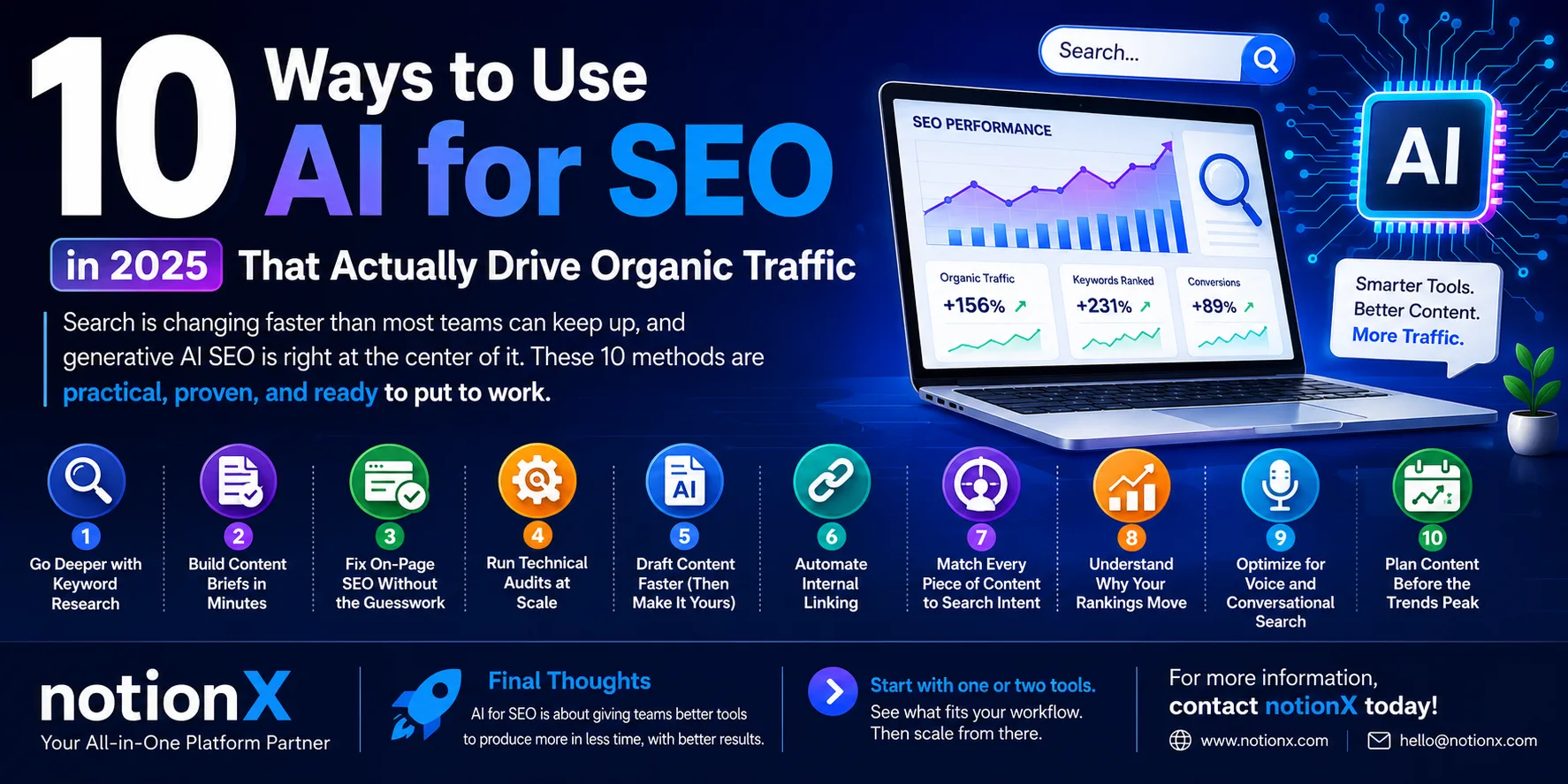
Search is changing faster than most teams can keep up, and generative AI SEO is right at the center of it.
If you are still running the same SEO routine from two or three years ago, you are likely missing traffic your competitors are already picking up. AI for SEO isn't just nice to have anymore. It's a core part of how top ranking teams, IT companies, and digital agencies operate today. Whether you're running campaigns across the USA or managing clients globally, these 10 methods are practical, proven, and ready to put to work.
Here is a quick look at what we'll cover in this blog.
1. Go Deeper with Keyword Research
Basic keyword tools show you search volume. AI tools show you the full picture.
They map out keyword clusters, identify search intent, and surface long tail opportunities that manual research would miss. Start with a broad topic, feed it into an AI keyword tool, and let it surface the related queries. You'll usually find 15 to 20 content ideas hiding inside a single keyword.
This alone can reshape how you plan your content calendar.
2. Build Content Briefs in Minutes
A strong content brief is the foundation of every good article. AI can generate a structured outline with headings, target questions, suggested word count, and competitor gaps in just a few minutes.
For IT companies managing large editorial calendars, this cuts planning time down significantly. And your writers will have a much clearer direction before they even type the first word.
3. Fix On-Page SEO Without the Guesswork
AI tools can compare your page against the top 10 ranking results and tell you exactly what's missing. Maybe your content skips a subtopic that competitors cover. Maybe your internal links are thin. Maybe you're using one phrase too much while ignoring related terms.
These tools catch what human editors often miss, and they do it fast.
What to Prioritize
Look for tools that check topical completeness, not just keyword density. Google's systems now reward pages that cover a subject in depth, not ones that simply repeat the target keyword.
4. Run Technical Audits at Scale
Technical SEO audits used to take days. AI powered crawlers can now scan thousands of pages in minutes and flag broken links, missing meta data, slow load times, and crawl errors automatically.
And they don't just list the problems. They rank them by impact, so your dev team knows exactly what to fix first and what can wait.
5. Draft Content Faster (Then Make It Yours)
Generative AI SEO tools can produce full drafts for blog posts, landing pages, and product descriptions. But publishing raw AI content without editing is a shortcut that often backfires.
Use AI to build the first draft. Then go in, add your own experience, update the examples, and make it genuinely useful. That's when it starts to rank and hold its position.
6. Automate Internal Linking
Internal links help search engines map your site structure and help users find more content. Doing this manually at scale is time consuming and easy to skip.
AI tools can scan new content as it's published and suggest the most relevant internal links based on what already exist on your site. Set it up once and it saves several hours every month.
7. Match Every Piece of Content to Search Intent
Two people can search the same keyword and want completely different things. AI helps you figure out what type of content fits each query, whether that's a listicle, a step by step guide, a comparison page, or a short direct answer.
Getting this right leads to lower bounce rates and stronger rankings over time.
8. Understand Why Your Rankings Move
AI powered analytics tools go beyond showing you where you rank. They explain why you moved up or down. They connect SERP changes, competitor shifts, and algorithm updates to your actual traffic data.
It's like having a senior SEO analyst reviewing your numbers every week, without the overhead costs.
9. Optimize for Voice and Conversational Search
More people are searching using full sentences and questions, especially on mobile and smart devices. AI can help you identify the conversational phrases your audience actually use and help you build content around them.
This is a growing area. And most brands are still not doing it well, which means there's a clear opening right now.
10. Plan Content Before the Trends Peak
This one is underused by most teams. AI tools can track which topics are gaining search traction before they hit peak volume.
If you publish three weeks before a trend spikes, you're already ranking when the rest of the market shows up. That kind of timing is hard to replicate without data.
Final Thoughts
AI for SEO is not about replacing writers or strategists. It's about giving them better tools so they can produce more in less time, with better results.Generative AI SEO is still evolving, which means there's a real opportunity right now for teams willing to learn and adapt early. Start with one or two tools. See what fits your workflow. Then scale from there.For more information, contact notionX your all in one platform partner.