Running a business takes more than a good product or service. It also needs enough money to keep operations running smoothly. Whether you are starting a new business, expanding into a new market, buying equipment, or managing day-to-day expenses, access to funds can make a big difference.
Many business owners think a bank loan is the only way to raise money. But that's no longer the case. Today, businesses have several fundraising options depending on their needs, business size, and financial situation. Some options help improve cash flow quickly, while others are better for long-term growth.
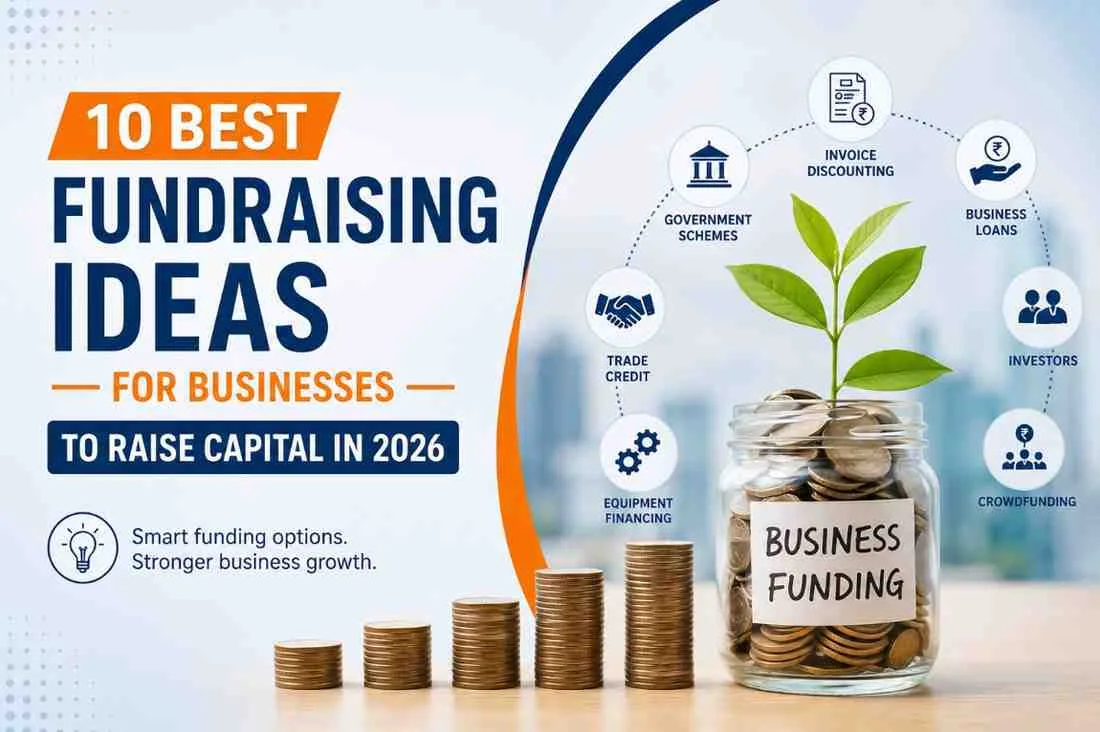
In this article, we'll look at 10 practical fundraising ideas for businesses in 2026. Understanding these options can help you choose the one that fits your business goals.
1. Invoice Discounting Through TReDS
If your business sells goods or services on credit, you probably have money stuck in unpaid invoices. Waiting 30, 60, or even 90 days for payment can put pressure on your cash flow. Invoice discounting is one way to solve this problem.
With invoice discounting, businesses can receive funds against approved invoices instead of waiting for buyers to make payment. This helps improve working capital without taking a traditional loan.
In India, this facility is available through the TReDS (Trade Receivables Discounting System) platform. RXIL is one of the RBI-authorised TReDS platforms that helps MSMEs discount their invoices with multiple financiers.
This option is useful for businesses that regularly deal with large corporate buyers and need faster access to working capital.
2. Working Capital Loans
Working capital loans are designed to help businesses manage everyday expenses. These loans can be used for paying salaries, purchasing inventory, paying suppliers, covering utility bills, or handling seasonal demand.
Unlike long-term business loans, working capital loans focus on short-term business needs. They are often suitable when a business has temporary cash flow gaps but expects regular income in the coming months.
Before applying, compare interest rates, repayment periods, and processing charges. Borrow only the amount your business actually needs.
3. Business Line of Credit
A business line of credit offers flexibility. Instead of receiving a fixed loan amount, you get access to a credit limit that you can use whenever required.
You can withdraw only the amount you need and usually pay interest only on the amount used. Once you repay the borrowed amount, the credit becomes available again.
This makes it a good option for businesses with changing cash flow requirements or unexpected expenses. It also helps avoid borrowing a large amount when only a small amount is needed.
4. Angel Investors
Angel investors are individuals who invest their own money in businesses with strong growth potential. In return, they usually receive an ownership stake in the company.
Apart from funding, angel investors often bring industry knowledge, business guidance, and useful connections. This can be valuable for startups that are still building their business.
However, business owners should understand that accepting angel investment means sharing ownership and sometimes decision-making. It is important to discuss expectations clearly before entering into any agreement.
5. Venture Capital Funding
Businesses with innovative products and high growth plans may consider venture capital funding.
Venture capital firms invest larger amounts compared to angel investors, but they usually expect rapid business growth. They often invest in startups that have already shown market demand and are ready to expand.
This type of funding can help businesses grow faster, hire experienced teams, improve technology, or enter new markets.
Since venture capital investors receive equity in return, business owners should carefully evaluate whether this option matches their long-term plans.
6. Crowdfunding
Crowdfunding has become another popular way to raise funds. Instead of depending on one investor, businesses collect small contributions from many people through online crowdfunding platforms.
This method works well for businesses launching innovative products or unique business ideas. Some crowdfunding campaigns offer products as rewards, while others provide equity to investors.
A successful crowdfunding campaign usually requires a clear business idea, realistic funding goals, and effective marketing. Businesses should also keep supporters updated throughout the campaign to build trust.
Although crowdfunding may not suit every business, it can be a useful option for companies with products that attract public interest.
7. Government Schemes for MSMEs
The Indian government offers several financial support schemes for Micro, Small, and Medium Enterprises (MSMEs). These schemes are designed to improve access to funding and encourage business growth.
Depending on eligibility, businesses may receive collateral-free loans, credit guarantees, interest benefits, or financial assistance through different government programmes.
Business owners should regularly check the latest schemes announced by central and state governments, as eligibility criteria and benefits may change over time.
Government-backed funding can reduce the financial burden and make it easier for businesses to invest in expansion and operations.
8. Trade Credit from Suppliers
Trade credit is one of the simplest fundraising ideas that many businesses already use without realising it.
Instead of paying suppliers immediately, businesses receive extra time to make payment. This allows them to sell products, generate revenue, and then pay suppliers later.
Trade credit helps improve cash flow without borrowing from banks or financial institutions.
Of course, businesses should make payments on time. Maintaining a good payment record strengthens supplier relationships and may lead to better credit terms in the future.
For businesses that purchase inventory regularly, trade credit can become an important part of managing working capital.
9. Equipment or Machinery Financing
Buying machinery, vehicles, or specialised equipment often requires a large investment. Paying the full amount at once may not be practical for every business.
Equipment financing allows businesses to purchase assets while spreading the cost over a fixed repayment period.
This option is commonly used in manufacturing, logistics, healthcare, construction, and other industries where machinery plays an important role.
Instead of delaying business growth because of limited funds, businesses can acquire the equipment they need and repay the financing gradually through future earnings.
Before choosing this option, compare financing terms and understand the total repayment amount.
10. Friends, Family, or Business Partners
Many businesses begin with financial support from family members, friends, or trusted business partners. This option can provide quick access to funds, especially during the early stages of a business.
Since these arrangements involve personal relationships, it is important to discuss everything openly. The amount being invested, repayment terms, ownership share, and responsibilities should all be written down clearly.
Doing this helps avoid misunderstandings later and protects both the business and personal relationships.
While this funding option may not be suitable for every business, it can work well when there is trust and proper planning.
Conclusion
Raising capital is an important step in building and growing a successful business. The good news is that businesses today have many fundraising options beyond traditional bank loans. The right choice depends on your business stage, funding requirement, repayment capacity, and future plans.
If your business needs quick working capital against unpaid invoices, invoice discounting through a TReDS platform like RXIL can be a practical option. Businesses looking for short-term support may consider working capital loans or a business line of credit. Startups with high growth potential may explore angel investors or venture capital, while MSMEs can also benefit from government schemes and trade credit.
Before making a decision, compare different funding options carefully. Understand the costs, repayment terms, and long-term impact on your business. Choosing the right fundraising method can improve cash flow, support expansion, and help your business move forward with confidence.