Work trousers don't tend to receive much attention until they're uncomfortable, poorly fitted or falling apart at the end of a long shift.
For people who spend their days moving, lifting, kneeling, climbing or carrying tools, that can quickly become a problem. Good workwear should make those tasks easier rather than adding another source of irritation.
That's why choosing the right Workwear Trousers is about much more than finding a pair that looks suitably rugged. Fabric, construction, fit, storage and weather resistance can all influence how well trousers perform during a demanding working day.
The same principle applies across construction, engineering, maintenance, landscaping, warehousing and other practical occupations. The ideal pair is the one that quietly does its job for hours without getting in the way.
Why the Right Work Trousers Matter
A normal pair of casual trousers isn't designed for repeated kneeling, carrying equipment or working around rough surfaces.
Work trousers need to cope with considerably more punishment.
Depending on the job, they may encounter dust, oil, mud, moisture, sharp surfaces and constant friction. At the same time, the wearer needs enough freedom of movement to crouch, stretch and climb without feeling restricted.
Good workwear therefore needs to balance several qualities:
- Durable fabric
- Comfortable fit
- Freedom of movement
- Reinforced high-wear areas
- Useful storage
- Suitable weather resistance
- Easy maintenance
It's tempting to focus on the toughest-looking material available, but heavier doesn't always mean better. If you're walking several miles across a site every day, unnecessarily bulky trousers may create more fatigue than protection.
Workwear Trousers: Choosing the Right Fabric and Fit
Fabric choice depends heavily on the type of work being done.
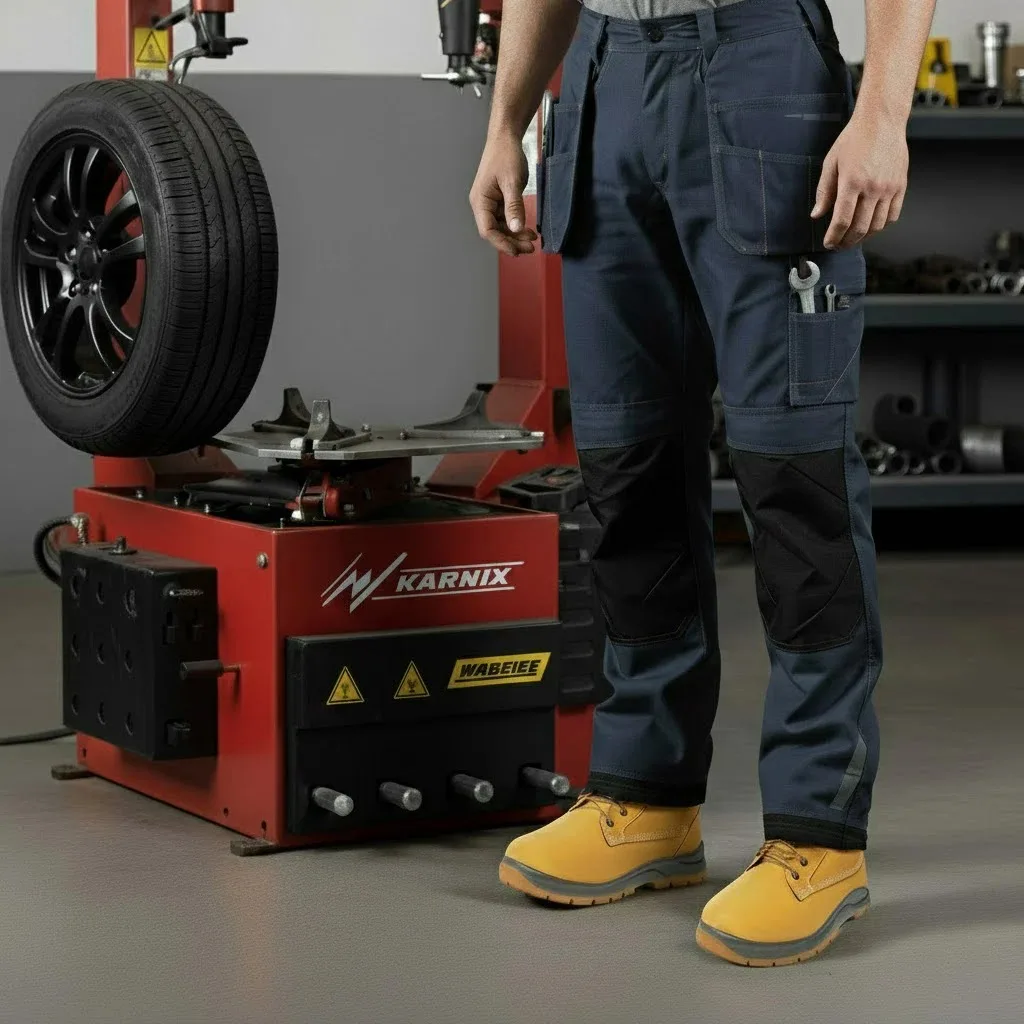
A construction worker may prioritise abrasion resistance and reinforced knees. Someone working indoors may value lighter material and better breathability. Outdoor trades need to think about rain, mud and changing temperatures.
Stretch fabrics have become increasingly common because they provide additional flexibility without necessarily sacrificing durability.
Fit matters just as much.
Trousers should allow you to bend and kneel comfortably while remaining secure around the waist. A very loose fit can become cumbersome around machinery or tools, while an overly narrow cut may restrict movement.
Try to think about the positions you actually work in.
If you spend much of the day kneeling, check how the knees move. If you're regularly climbing ladders, make sure the trousers don't pull uncomfortably around the hips or thighs.
Why Cargo Work Trousers Remain Popular
Cargo Work Trousers have remained a staple because they solve a straightforward problem: carrying equipment without constantly returning to a toolbox or vehicle.
The classic side pockets can be useful for tape measures, fasteners, gloves, phones and smaller tools. Many modern versions also include reinforced pockets or dedicated loops for specific equipment.
But more pockets don't automatically make a better pair.
Poorly positioned storage can become uncomfortable when sitting, kneeling or climbing. Heavy tools on the thigh can also affect balance and movement.
Think about the items you genuinely use throughout the day. A few well-positioned pockets are usually more valuable than a dozen compartments you rarely touch.
Pockets and Storage That Actually Help
Good workwear storage should be accessible without getting in the way.
Front pockets are useful for items you reach for frequently. Thigh pockets can provide extra capacity, particularly when you're moving around without a tool belt.
Zipped compartments can help protect phones or keys, while reinforced tool pockets are worth considering for trades that regularly carry hand tools.
There's also a question of weight.
A trouser pocket loaded with screwdrivers, a measuring tape and other equipment can become surprisingly heavy. In some jobs, a dedicated tool belt or work bag remains the better option.
The best storage system is the one that supports your workflow rather than replacing it.
Comfort and Movement During a Long Shift
A pair of trousers can feel perfectly comfortable for twenty minutes and become irritating after eight hours.
This is why waistband design, seam placement and fabric flexibility matter.
A slightly contoured waistband can help prevent unwanted movement while sitting or bending. Stretch panels around the hips and knees can make repetitive tasks easier.
Breathability also matters, particularly when work becomes physical.
If trousers trap heat and moisture, comfort tends to deteriorate quickly. Lightweight technical blends can be useful in warmer environments, while heavier fabrics may be better suited to colder outdoor work.
Think about the whole working day rather than how the trousers feel when you first put them on.
Choosing the Right Safety Footwear
Work trousers are only part of a practical work outfit.
Footwear takes the direct impact of every step, so the right choice depends on the hazards of the environment and the amount of movement involved.
Some roles require substantial protective boots, while others can use lighter safety footwear.
The important thing is to choose footwear based on the workplace requirements rather than appearance alone.
Look for a secure fit, suitable sole grip, appropriate toe protection and enough cushioning for the amount of time you'll spend standing or walking.
Men's Safety Trainers for Active Working Environments
Men's Safety Trainers have become popular among workers who want safety features without the bulk associated with traditional work boots.
Their trainer-inspired construction can make them useful for warehouses, workshops, logistics, facilities work and other environments where mobility is a major part of the job.
They can also be attractive to workers who move regularly between indoor and outdoor settings.
However, a trainer-style appearance does not automatically make a shoe suitable for every workplace. Always check the required safety standard and protective features before choosing footwear.
The practical advantage is clear, though: a lighter safety shoe can feel noticeably easier to wear during a long, active shift.
Safety Footwear For Women: Fit and Practical Considerations
Women's workwear has improved significantly, but fit still deserves careful attention.
Safety Footwear For Women should not simply be smaller versions of men's designs. Foot shape, width, heel fit and overall construction can differ, making a properly shaped shoe considerably more comfortable.
A secure heel is particularly important. Excessive movement can cause rubbing and reduce stability.
Toe room matters too. Safety footwear needs enough space to allow natural movement while ensuring the protective toe cap sits where it should.
As with any work shoe, try them with the socks you'll actually wear on the job.
A comfortable fit can make a considerable difference after several hours on hard flooring.
Looking After Work Trousers
Workwear is built to get dirty, but proper care still matters.
Check washing instructions before using high temperatures or strong detergents, particularly where trousers contain stretch fibres or specialist finishes.
Remove oil, mud and other contaminants promptly where possible. Allow wet clothing to dry thoroughly before storing it.
Inspect stitching and reinforced sections regularly. Small issues around pocket edges, knees and seams are easier to repair before they become significant damage.
Care won't prevent normal wear, but it can extend the useful life of a good pair of trousers.
Common Buying Mistakes
One of the biggest mistakes is buying purely on appearance.
Heavy-looking trousers may seem more durable, but they can become uncomfortable if the job involves constant movement.
Another mistake is buying too many pockets without considering what they'll hold. Storage should make work easier, not create extra weight around your legs.
Sizing is another common problem. Don't assume your usual casual trouser size will automatically work in workwear.
Work trousers are often cut differently, so consider the manufacturer's measurements and try them on with the boots or safety shoes you normally wear.
Finally, think about your environment.
The ideal trousers for an indoor workshop may not be the right choice for a wet construction site.
The best Workwear Trousers are practical, comfortable and designed around the demands of the job. Cargo Work Trousers can be particularly useful when accessible storage is important, but the right fabric, fit and pocket layout matter more than simply having lots of compartments.
The same careful approach should be applied to footwear. Men's Safety Trainers can provide a lighter option for active working environments, while Safety Footwear For Women should be chosen with proper fit, support and workplace requirements in mind.
Good workwear isn't about looking tough. It's about giving workers clothing and footwear that allow them to do the job comfortably, safely and efficiently, shift after shift.
Frequently Asked Questions
What makes good Workwear Trousers?
Good work trousers combine durable materials with comfortable fit, freedom of movement, useful storage and construction suited to the working environment.
Are Cargo Work Trousers suitable for construction work?
Yes, they can be highly practical, particularly where workers need to carry small tools or equipment. Look for reinforced construction and pocket layouts suited to the actual job.
Are Men's Safety Trainers suitable for building sites?
Some models are, but suitability depends on the site's safety requirements and the footwear's certification. Always check the required protective standard before wearing them on site.
What should women look for in safety footwear?
Fit is particularly important. Check heel security, toe room, width and overall support, and make sure the footwear meets the safety requirements of the workplace.
How should work trousers fit?
They should allow you to bend, kneel, climb and walk naturally without being excessively loose or restrictive.
How long should good work trousers last?
There is no fixed lifespan. Frequency of use, working conditions, fabric quality and care all influence durability. Replace them when significant wear affects comfort, fit or performance.