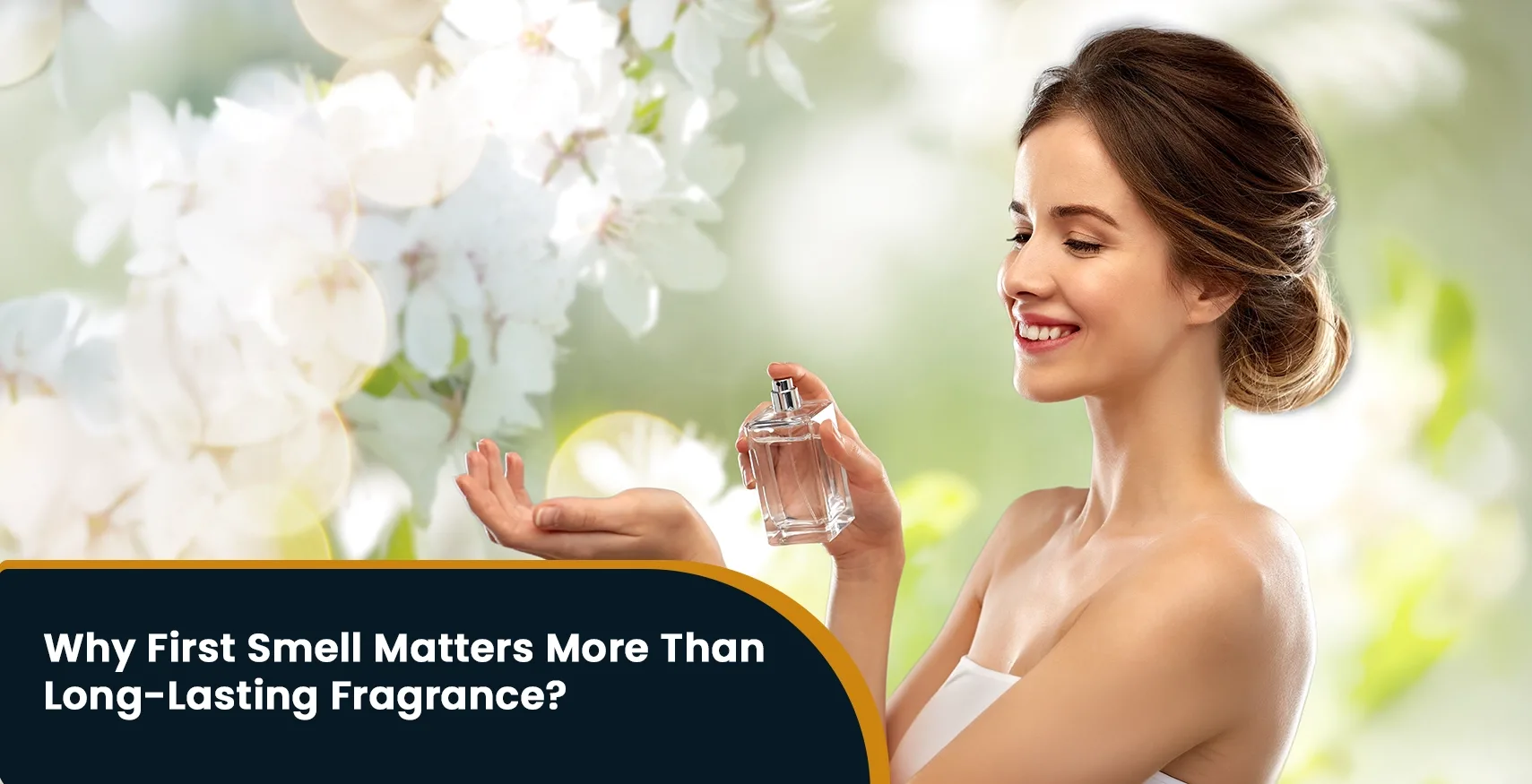
When people evaluate a fragrance, they rarely begin by asking how it will smell six hours later.
Their reaction starts almost immediately.
Within the first few moments, a scent can feel fresh, elegant, comforting, familiar, overpowering, or simply uninteresting. That initial response can influence how the entire fragrance experience is perceived afterward.
This is particularly important for brands using scent as part of a product or customer experience. While long-lasting fragrance remains valuable, longevity alone cannot create a positive impression if the opening fails to connect with the customer.
The first smell creates the introduction. Everything that follows builds on it.
Why the Opening of a Fragrance Matters
Fragrance is one of the fastest sensory cues customers encounter.
A consumer opening a personal care product, testing a perfume, entering a hotel lobby, or experiencing a scented retail environment does not usually analyse the fragrance note by note.
They respond instinctively.
The opening scent can quickly influence perceptions such as:
- Product quality
- Freshness
- Comfort
- Sophistication
- Brand personality
- Desire to continue using the product
This is what makes the first impression fragrance impact so important.
The opening may last for only a short period, but it establishes expectations for everything that comes afterward.
First Smell Creates the Emotional Entry Point
Scent and emotion are closely connected.
A familiar aroma can remind someone of a person, place, season, product, or experience almost instantly.
This makes fragrance particularly valuable in branding because it can create an emotional response without requiring words or visual communication.
When customers encounter a scent for the first time, they begin forming an impression of the experience.
If the opening feels appropriate and appealing, they are more likely to remain engaged.
If it feels unpleasant or completely disconnected from the product, the customer may lose interest before the deeper fragrance notes have an opportunity to develop.
That is why a fragrance should not rely entirely on what happens later.
Longevity Cannot Correct a Poor First Impression
Brands often highlight fragrance longevity as an important product advantage.
And it certainly matters.
Customers generally want their perfume, deodorant, body-care product, home fragrance, or other scented product to maintain a pleasant character for a reasonable period.
But consider this situation:
A fragrance lasts eight hours, but the customer dislikes it during the first minute.
Does the eight-hour performance still feel like a benefit?
Probably not.
Longevity becomes valuable only when the customer already enjoys the fragrance.
This is why successful fragrance development needs to consider both immediate appeal and long-term performance.
How a Fragrance Develops
Most fragrances are designed to evolve through several stages.
Top Notes
Top notes form the opening.
They are the first elements customers notice after experiencing the fragrance.
These notes often include bright, fresh, citrus, green, aromatic, or light floral characteristics.
Because this stage creates the first sensory impression, it carries considerable responsibility.
The top notes need to attract attention without feeling disconnected from what follows.
Heart Notes
As the opening begins to soften, the heart becomes more noticeable.
This part of the fragrance often contains floral, fruity, spicy, or aromatic characteristics.
The heart provides much of the fragrance's recognisable personality.
Base Notes
The base forms the deeper and more persistent foundation.
Woody, musky, amber, vanilla, patchouli, and other richer characteristics often appear here.
These notes contribute significantly to fragrance longevity.
But the customer needs to remain interested long enough to experience them.
That is why the opening remains so important.
First Impression and Long-Lasting Fragrance Should Work Together
The question should not really be:
Which matters more—the opening or longevity?
A better question is:
How can both work together?
A strong fragrance structure typically needs:
An attractive opening
to create interest.
A smooth transition
to maintain the experience.
A balanced base
to provide lasting presence.
If the opening is excellent but the fragrance collapses quickly, the customer may feel disappointed.
If the base performs beautifully but the opening feels unpleasant, the customer may never appreciate the rest of the fragrance.
Balance is therefore essential.
Fragrance Has Become Part of Brand Identity
Brands increasingly compete on experience rather than product function alone.
Packaging, visual identity, communication, texture, sound, and fragrance can all contribute to how customers perceive a product.
This is where sensory branding and fragrance identity become increasingly relevant.
A distinctive scent can help a brand communicate characteristics such as:
- Premium positioning
- Freshness
- Comfort
- Energy
- Cleanliness
- Elegance
- Warmth
When customers repeatedly experience the same fragrance character, scent can gradually become connected with the brand itself.
The fragrance starts functioning as another identifying element alongside colour, packaging, and visual design.
The First Smell Can Influence Perceived Product Quality
Imagine opening two personal care products.
Both perform similarly.
Both have comparable packaging.
But one immediately gives off a fragrance that feels refined and appropriate, while the other produces an opening that feels harsh or disconnected from the product.
Before either product has fully demonstrated its functional performance, the customer may already have formed an opinion.
This illustrates how fragrance can influence perceived quality.
The scent does not replace actual product performance.
But it can shape expectations before the customer has finished evaluating the product.
Different Categories Need Different Opening Experiences
There is no universally correct opening fragrance.
The right first impression depends on the product and the audience.
Personal Care
Body washes, lotions, shampoos, and deodorants may need an opening that communicates freshness, cleanliness, comfort, or premium care.
Fine Fragrance
A perfume may use a distinctive opening to establish personality immediately and encourage the wearer to continue exploring how the fragrance develops.
Hospitality
Hotels and premium environments may require a subtle opening that contributes to atmosphere rather than dominating it.
Wellness
Wellness-focused spaces and products may need fragrance profiles that communicate calmness, balance, or relaxation from the first encounter.
The opening should always support what the brand wants customers to feel.
Why Custom Fragrance Development Matters
Using a generic fragrance direction can make it difficult for a product to establish a distinctive identity.
Custom fragrance development allows brands to consider:
- Target audience
- Product category
- Cultural preferences
- Brand personality
- Intended emotional response
- Application requirements
- Desired longevity
An experienced leading fragrance company in India can help translate these considerations into a structured fragrance direction rather than focusing only on whether the scent is strong or long-lasting.
The objective is to create an experience that makes sense from the first impression through the final dry-down.
Cultural Preferences Can Shape the Opening
Fragrance preference is not universal.
Different markets and consumer groups may respond differently to floral, woody, fruity, fresh, spicy, or gourmand directions.
A fragrance intended for one audience may therefore require a very different opening from a product designed for another.
Brands need to understand who they are creating the fragrance for.
This is particularly important when developing products for several geographic markets.
The first scent should feel relevant to the intended consumer rather than simply follow a global trend.
The Opening Should Match the Brand Promise
A fragrance can smell pleasant and still be wrong for the brand.
For example, a premium wellness product may want to communicate sophistication and calm.
An extremely playful or sugary opening might be attractive on its own but feel inconsistent with the intended positioning.
Similarly, a youthful lifestyle brand may need something energetic and expressive rather than a fragrance that feels overly formal.
The strongest perfume fragrance direction is therefore not simply the scent that receives the most immediate compliments.
It is the fragrance that creates the right emotional response for the product and brand.
Repetition Turns First Impression Into Recognition
One positive fragrance experience creates an impression.
Repeated experiences can create recognition.
When customers encounter a similar scent character every time they use a product or interact with a brand, the fragrance can become familiar.
Over time, scent may help customers identify or remember the brand even before they consciously analyse what they are smelling.
This is one reason fragrance identity can become so valuable.
The opening does not need to be shocking or unusually strong.
It needs to be distinctive enough to feel recognisable and consistent enough to build familiarity.
Stronger Does Not Mean Better
Brands sometimes assume that creating a powerful opening requires greater fragrance intensity.
That is not necessarily true.
An excessively strong fragrance can create discomfort and work against the intended experience.
First impression is about character, not simply strength.
A well-balanced opening can feel memorable without dominating the product.
Subtlety can sometimes create a more premium impression than intensity.
The objective should always be an appropriate sensory experience.
What Should Brands Evaluate During Fragrance Development?
When evaluating a fragrance, brands can ask more than:
“How long does this last?”
Useful questions include:
- What does the first smell communicate?
- Does the opening match the brand personality?
- Is the fragrance appropriate for the target customer?
- Does the heart develop naturally from the opening?
- Does the base provide sufficient lasting presence?
- Does the fragrance perform correctly in the final product?
- Is the overall experience consistent from beginning to end?
These questions provide a more complete evaluation than longevity alone.
First Impression Influences Brand Recall
Customers interact with countless products and marketing messages every day.
Most are quickly forgotten.
A distinctive sensory experience provides another opportunity to remain memorable.
When a fragrance creates a positive initial reaction and is repeatedly associated with the same brand, it can contribute to long-term recognition.
This makes fragrance useful not only as a product feature but also as part of the wider customer experience.
The opening becomes the moment when that relationship begins.
The Best Fragrance Strategy Creates a Complete Journey
A successful fragrance should not depend entirely on one stage.
The opening attracts.
The heart develops the personality.
The base provides depth and continuity.
Together, they create the complete experience.
The strongest fragrance development therefore balances immediate appeal with appropriate longevity.
Neither should exist at the expense of the other.
Final Thoughts
A long-lasting fragrance can be valuable.
But longevity cannot compensate for an opening that fails to connect with the customer.
The first few seconds establish expectations, influence emotion, and begin shaping the way the product or brand is perceived.
That is why the first impression fragrance impact deserves as much attention as technical fragrance performance.
For brands using scent as part of sensory branding and fragrance identity, the objective should be to create a fragrance journey that works from beginning to end.
The opening earns attention.
The heart builds character.
The base supports lasting satisfaction.
And when all three work together, fragrance becomes more than something customers simply smell.
It becomes part of what they remember.