Quick answer: Tapas matter to Spanish culture because they're built around sharing, conversation, and slowing down together, not just eating. The format has since travelled well beyond Spain, and London has taken to it especially well. Frame, a restaurant in Notting Hill is one of the restaurants built entirely around that same spirit of communal, unhurried dining.
Ask someone what makes tapas different from other food, and most will mention the small plates. That's true, but it's not really the point. The plates are just the mechanism. What tapas actually protects is the time spent at the table, and that's a much harder thing to explain in one sentence.
Where the Habit Started
The word tapa means "cover" in Spanish, and the most repeated origin story involves bartenders placing a slice of bread or ham over a glass of wine to keep flies out. Whether that's literal history or just a good story, it captures something true about how tapas began: small, generous gestures built into the act of serving a drink, long before they became a cuisine of their own.
Over time, those small covers became dishes, and those dishes became an entire way of eating out.
Sharing Is the Whole Point, Not a Side Effect
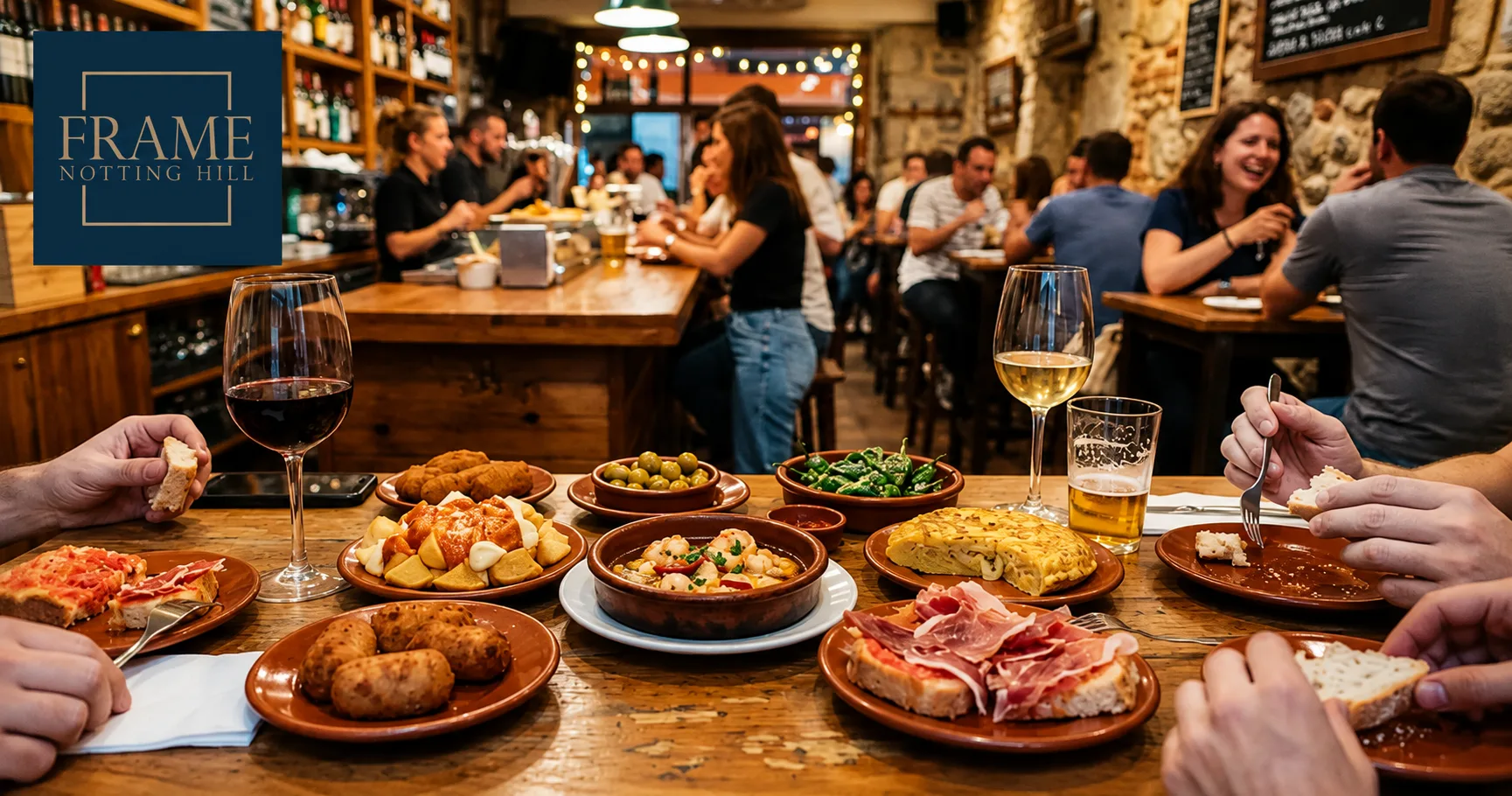
In Spain, going out for tapas (ir de tapas) was never really about the food alone. It's about moving between places with friends, ordering a few plates at each stop, and spending hours in company without any single person "owning" a dish. Nobody orders just for themselves; the table eats as a group, which changes the entire feel of the meal compared to a standard sit-down dinner where everyone's plate is their own.
That shift, from individual portions to shared ones, is a big part of why tapas dining feels more social than almost any other restaurant format.
None of these versions is "more correct" than the others; they're regional variations on the same underlying idea of small, shared plates built for company.

Why Tapas Has Outlasted Almost Every Other Spanish Tradition
Spain has plenty of well-known traditions: flamenco, the siesta, the long lunch. Each one says something real about the culture, but most of them stay close to home. Few have travelled as far, or stuck as firmly, as tapas. A few reasons that stand out:
It's genuinely social. The format forces conversation and sharing rather than allowing a meal to become a solo, heads-down affair.
It gets passed down easily. Sharing food across generations, teaching kids to eat communally rather than possessively, is baked into how tapas works at a family table.
It travels well. Because it's built around a format rather than a single dish, tapas adapts naturally to new cities and new ingredients without losing what makes it distinct.
How London Picked Up the Tradition
Small-plates dining has become one of the more common restaurant formats worldwide over the last couple of decades, and London has taken to it particularly well. Part of that fit is that London's dining scene already leans toward variety and informality, and part of it is simply that sharing food is an easy habit to adopt once people try it.
Restaurants across the city have built menus around this same idea, and Frame in Notting Hill is one of them, treating tapas less as a menu format and more as the whole approach to an evening out.
What This Looks Like at Frame
At Frame, the tapas menu is built to be shared across the table rather than ordered individually: small bites, vegetarian plates, seafood, and meat, meant to be passed around rather than eaten in isolation. For gatherings that call for a bit more privacy, Frame also runs two private dining spaces, the Indoor Garden and The Cellar, each suited to a different kind of evening but built around the same sharing philosophy.
Conclusion
Tapas has held on for centuries not because small plates are inherently better than a big one, but because the format protects something restaurants often lose: time spent actually being together at the table. That's as true in Andalusia as it is in Notting Hill. If you want to experience that version of it in London, Frame's tapas menu is built around the same idea: order together, share everything, and let the evening slow down a bit.
FAQs
Why is sharing so central to tapas culture?
Because tapas was never designed around individual portions, the format assumes a table eats together, which is what gives it its social character.
Where did tapas originate?
Most accounts trace tapas back to Andalusia in southern Spain, where small bites were served alongside drinks, eventually growing into a full culinary tradition.
Has tapas culture changed much outside Spain?
The core idea of shared small plates has stayed intact, though restaurants outside Spain, including many in London, often add their own regional or seasonal twists to the format.