Businesses today handle an increasing amount of sensitive material, from cash and confidential documents to pharmaceuticals, samples, electronics, and high-value products. As items move between employees, facilities, customers, couriers, and distribution centres, maintaining control over what is being transported becomes increasingly important. Packaging is therefore no longer just about convenience—it can also form an important part of a company's security process.
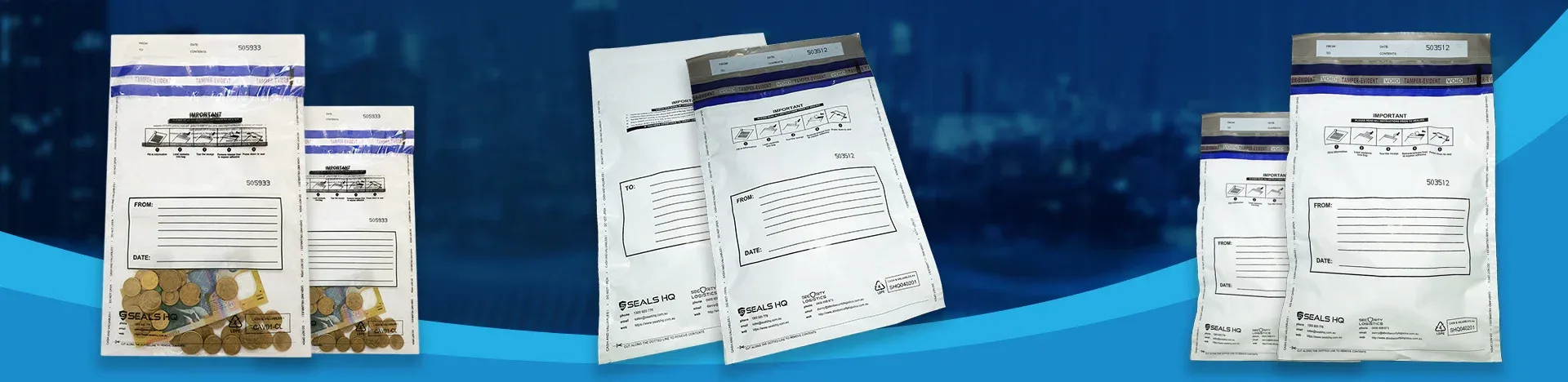
For organisations that need an additional layer of protection during storage or transportation, security bags offer a practical solution. Depending on the design, security bags can include tamper-evident seals, unique identification numbers, tear-resistant materials, opaque construction, and other features designed to make unauthorized access easier to identify. These features can help businesses create greater accountability throughout the movement of sensitive items.
What Are Security Bags?
Security bags are specialized packaging products designed to protect contents and provide evidence if someone attempts to interfere with them. Unlike standard mailing or storage bags, security bags can incorporate features that make unauthorized opening difficult to conceal.
Some common features include:
- Tamper-evident adhesive seals
- Sequential serial numbers
- Barcodes or identification areas
- Tear-resistant construction
- Opaque materials for privacy
- Write-on panels
- Security closures
- Permanent evidence of opening
The exact combination of features depends on the intended application. A pharmacy transporting sensitive products may have different requirements from a financial institution transporting cash or a business handling confidential documents.
Why Tamper Evidence Matters
One of the main advantages of security packaging is visibility.
A conventional bag can potentially be opened, its contents accessed, and the package closed again without providing an obvious indication that anything happened. A properly designed tamper-evident bag is intended to make this type of interference more noticeable.
The Therapeutic Goods Administration (TGA) explains that tamper-evident packaging should include an indicator or barrier that, if breached or missing, provides visible or audible evidence that tampering may have occurred. The TGA also provides guidance on the selection, design, and validation of tamper-evident packaging for applicable therapeutic goods in Australia.
While that guidance specifically addresses therapeutic goods, the underlying principle is useful across many industries: security packaging should make unauthorized access easier to detect.
Security Bags and Chain of Custody
Chain of custody is particularly important when items pass through multiple people or locations.
Consider a package that is prepared by an employee, collected by a courier, transported to another facility, and received by a second employee. Without an identifiable security system, it may be difficult to determine whether the package remained untouched throughout the process.
A security bag can become part of that chain-of-custody process.
Serial numbers, barcodes, and other identifiers can be recorded at the time of dispatch and checked when the package arrives. If the seal is damaged or the identification details do not match the original record, the recipient has a reason to investigate before accepting the contents.
This doesn't replace proper security procedures, but it can add another layer of accountability.
Where Are Security Bags Used?
Security bags can be useful in a wide range of industries.
Healthcare and Pharmacies
Healthcare organizations frequently handle medicines, patient-related documents, specimens, and other sensitive materials. Secure packaging can help protect these items while they are transported between locations.
Financial Services
Banks and financial businesses may use security packaging for cash, documents, transaction records, and other sensitive materials.
Retail
Retailers can use secure packaging for high-value products, returns, deposits, or internal transfers between stores and warehouses.
Laboratories
Laboratories may need secure packaging for samples, testing materials, and documentation that must remain properly identified during transportation.
Government and Legal Services
Confidential documents and records may require controlled handling when being transferred between departments or facilities.
Logistics
Courier and logistics companies can use security packaging to provide an additional layer of protection for sensitive shipments moving through complex distribution networks.
Security Bags for Pharmacy Operations
Pharmacies are a particularly important application because they may handle products that require careful transportation and controlled access.
Security packaging can help distinguish a properly sealed shipment from one that may have been opened during transit. This can provide staff with a simple visual check before the contents are accepted or processed.
The TGA states that tamper-evident packaging for applicable therapeutic goods should be designed to remain intact during reasonable handling, including manufacture, distribution, and retail display. It also specifies requirements around tamper-evident features and packaging statements for products covered by its code.
Businesses should always assess the specific regulatory requirements applicable to the products they handle rather than assuming that a generic security bag automatically satisfies every requirement.
Serial Numbers Improve Traceability
A unique serial number can turn a simple security bag into a more trackable packaging solution.
For example, an organization could record:
Bag number → Employee → Shipment → Destination → Recipient
This creates a straightforward record of where a particular package originated and where it was supposed to go.
Sequential numbering can also make it easier to identify missing bags or investigate discrepancies. For organizations processing a large number of secure shipments, this type of identification can improve internal organization.
Privacy Is Another Important Consideration
Security isn't always about preventing physical access. Sometimes the contents themselves need to remain private.
Opaque security bags can help prevent people from seeing what is inside without opening the package. This can be useful for confidential documents, medical products, financial materials, and other sensitive items.
Combining privacy with tamper evidence provides two different layers of protection: the contents are difficult to view from the outside, while unauthorized opening can leave visible evidence.
Choosing the Right Security Bag
Businesses should consider their specific requirements before selecting a security bag.
Important factors can include:
Size: The bag should accommodate the contents without excessive space.
Material: The material should be appropriate for the weight and nature of the contents.
Closure: The sealing mechanism should provide clear evidence if opened.
Identification: Serial numbers, barcodes, or write-on panels can support tracking.
Opacity: Sensitive contents may require privacy protection.
Durability: The bag should withstand normal handling and transportation.
Quantity: Businesses with regular shipments should consider consistent supply requirements.
The best option isn't necessarily the cheapest bag. It is the one that provides an appropriate balance between security, usability, traceability, and cost.
Security Packaging Should Fit into Existing Workflows
A security product is most effective when employees can use it consistently.
If sealing a bag requires complicated procedures, staff may be tempted to bypass parts of the process. A practical security bag should therefore be straightforward to prepare, identify, seal, transport, and inspect.
Businesses can establish simple procedures around secure packaging, such as recording the bag number, confirming the recipient, checking the seal at delivery, and documenting any visible damage.
These small steps can make security more systematic without creating unnecessary operational complexity.
Security Bags and Modern Supply Chains
Supply chains are becoming increasingly interconnected. A single shipment may pass through warehouses, couriers, distribution centres, and delivery teams before reaching its final destination.
This makes visibility and accountability increasingly important.
Security bags can help businesses establish a clear physical indication of package integrity throughout this journey. Combined with digital tracking, barcode systems, inventory management, and documented handling procedures, secure packaging can become part of a broader supply-chain security strategy.
Sustainable Security Packaging
Businesses are also paying greater attention to the environmental impact of packaging.
When selecting security bags, organizations can consider material efficiency, appropriate bag sizing, packaging waste, and whether the product aligns with their broader sustainability goals.
The objective should be to balance security requirements with responsible resource use. Businesses should avoid excessive packaging while ensuring that reducing material does not compromise the security features needed for the application.
How to Select Security Packaging for Your Business?
Companies researching tamper-evident bags for secure business packaging should consider the type of items being transported, the level of confidentiality required, the potential risks during handling, and whether serial identification or other tracking features are necessary. A well-selected bag should fit naturally into the company's existing dispatch, receiving, and record-keeping processes.
Building a More Secure Packaging Process
Security bags are only one component of an effective security strategy, but they can provide a useful physical layer of protection.
When combined with employee procedures, access controls, inventory records, courier tracking, and documented chain-of-custody processes, security packaging can make it easier to identify potential interference and maintain accountability.
For businesses handling confidential, valuable, regulated, or sensitive items, the goal should be to create a process where security is built into everyday operations rather than treated as an afterthought.
As supply chains continue to evolve, practical packaging solutions that combine protection, traceability, privacy, and ease of use will remain increasingly valuable. The right security bag can provide a simple but effective step toward keeping sensitive items protected from dispatch through to final delivery.