In the hyper-analytical landscape of modern business, leaders often isolate strategic success into spreadsheets, supply chain efficiencies, and algorithmic forecasting. Yet, the history of corporate evolution proves that the ultimate lever of enterprise execution is not data projection, but human alignment. A corporate leader’s primary responsibility is to transform static strategy into dynamic collective action. This transformation requires master-level public speaking—a skill that sits at the intersection of behavioral economics, corporate trust architectures, and environmental psychology. Far from being a mere soft skill for public relations, commanding a stage is a core technical competence that directly dictates market valuation, investor confidence, and employee retention.
The Neuroscience of Persuasion: Moving Beyond Information Delivery
When an executive addresses a boardroom or an industry summit, they are not just delivering information; they are managing the neurochemistry of their audience. Poor presenters rely entirely on dry metrics, which activate only the language-processing centers of the brain (Broca’s and Wernicke’s areas). While the audience decodes the words, they remain emotionally uninspired and behaviorally unchanged.
In contrast, an expert orator utilizes narrative frameworks and structural pacing to trigger neural coupling—a phenomenon where the listener's brain mirrors the exact patterns of the speaker's brain. By skillfully layering hard data with strategic storytelling, a leader induces the release of oxytocin (which builds mutual trust) and dopamine (which sharpens cognitive focus) across the room. In high-stakes environments like shareholder briefings or global product launches, this neurochemical alignment is what turns skeptical investors into long-term strategic partners.
The Corporate Event as a Catalyst for Strategic Trust
In an era dominated by digital communication, Slack notifications, and automated emails, human beings have developed an acute subconscious filter for corporate noise. Digital corporate communication often feels impersonal and transactional. This is precisely why physical, high-visibility corporate gatherings have returned as the premier tool for institutional trust-building.
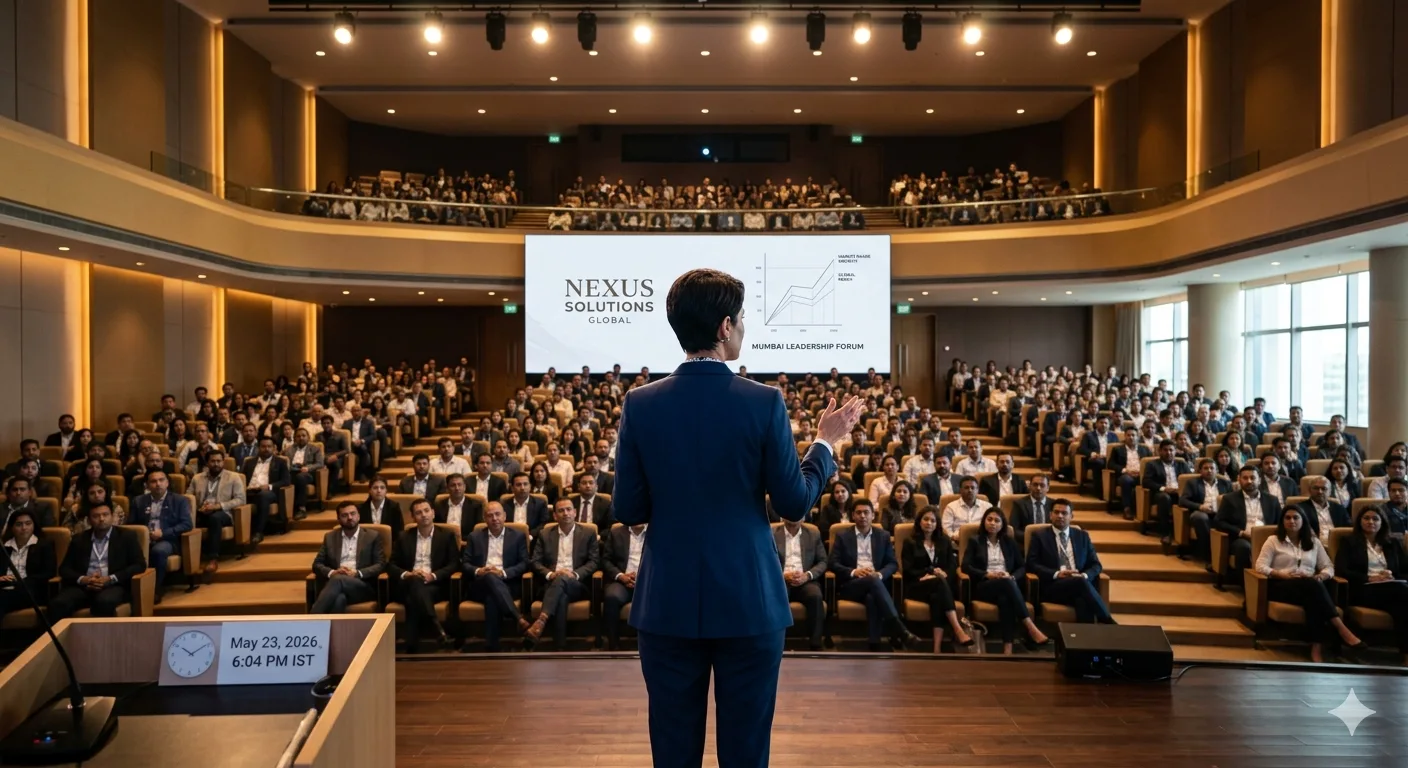
A screen cannot replicate the psychological weight of physical presence. When a CEO steps onto a physical stage, their non-verbal cues—such as open posture, grounded stance, and controlled vocal resonance—are analyzed by the audience’s evolutionary biological networks. To maximize this behavioral impact, enterprises spend immense resources selecting the right infrastructure. Booking premium venues for corporate events in Mumbai is an essential step in this strategic equation. The grand scale, immaculate acoustic insulation, and professional layout of a world-class auditorium provide the exact environmental prestige required to validate a leader’s authority, ensuring their words are received with absolute psychological gravity.
Overcoming Cognitive Load in High-Stakes Presentations
One of the greatest challenges corporate leaders face when presenting complex multi-million dollar strategies is the audience's limited working memory capacity. When data is presented without clear cognitive architecture, the audience suffers from cognitive overload, leading to analytical paralysis or immediate disengagement.
Elite public speakers counter this by utilizing structured communication frameworks like the Pyramid Principle (leading with the core conclusion first, followed by supporting logical categories). Furthermore, exceptional orators understand that their performance is deeply tied to the room’s ambient physics. The physical volume, glare, and room ventilation either reduce or exacerbate audience fatigue. When a leader speaks in a venue designed with optimal sightlines and professional multi-zone climate control, the physical friction on the audience is removed. This allows the listeners' brains to dedicate 100% of their metabolic energy to digesting the complex corporate vision being presented.
Conclusion
Public speaking is the ultimate force multiplier in a corporate leader's toolkit. A brilliant business strategy yields zero ROI if the human capital responsible for its execution remains unaligned or uninspired. By treating public speaking as a rigorous science—one that demands psychological mastery, neurochemical awareness, and the selection of flawless physical environments—leaders can bridge the gap between abstract strategy and flawless market execution. In the ultimate analysis, the market value of a business is directly proportional to its leader's ability to vocalize its future.