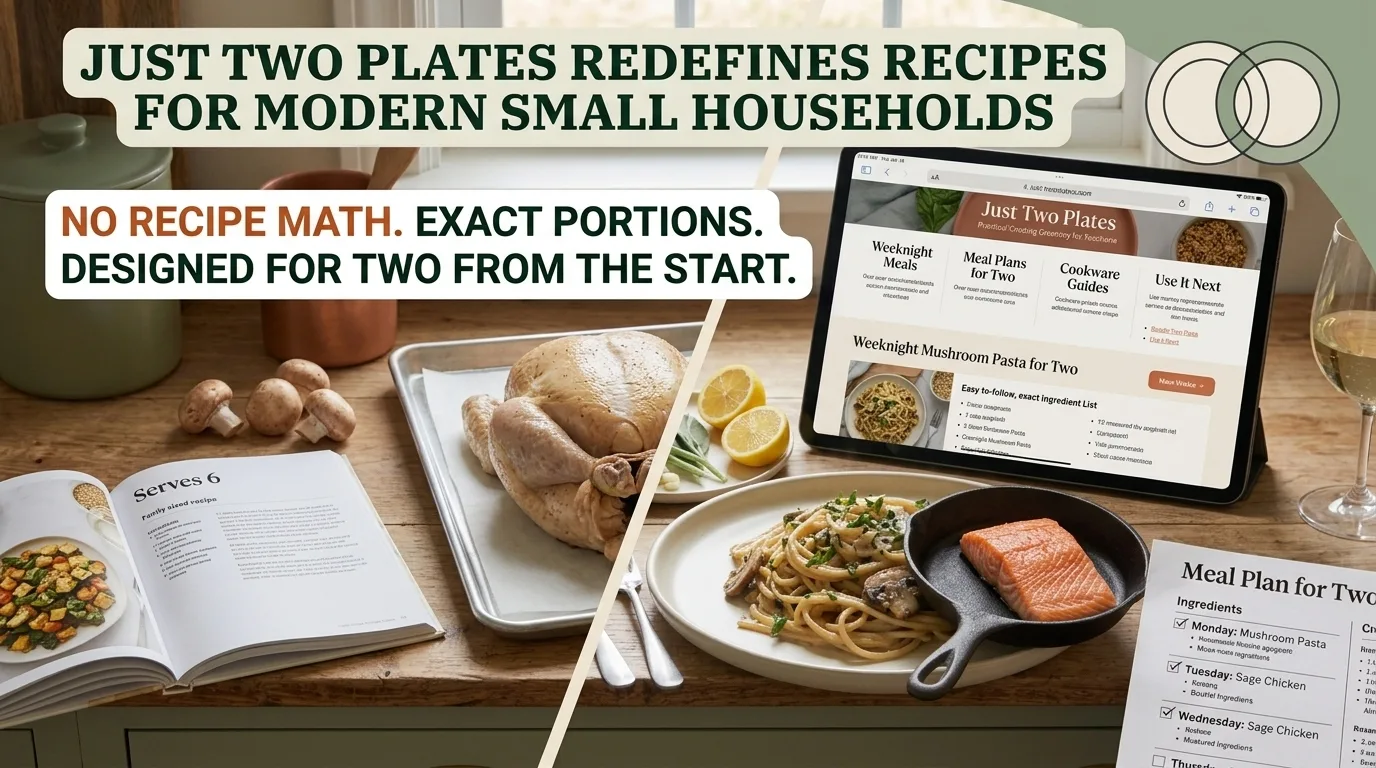
Why Just Two Plates Is Redefining Recipes for Modern Small Households
Household size in the US has been shrinking for decades, yet most recipe content hasn't caught up. Recipes are still written by default for four to six servings, an assumption that no longer matches how a growing share of people actually eat. Just Two Plates is built around a different starting point: the recipe, the portion, and the plan are all designed for two people from the beginning, not adjusted afterward.
The Default Recipe Format Is Outdated
Most cookbooks, food blogs, and recipe sites default to a "serves 4" or "serves 6" format because that used to reflect the average household. Small households, couples, roommates, empty nesters, and single-person homes with intentional leftovers, are left to divide these recipes manually. That process introduces awkward measurements, mismatched pan sizes, and leftover ingredients that don't fit cleanly into another meal.
This isn't a minor inconvenience. It's a structural mismatch between how recipes are written and how a large number of households actually cook. Just Two Plates treats this mismatch as the problem to solve, rather than treating two-person cooking as a smaller version of standard cooking content.
Recipes Designed for Two, Not Adjusted for Two
The clearest example of this shift is in how the recipes themselves are written. Instead of taking a four-serving recipe and instructing readers to divide it, Just Two Plates writes each recipe around a two-serving yield from the start. Recipes like Quick and Easy Chicken Caesar Salad for Two or Vegan Stuffed Bell Peppers for Two list exact quantities and pan sizes matched to that specific yield.
This is a meaningfully different approach than most recipe sites take, since it removes the "figure it out yourself" step that small households have had to deal with for years. The recipe format itself reflects the household size, rather than assuming a bigger one and leaving the adjustment to the reader.
Portion Guides Fill a Gap Recipes Never Addressed
Recipes only solve part of the problem. Knowing how much of an ingredient to buy and cook in the first place is a separate question, and one that's rarely addressed directly anywhere else. Just Two Plates includes a dedicated set of portion guides built specifically for this:
- How much salmon do you need for two people?
- How much ground beef do you need for two people?
- What's the right quantity of vegetables for two people?
- How much sauce does a stir-fry for two actually need?
These guides work independently of any specific recipe, which is a distinct approach from typical recipe content. Instead of treating portioning as a side note within a recipe post, Just Two Plates treats it as its own category of practical information, which reflects how people actually cook day to day, often without following a recipe exactly.
Ingredient Planning That Reflects Real Grocery Habits
Modern grocery shopping, packaging sizes, bulk options, and weekly shopping trips, doesn't naturally divide evenly for a two-person household. A carton of cream, a bag of spinach, or a package of protein is rarely sized for a single two-serving recipe. Just Two Plates addresses this with its "Use It Next" system, which connects recipes to each other based on shared ingredients rather than treating each recipe as a standalone item.
The site's own example shows this clearly:
- Monday: Creamy chicken for two (uses ½ carton cream + ½ bag spinach)
- Wednesday: Mushroom pasta for two (uses the remaining cream)
- Friday: Garlicky spinach side (finishes the spinach)
This reflects a more realistic view of how small households actually shop and cook, buying ingredients that carry across multiple meals, rather than treating each recipe as an isolated event with its own separate grocery list.
Meal Plans Built Around Two From the Start
Just Two Plates' weekly meal plans follow the same logic. Instead of offering a generic plan reduced from a family-sized template, plans are built specifically around two-person quantities with ingredient overlap designed in from the beginning. This is a structural difference, not just a smaller version of a standard meal plan, since the starting assumption is a two-person household rather than a bigger one scaled down.
Cookware Guidance Reflects a Smaller Kitchen, Not a Downsized One
Most kitchens are still stocked with cookware based on outdated assumptions about household size, large stockpots, oversized sheet pans, and casserole dishes meant for bigger batches. Just Two Plates includes cookware recommendations sized specifically for two-person meals: skillets and saucepans matched to smaller portions, baking dishes sized for two-serving dishes, and appliance suggestions that avoid unnecessarily large equipment. This is a detail almost entirely absent from standard recipe content, which typically assumes a fully stocked, family-sized kitchen.
Substitutions and Troubleshooting Built for Smaller Kitchens
Just Two Plates also includes ingredient substitution guidance and cooking troubleshooting content, both relevant to smaller households that are less likely to keep backup ingredients on hand. This is a smaller part of the site, but it reinforces the same overall approach: content built around how a two-person household actually cooks, rather than general advice adapted after the fact.
Why This Model Fits Where Households Are Headed
Smaller households aren't a niche case anymore. Couples, roommates, empty nesters, and people living alone all represent a significant and growing share of how people actually cook day to day. Recipe content that still defaults to four or six servings is increasingly out of step with that reality. Just Two Plates reflects a shift toward recipe and planning content built around actual household size, rather than a legacy format that assumes a bigger family by default.
Final Take
Recipes built for four and divided down don't reflect how a large number of households actually cook today. Just Two Plates rebuilds the entire process, recipes, portions, cookware, and planning, around two people from the ground up, which is a more accurate and more useful model for modern small households than adjusting outdated, larger-format recipes on the fly.