Your company organizes an on-site wellness event, reserves space for massage appointments, and invites employees to participate. Yet when the event begins, several appointment slots remain empty. For Manhattan HR teams, this raises a practical question: why aren't employees participating in an activity intended for their well-being?
Before assuming employees aren't interested in wellness, consider whether the program fits how they actually work.
Research on workplace wellness participation has identified barriers such as inconvenient scheduling, limited time, location, and activities that don't match employee interests. Addressing those barriers may be more useful than simply promoting the next event more aggressively.
Why Employees Don't Participate in Workplace Wellness Programs
A workplace wellness program can sound appealing in principle but feel inconvenient in practice.
Employees may receive an invitation during a busy project week, worry about stepping away from deadlines, or feel uncomfortable receiving a massage in a shared office environment. Others may prefer greater privacy or a different appointment time.
The problem is often less about whether employees value their health and more about whether the activity is accessible, relevant, and genuinely optional.
A useful first step is identifying the specific reasons behind low participation rather than assuming everyone faces the same obstacle.
Scheduling May Be the Biggest Barrier
Consider a Manhattan office where employees attend back-to-back meetings from late morning through the afternoon.
Scheduling a wellness session at noon might appear convenient, but that hour may overlap with lunch, client calls, or the only available personal break.
Instead, examine the team's actual schedule.
Shorter sessions offered across multiple time slots may allow more employees to participate. A rotating schedule can also prevent the same people from being excluded repeatedly.
For example, an employer could offer individual chair massage appointments across morning and afternoon time slots, then review which scheduling arrangements attract greater participation.
Ask Employees What They Actually Want
Wellness initiatives are more useful when employees have a say in how they are organized. Before committing to a workplace activity, employers can ask employees which formats they would feel comfortable participating in, when they are available, and what barriers might prevent them from joining.
A short anonymous survey may reveal that employees prefer individual relaxation breaks rather than activities requiring group participation or a change of clothes.
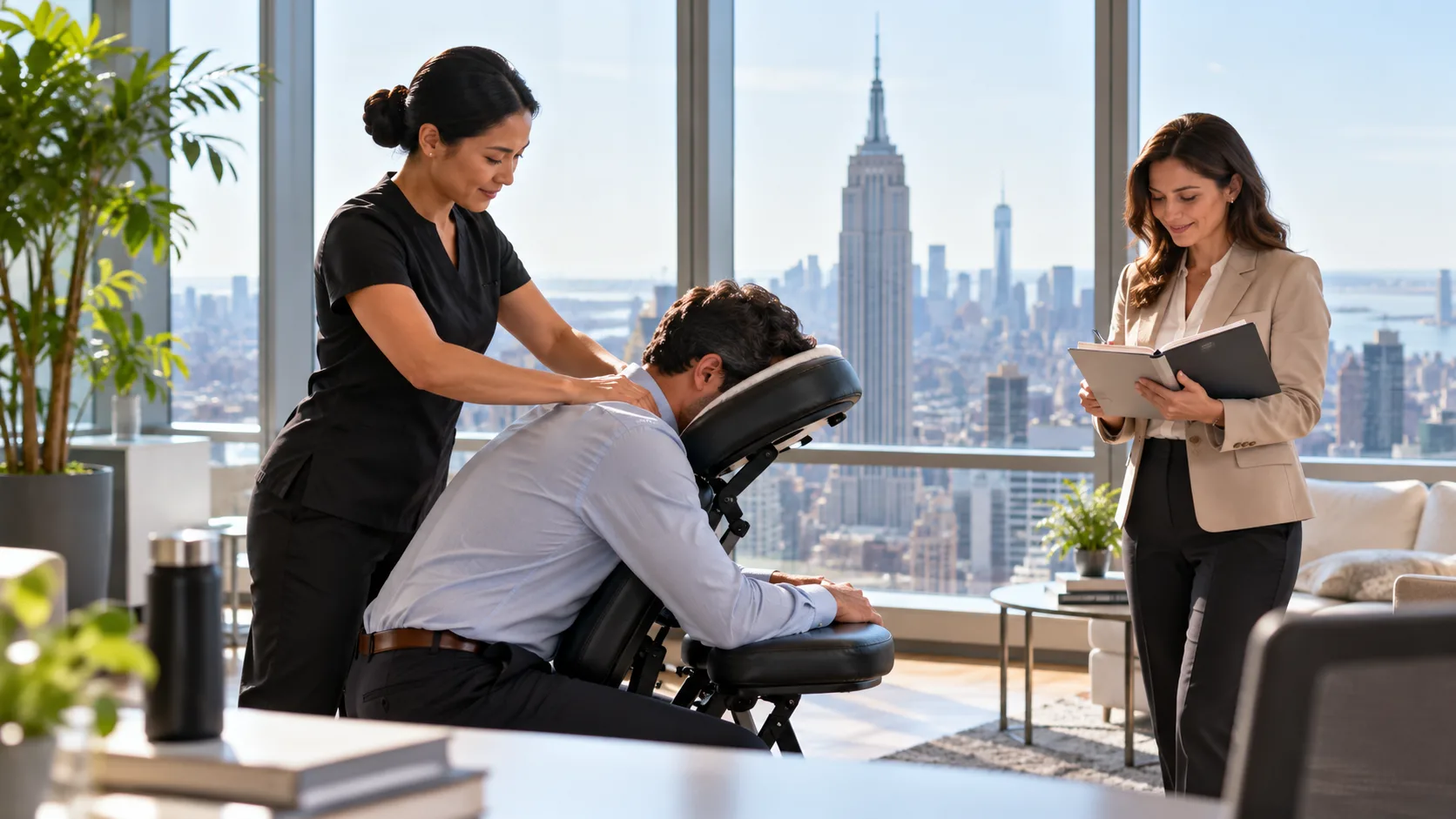
For Manhattan offices, on-site corporate chair massage can provide individual wellness breaks within scheduled appointment windows. Employees can participate without changing into workout clothes or traveling outside the workplace.
The goal is to select an activity that employees genuinely want and can access without disrupting their responsibilities.
Remove the Pressure to Participate
Employee wellness should remain voluntary and respectful of individual comfort.
Employees may have different comfort levels, accessibility needs, or health considerations affecting their willingness to receive a massage at work. Participation should remain voluntary, with appropriate privacy and a way to discuss relevant treatment precautions confidentially with the therapist.
Employers should avoid requesting unnecessary personal medical information or pressuring employees to participate.
Managers should also avoid treating attendance as evidence of commitment or productivity.
A supportive environment gives employees permission to participate without making them feel monitored.
Match Massage Sessions to the Available Office Space
Manhattan offices may not have dedicated wellness rooms, but that does not necessarily prevent employers from organizing massage appointments.
Corporate chair massage can often be arranged in an appropriate conference room, quiet office corner, or other suitable space. The massage therapist visits the workplace with the necessary equipment, and employees participate individually during their assigned appointment windows.
For longer massage sessions requiring different equipment or arrangements, employers should confirm the available space and setup requirements with the provider beforehand.
The focus should remain on making the experience accessible, comfortable, and easy to organize rather than creating an elaborate wellness event.
Plan Around Different Office Attendance Schedules
Hybrid work arrangements can create participation challenges when employees visit the office on different days.
Instead of scheduling a single event without reviewing attendance patterns, employers can identify the days when the greatest number of interested employees are expected on-site.
For larger offices, staggered appointment windows or multiple massage sessions may help accommodate different schedules.
Employers planning corporate massage appointments for employees should confirm the expected participation, available space, therapist requirements, and appointment schedule before finalizing an on-site event.
Measure More Than Attendance
Attendance is useful, but it cannot tell employers everything about whether a wellness activity met employee needs.
After a corporate massage event, employers can collect optional, anonymous feedback about convenience, appointment timing, privacy, and the overall experience.
They can also review whether interested employees had a reasonable opportunity to participate and whether the format suited the office environment.
This information can help determine whether future massage appointments should be offered during different hours, with additional therapists, or on another office day.
Avoid treating a single wellness event as proof of improved employee productivity, reduced absenteeism, or better mental health.
Final Thoughts
When employees skip wellness activities, the solution isn't necessarily another promotional email.
Start by identifying practical barriers, asking employees what they need, and offering accessible activities that fit their workday.
A smaller, thoughtfully designed program may be more useful than an elaborate event employees struggle to attend.