
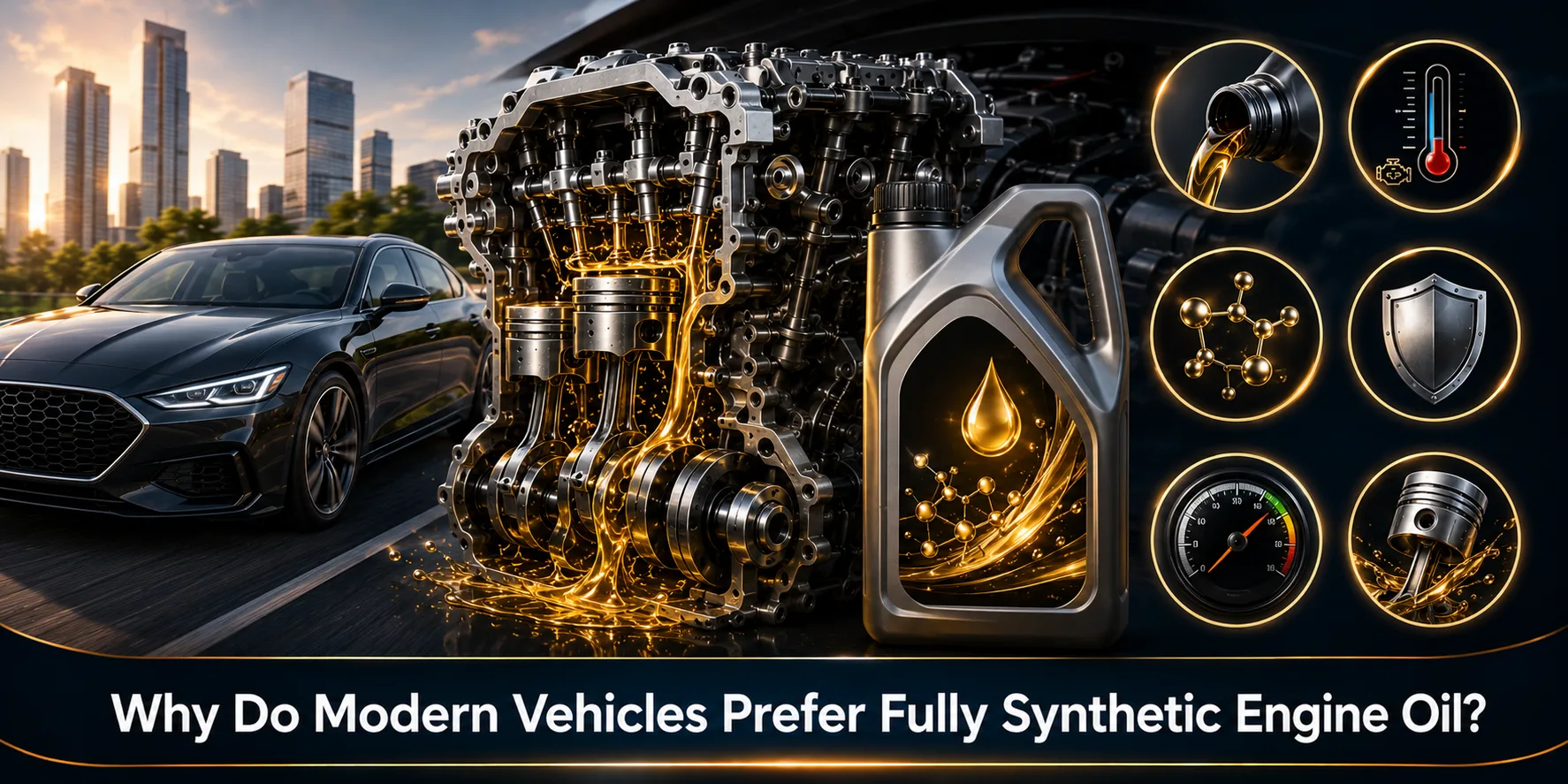
You take your vehicle to a service centre for a routine oil change, and the technician recommends fully synthetic engine oil instead of the semi-synthetic oil used previously. The price difference is noticeable, and without understanding the technical reason behind the recommendation, it can easily feel like an unnecessary upgrade rather than an engineering requirement.
Modern engines, however, operate very differently from older engine platforms. Higher combustion temperatures, turbocharged powertrains, tighter machining tolerances, direct fuel injection systems, and longer service intervals have significantly increased the demands placed on engine lubrication systems. Under these operating conditions, conventional mineral-based lubricants struggle to maintain viscosity stability, oxidation resistance, and long-term thermal protection.
This is why fully synthetic engine oil has become the preferred specification across most modern passenger vehicles. The shift is not driven by branding trends or premium positioning. It is driven by changes in engine engineering itself. Modern lubrication systems require oil capable of maintaining stable molecular performance under conditions where traditional lubricants degrade more rapidly.
This blog explains why modern vehicles increasingly depend on fully synthetic engine oil, how synthetic lubrication behaves differently under real operating conditions, and why modern engines are engineered around these lubrication characteristics.
Why Modern Engines Require Higher Lubrication Stability
Modern engines generate significantly more thermal and mechanical stress than older naturally aspirated engine configurations. Smaller displacement turbocharged engines now produce power outputs that previously required much larger engines. At the same time, emission control systems and fuel-efficiency targets have pushed engine tolerances tighter than ever before.
These operating conditions create an environment where lubrication stability becomes critical for engine protection.
Turbocharger systems, direct injection combustion, extended drain intervals, and high-pressure fuel systems all increase thermal loading inside the engine. Engine oil must now maintain stable viscosity under higher RPM ranges, elevated bearing temperatures, and longer operating cycles.
Fully synthetic engine oil performs better under these conditions because its molecular structure is engineered for greater consistency. This allows the lubricant to maintain stable film strength, resist thermal degradation, and reduce internal friction more effectively across varying operating temperatures.
Modern engines are therefore calibrated around lubrication systems capable of sustaining this level of performance consistently.
What Makes Fully Synthetic Engine Oil Different
The difference between mineral oil, semi-synthetic oil, and fully synthetic engine oil begins at the molecular level.
Several technical characteristics separate synthetic oil from conventional lubrication systems and explain why it performs more effectively in modern engines.
Uniform Molecular Structure Improves Stability
Mineral engine oil is refined directly from crude petroleum. Even after advanced refining processes, the base oil still contains molecules of varying sizes and structures. This inconsistency affects viscosity stability, oxidation resistance, and thermal performance under load.
Fully synthetic engine oil uses chemically engineered base stocks with highly uniform molecular composition. The controlled structure improves:
- thermal resistance,
- viscosity consistency,
- oxidation stability, and
- shear protection.
This molecular uniformity allows synthetic oil to maintain more predictable lubrication performance across a wide temperature range.
Better Resistance to Oxidation and Deposit Formation
Modern engines operate at higher combustion temperatures, especially turbocharged petrol and diesel platforms. Under these conditions, engine oil is continuously exposed to thermal stress and oxidation.
Mineral oils oxidise more rapidly under heat, leading to:
- sludge formation,
- varnish deposits,
- carbon accumulation, and
- viscosity degradation.
Fully synthetic engine oil resists oxidation more effectively because of its engineered base stock composition. This reduces deposit formation around:
- turbocharger bearings,
- valve train assemblies,
- oil passages, and
- piston ring zones.
The result is cleaner long-term engine operation and more stable lubrication behaviour across extended service intervals.
Why Turbocharged Engines Depend on Synthetic Oil
Turbocharged engines are one of the biggest reasons fully synthetic engine oil has become the industry standard.
Turbochargers operate under extremely high thermal and rotational stress. The turbo shaft can rotate between 100,000 and 250,000 RPM while being lubricated directly by the engine oil system.
Under these conditions, the oil must maintain stable film strength around the turbocharger bearings while resisting thermal breakdown from exhaust-side heat transfer.
Several lubrication-related problems occur when lower-grade oil is used in turbocharged engines.
High Temperature Oxidation Around Turbo Bearings
After engine shutdown, residual heat from the turbocharger continues transferring into the oil trapped around the bearing housing. Poor-quality oil oxidises under this heat and forms carbon deposits commonly known as oil coking.
These deposits restrict lubrication flow and accelerate turbocharger bearing wear.
Fully synthetic engine oil maintains higher oxidation resistance during these thermal cycles, reducing deposit formation and improving turbocharger durability.
Shear Stability Under High Rotational Speed
Turbocharger lubrication systems operate under severe shear conditions because of extremely high shaft speeds.
Synthetic oil maintains viscosity stability more effectively under these conditions. This allows the oil film to preserve proper separation between rotating surfaces, reducing wear and maintaining lubrication efficiency during sustained boost operation.
How to Identify the Correct Fully Synthetic Oil Specification
Not every synthetic oil is suitable for every engine platform.
Modern engines require lubrication systems matching manufacturer-specific technical standards.
Several specifications should always be verified before selecting engine oil.
SAE Viscosity Grade
The viscosity range recommended by the manufacturer must match the engine's operating tolerance and climate conditions.
Common grades include:
- 0W-20,
- 5W-30,
- 5W-40, and
- 0W-30.
API and ACEA Standards
Modern engine oils must meet specific industry performance standards related to:
- wear protection,
- fuel economy,
- deposit control, and
- emissions compatibility.
OEM Manufacturer Approvals
Many vehicle manufacturers specify proprietary lubrication standards for their engines.
These approvals ensure compatibility with:
- turbocharger systems,
- direct injection combustion,
- diesel particulate filters, and
- extended drain intervals.
Using oil without the correct manufacturer approval can compromise long-term lubrication performance.
Final Thoughts
Modern vehicles prefer fully synthetic engine oil because modern engine systems operate under significantly higher thermal, mechanical, and lubrication stress than older engine platforms.
The preference for synthetic oil is therefore not based on premium positioning alone. It is directly connected to how modern engines are engineered and how current lubrication systems are designed to operate under real-world conditions.