
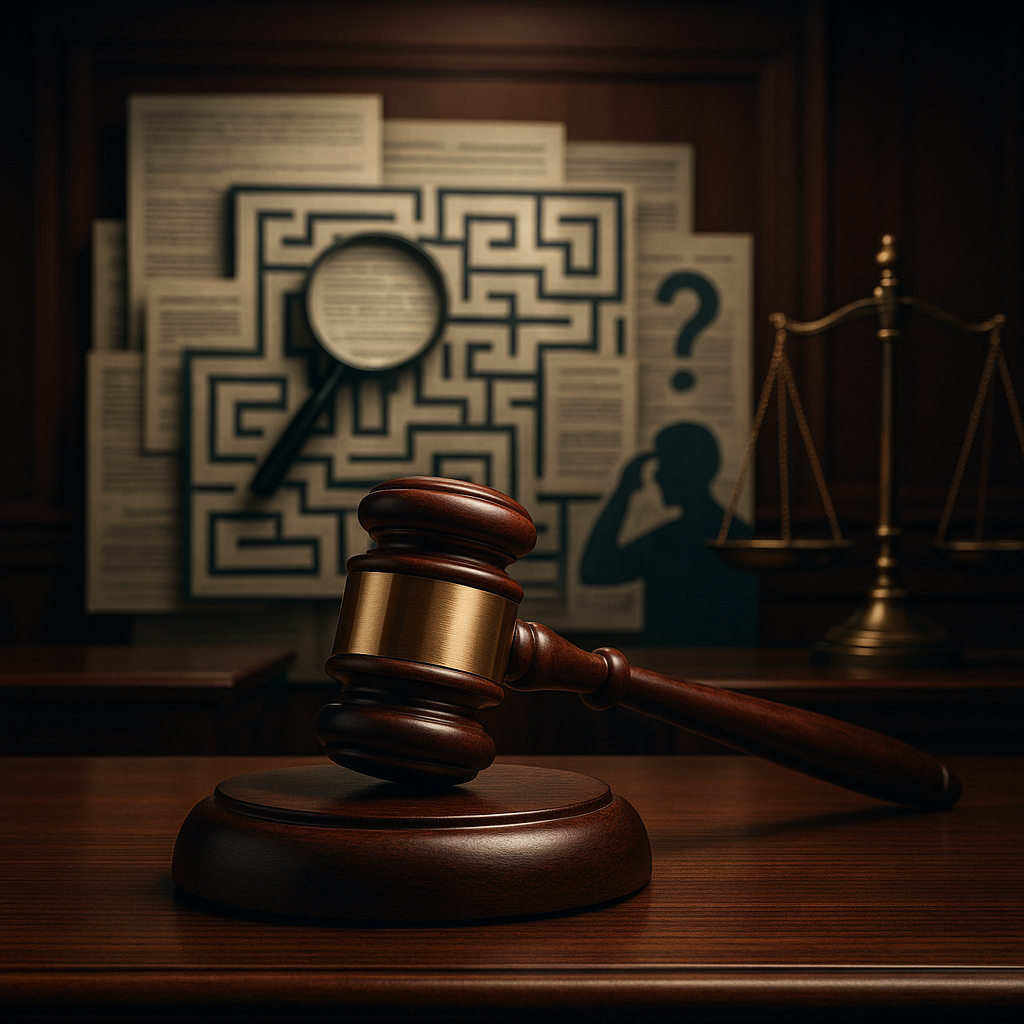
The Fragile Balance of Justice: A Closer Look at Judicial Errors
Imagine a high-profile case that has gripped the nation, its verdict eagerly awaited by millions. The courtroom drama concludes, the judge issues a ruling, but soon after, cracks begin to show. Appeals are filed, public trust wavers, and the very foundation of justice seems shaken. These moments underscore an uncomfortable truth: court rulings, despite their solemnity, are not immune to mistakes. In 2026, as legal systems worldwide strive for fairness and precision, understanding common pitfalls in court rulings remains essential for safeguarding justice.
Across jurisdictions, from civil disputes to criminal trials, errors in judicial decisions continue to surface, sometimes with profound consequences. According to recent analyses, approximately 5-10% of appellate cases involve claims of judicial errors significant enough to alter outcomes, reflecting a persistent challenge within the judiciary. These mistakes can erode public confidence and, in some cases, result in irreversible harm to individuals and society.
“Mistakes in court rulings, while often unintentional, carry the weight of human lives and societal trust. Recognizing and addressing these errors is critical for the integrity of the legal system.” – Legal scholar Dr. Helena M. Ortiz
In this comprehensive exploration, we dissect the common errors that occur in court rulings, their origins, and the 2026 landscape shaping judicial accuracy. We will also analyze expert insights and case studies to illuminate how the legal community confronts these challenges and what future reforms may hold.
Historical Context: How Judicial Errors Became a Persistent Concern
The judiciary has long grappled with the tension between human judgment and the pursuit of impartial justice. Historically, court rulings relied heavily on oral arguments and handwritten records, factors that introduced ambiguities and inconsistencies. The advent of written opinions and codified laws improved clarity but did not eliminate errors. Throughout the 20th century, landmark cases highlighted how judicial mistakes could stem from misinterpretation of evidence, bias, or procedural lapses.
In the early 2000s, the rise of forensic technology and appellate review mechanisms began to spotlight wrongful convictions and flawed rulings more starkly. The Innocence Project, for instance, brought national attention to cases where DNA evidence overturned decades-old verdicts. This era underscored the fallibility of courts and the urgent need for systemic safeguards.
Today, in 2026, courts operate within a complex ecosystem of precedent, technology, and legal standards. Yet, many underlying causes of judicial errors remain rooted in human factors and procedural vulnerabilities. The increasing caseloads and complexity of modern law further strain the system, sometimes exacerbating the risk of mistakes.
“The evolution of legal systems has been remarkable, but the human element at the core of judicial decisions means absolute perfection remains elusive.” – Justice Samuel T. Greene, retired
Common Judicial Mistakes: Analyzing the Core Fault Lines
Judicial errors manifest in diverse forms, often interlinked, but certain categories dominate the landscape. Legal experts classify these mistakes broadly into four main types:
- Misapplication of Law: Judges sometimes err by incorrectly interpreting statutes, precedents, or constitutional provisions, leading to flawed legal conclusions.
- Fact-Finding Errors: Courts may overlook or misinterpret key evidence, witness testimony, or expert reports, resulting in inaccurate factual determinations.
- Procedural Mistakes: Failures in following due process, such as improper admission of evidence or inadequate jury instructions, can undermine fairness.
- Bias and Conflicts of Interest: Conscious or unconscious prejudices affecting judicial impartiality compromise decisions.
According to a 2025 survey conducted by the National Center for State Courts, misapplication of law accounted for 42% of appellate reversals, while fact-finding errors comprised 35%. Procedural mistakes and bias made up the remaining share. These figures highlight the critical need for continuous judicial education and robust review systems.
Technological integration in courts has also introduced new challenges. For example, reliance on algorithmic risk assessments in sentencing has raised concerns about opaque decision-making processes and embedded biases. Courts must balance innovation with transparency to avoid compounding errors.
2026 Legal Landscape: Innovations and Challenges in Judicial Accuracy
This year, courts worldwide are at a crossroads. Advances in artificial intelligence, real-time data analytics, and digital case management promise unprecedented support for judges. Some jurisdictions have piloted AI-assisted legal research tools that help identify relevant precedents and flag potential inconsistencies in rulings.
However, integration has not been seamless. Critics caution against overreliance on technology, emphasizing that AI systems may replicate systemic biases or produce errors if inputs are flawed. Furthermore, ethical debates persist regarding the extent to which machines should influence judicial discretion.
Simultaneously, judicial training programs have expanded, emphasizing cognitive bias awareness, evidence evaluation, and procedural rigor. The 2026 Judicial Conference in Washington D.C. underscored these priorities, advocating for enhanced cross-disciplinary collaboration between judges, forensic experts, and data scientists.
Despite these positive trends, challenges remain:
- Backlogs and Caseload Pressures: Many courts continue to face overwhelming dockets, increasing the risk of rushed or inattentive rulings.
- Resource Disparities: Smaller jurisdictions often lack access to advanced technology and training, perpetuating inconsistent judicial quality.
- Transparency and Accountability: Calls for more open court proceedings and clearer reasoning in rulings have grown louder but face institutional resistance.
These dynamics set the stage for ongoing debates about balancing efficiency, fairness, and innovation in judicial processes.
Expert Insights and Industry Impact: Voices from the Legal Frontline
Leading jurists and scholars emphasize that while errors in court rulings cannot be eradicated entirely, systemic reforms can mitigate their frequency and impact. Professor Amina Desai, a prominent legal theorist, notes:
“Judicial errors often reflect deeper systemic issues — from training gaps to institutional culture. Addressing these root causes requires a holistic approach, not piecemeal fixes.”
Many advocates highlight the importance of appellate courts as critical correctives, but they also warn against overburdening these bodies, which can delay justice further. The balance between finality and accuracy remains delicate.
Additionally, the legal profession at large is adapting to these realities. Law firms, public defenders, and prosecutors increasingly collaborate with forensic and technological experts to prepare stronger cases, anticipating potential judicial pitfalls. This multidisciplinary approach enhances the quality of legal arguments but also raises concerns about access to justice for under-resourced parties.
The private sector has responded with innovative products designed to assist judges, such as AI-driven legal analytics platforms and virtual courtrooms equipped with real-time transcription and evidence visualization tools. These solutions promise to reduce human error by supplementing judicial capacity.
Case Studies: When Court Rulings Faltered and Lessons Learned
Examining specific rulings reveals how common mistakes play out in practice and their ramifications. One notable 2025 case in the U.S. federal system involved a sentencing decision where a judge misapplied a recent Supreme Court precedent relating to mandatory minimums. The error led to a harsher sentence than legally warranted, which was later overturned on appeal.
In another example from the European Court of Justice, a ruling on data privacy was criticized for factual inaccuracies regarding the technical capabilities of data anonymization, undermining the decision’s credibility and prompting calls for better expert involvement.
These cases illustrate several key takeaways:
- Judicial reliance on up-to-date legal knowledge and expert input is critical.
- Transparent explanation of rulings enhances public trust and facilitates appellate review.
- Procedural safeguards, such as clearer jury instructions and evidentiary standards, prevent avoidable errors.
For further insight on how court rulings influence societal frameworks, readers may consult How Court Rulings Shape Society: Power, Precedents, and Policy Impact and How a Landmark 2026 Court Ruling is Reshaping Legal Precedents and Policy.
Looking Ahead: Strategies to Minimize Judicial Errors and Strengthen Justice
As judicial systems evolve, several actionable strategies emerge to curtail common mistakes. These include:
- Enhanced Judicial Training: Ongoing education focused on legal updates, cognitive biases, and technological tools.
- Technological Integration with Oversight: Deploying AI and analytics cautiously, ensuring transparency and human oversight.
- Improved Procedural Frameworks: Standardizing practices for evidence handling, jury instruction, and opinion writing.
- Robust Appellate Review: Streamlining appeals processes to address errors efficiently without excessive delay.
- Greater Transparency: Publishing detailed judicial reasoning and encouraging public engagement to build trust.
Legal systems that embrace these reforms while respecting judicial independence are more likely to deliver accurate, fair rulings consistently. The journey toward error-resistant justice is ongoing but vital for democracy and rule of law.
“The pursuit of perfect justice is aspirational, but through vigilance and innovation, courts can approach that ideal more closely than ever.” – Chief Justice Elena R. Morales, 2026
For a detailed breakdown of judicial challenges and reforms, see Unpacking Court Rulings: Essential Insights for Legal Clarity and Impact and the critical examination in When Justice Stumbles: Unpacking Common Mistakes in Court Rulings.
In conclusion, while no judicial system is infallible, recognizing and addressing the common mistakes in court rulings is imperative for justice to prevail. As courts embrace new tools and reforms in 2026, the hope is that error rates will decline, trust will deepen, and the law will serve its purpose more effectively than ever before.