By Dr. Akshay Kolluri, Board-Certified Pediatric Dentist
One of the most common questions parents ask is how baby teeth impact permanent teeth. And whether baby teeth really matter if they eventually fall out.
Though baby teeth are temporary, the role they play in a child's life is not. Baby teeth enable kids to chew, talk, and smile, maintain the right amount of space for permanent teeth, and help them erupt properly. Baby teeth play an important role in guiding the development and eruption of permanent teeth. If we do not take care of baby teeth, the connection between baby teeth and adult teeth can cause problems later on.
At One Tooth Pediatric Dental, the team helps families understand how early dental health can influence long-term oral development. They help families prevent problems early, support healthy development, and understand how baby teeth influence long-term oral health. They also make sure families know what is going on. If we find problems with baby teeth early, they are a lot easier to fix.
Why Do Baby Teeth Matter If They Fall Out?
Baby teeth provide the foundation for healthy oral development. They help children chew comfortably, support speech development, and maintain the space needed for permanent teeth to erupt properly.
- Chewing and Nutrition: Comfortable teeth allow children to eat a greater variety of foods without reducing their intake because of pain when they chew.
- Speech Development: Front teeth and tongue position work together to help children learn and pronounce sounds clearly.
- Space Guidance: Baby teeth maintain the correct space for erupting permanent teeth.
- Confidence and Comfort: Without the burden of tooth pain, swelling, and sensitivity, a child is happier to smile, sleep, learn, and play. Early positive dental experiences help children feel comfortable with dental care as they grow.
How Do Baby Teeth Impact Permanent Teeth?
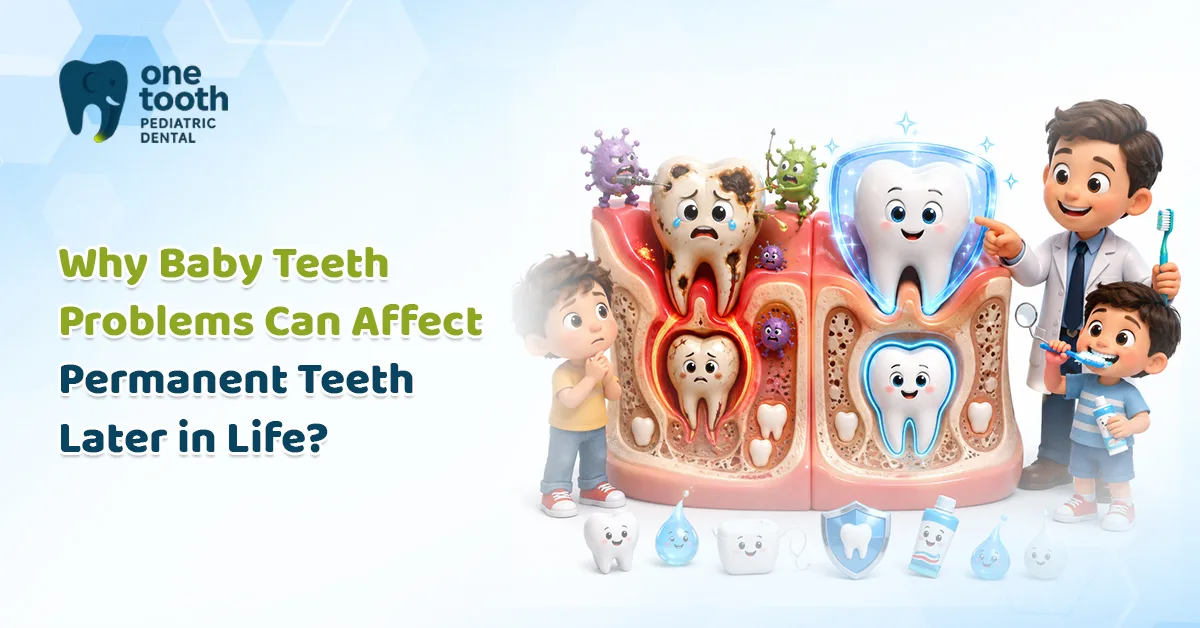
Permanent teeth do not magically appear one day. Permanent teeth begin developing beneath the gums years before they erupt into the mouth. Baby teeth help guide the eruption of permanent teeth and support proper jaw development. They maintain the space needed for permanent teeth to erupt properly.
When baby teeth issues lead to permanent teeth problems:
- Early loss of a baby tooth causes shifting of adjacent teeth into the vacant space.
- Decay that is not treated continues to go deeper till it causes infection around the root of the tooth.
- Trauma to the tooth affects the baby tooth and also damages the developing permanent tooth in the area.
- Heavy cavities cause pain while eating and alter the child's bite pattern.
- Enamel damage in baby teeth raises the chances of tooth decay and hurt in baby teeth.
It is not always the case that a baby tooth problem will lead to a permanent tooth problem. A lot of times, through early intervention and good management, major permanent teeth formation issues are avoided. The main thing is not to wait until discomfort is felt.
What Are the Tooth Development Stages Parents Should Understand?
Knowing about the tooth development stages helps families understand why regular dental visits are important. Most children start getting baby teeth during infancy. After that, the baby teeth come in and fall out through the toddler years. At age six, many children start the mixed dentition stage in which baby teeth and permanent teeth are both in the mouth. The mouth is in a state of flux during these years.
Key stages to note:
- Gum and Early Infant Stage: Oral care should be considered as soon as teeth start to appear; it is the gums, feeding habits, and even the first bacteria exposure that will determine later routines.
- First Tooth Stage: Brushing should be initiated as soon as the first tooth appears, with a small toothbrush and a grain-of-rice-sized amount of fluoride toothpaste.
- Toddler and Preschool Stage: Baby molars are erupting; chewing is forming; cavity risk is rising because back teeth have deep grooves which trap food.
Understanding these stages is one of the reasons why early pediatric dental visits are crucial. Any developmental issues can be managed before a minor problem turns into a major one.
What Baby Teeth Problems Should Parents Watch For?
Most baby tooth problems start silently. Many children do not complain about dental problems until pain develops. Parents should watch for changes in their kids' behavior, and if they seem uncomfortable a lot.
Some common signs of tooth problems are:
- White or chalky spots may be the first signs of enamel damage.
- Early enamel damage may occur before a visible cavity develops.
- Brown or black spots on teeth can mean that decay may be progressing.
These problems can also be caused by things like food or drinks that stain the teeth. If the tooth enamel is breaking down, a pediatric dentist should evaluate the area
- If a child has a toothache when they eat something, brush their teeth, or drink water, the tooth needs to be checked by a pediatric dentist
- If the area around a baby tooth gets swollen, it could be a sign of a tooth infection.
- Bad breath that does not go away can be caused by food getting stuck between the teeth, tooth decay, or gum problems with the teeth.
- If a child avoids crunchy, cold, or chewy foods, tooth sensitivity may be present.
If a baby tooth falls out early, a dentist should take a look at the teeth. Early treatment can relieve discomfort and support healthy dental development.
How One Tooth Pediatric Dental Supports Growing Smiles
At One Tooth Pediatric Dental, baby teeth are viewed as a crucial element of a child's overall oral development. Dr. Akshay Kolluri and the team focus on prevention, education, and early treatment to support healthy oral development as children grow in Anne Arundel County and surrounding areas. Families receive clear explanations about recommended treatment, why it matters, and how each step supports healthy dental development at restorative dental care nearby Anne Arundel.
Schedule a visit with One Tooth Pediatric Dental to protect baby teeth, support permanent teeth, and receive gentle pediatric guidance for every stage of a child’s smile.