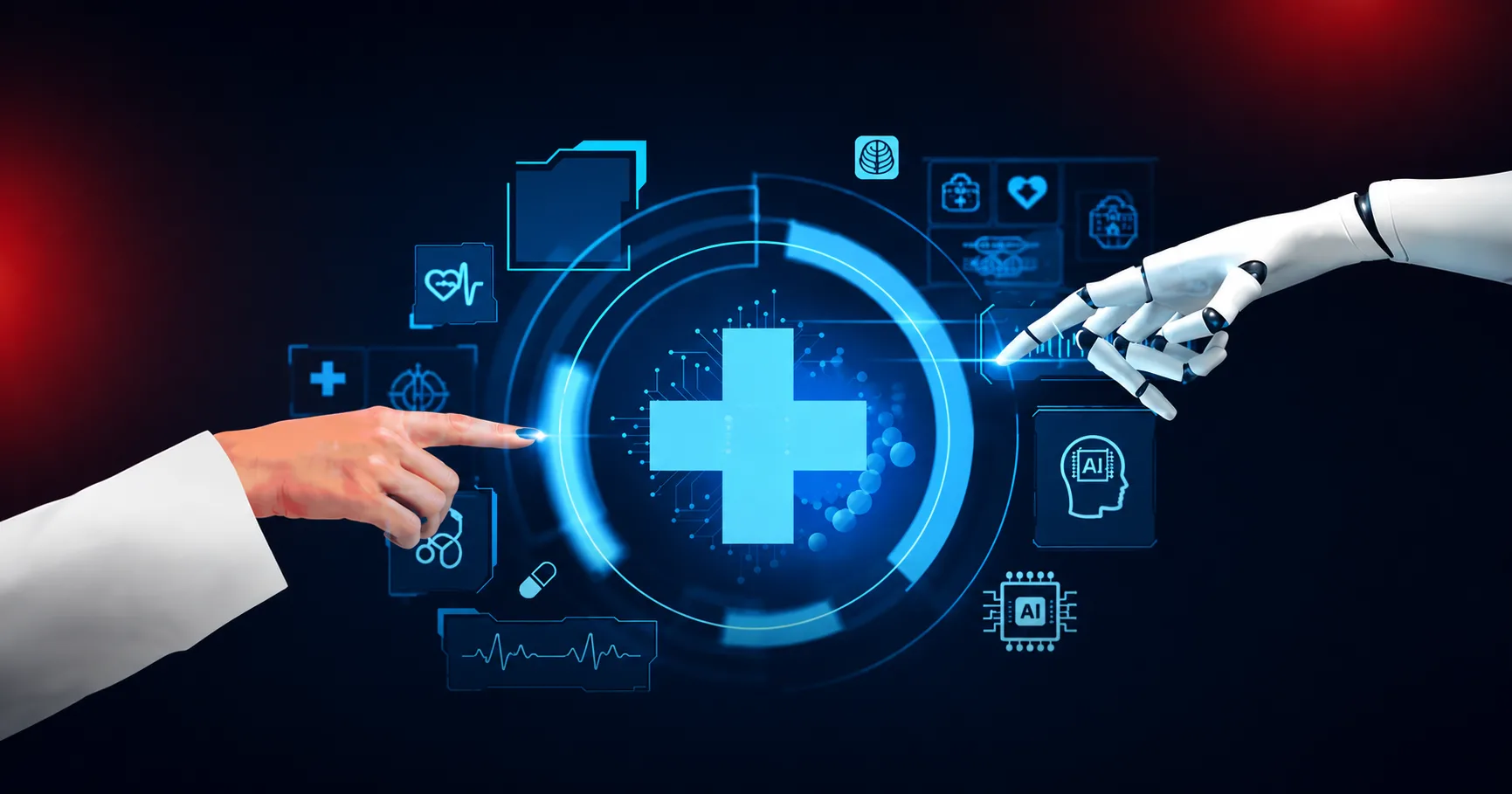
Healthcare is rapidly evolving as artificial intelligence (AI) helps providers move from reactive treatment to proactive and preventive care. By combining machine learning, predictive analytics, and clinical data, AI enables healthcare professionals to detect health risks earlier, improve patient outcomes, and optimize hospital operations.
Rather than replacing doctors and medical staff, AI acts as an intelligent assistant that enhances decision-making, reduces administrative burdens, and supports more personalized patient care. As healthcare systems continue to embrace digital transformation, AI is becoming an essential technology for delivering efficient, accurate, and patient-centric services.
How AI Is Transforming Preventive Healthcare
AI-powered technologies are helping healthcare organizations improve patient care in several important ways, including:
- Early disease detection through medical image analysis
- Predictive analytics for identifying health risks
- Personalized treatment recommendations
- Remote patient monitoring using wearable devices
- Clinical workflow automation
- AI-assisted medical documentation
These innovations allow clinicians to spend more time with patients while reducing repetitive administrative tasks. AI also helps healthcare teams analyze large volumes of medical data quickly, enabling faster responses to potential health concerns before they become critical.
The Growing Importance of Clinical Intelligence
Clinical intelligence combines AI, healthcare data, and predictive analytics to support smarter medical decisions. By analyzing patient records, diagnostic reports, laboratory results, and real-time health information, healthcare organizations can identify patterns that improve diagnosis, treatment planning, and operational efficiency.
Organizations exploring intelligent healthcare technologies can learn more about Healthcare AI & Clinical Intelligence Systems, which demonstrate how AI supports secure, scalable, and data-driven healthcare innovation while improving both patient outcomes and clinical performance.
Benefits of AI in Modern Healthcare
Healthcare providers are increasingly investing in AI because it offers measurable benefits, such as:
- Improved diagnostic accuracy
- Faster clinical decision-making
- Better patient engagement
- Reduced operational costs
- Enhanced hospital efficiency
- More personalized patient experiences
- Support for preventive healthcare strategies
These advantages help healthcare organizations deliver higher-quality care while addressing growing patient expectations and resource challenges.
Challenges Healthcare Organizations Must Address
Although AI offers significant opportunities, successful implementation requires careful planning. Healthcare organizations should focus on:
- Protecting patient privacy and sensitive health information
- Complying with regulations such as GDPR and HIPAA
- Ensuring transparency in AI-assisted recommendations
- Integrating AI with Electronic Health Record (EHR) systems
- Maintaining human oversight in clinical decision-making
Building trust through responsible AI adoption is essential for long-term success.
The Future of AI in Healthcare
AI will continue to play a central role in the future of healthcare. As technology advances, healthcare providers are expected to adopt more intelligent solutions for diagnostics, clinical decision support, remote monitoring, and personalized medicine. Organizations that embrace secure, ethical, and scalable AI technologies today will be better positioned to improve patient outcomes, increase operational efficiency, and deliver accessible, high-quality healthcare for future generations.