Beanies are a common choice for businesses that need cold-weather headwear for staff, retail, or promotional giveaways. Buying wholesale beanies in bulk involves different considerations than a single retail purchase, from fabric weight to knit style to branding method. This article covers what businesses should review before placing a bulk order, along with how custom beanies fit into a broader uniform or merchandise plan.
Why Businesses Order Beanies in Bulk
Beanies work well for a wide range of industries, including retail, hospitality, construction, and outdoor recreation. Unlike structured caps, a beanie fits most head sizes without needing an adjustable closure, which makes it a practical option for businesses ordering for a full staff or a large event giveaway. Because beanies are worn seasonally, many businesses time their orders ahead of colder months to have stock ready before demand picks up.
Ordering wholesale beanies also helps a business maintain consistency across a large group. When staff or event attendees receive the same knit style and color, it creates a uniform look that would be harder to achieve through smaller, separate purchases over time.
Types of Knit Styles
Cuffed Beanies
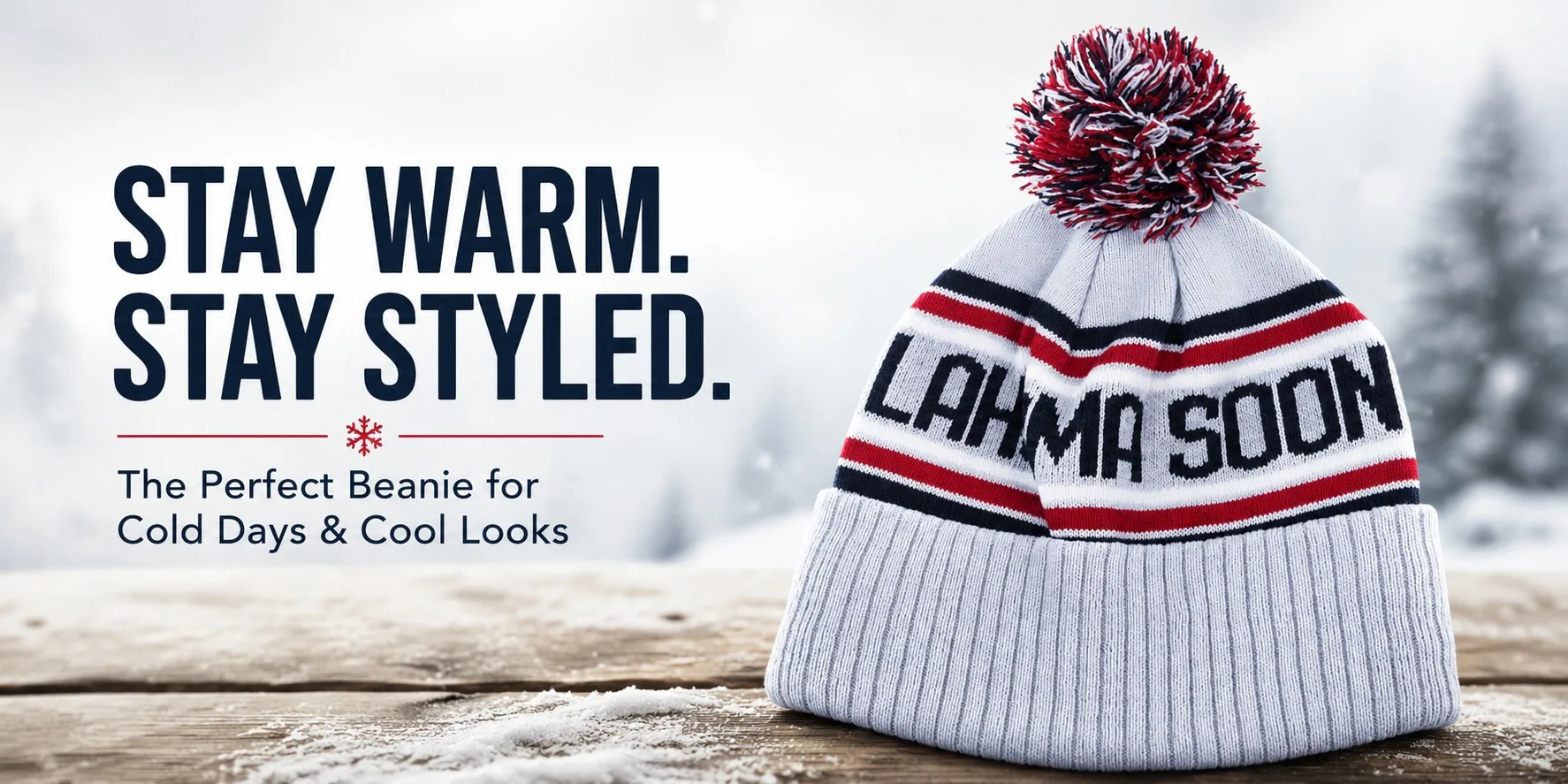
Cuffed beanies have a folded band at the bottom, which adds thickness and warmth around the ears and forehead. This style is common in colder climates and tends to hold its shape well after repeated wear, since the folded layer reinforces the edge.
Uncuffed or Fisherman Beanies
Uncuffed beanies sit closer to the head without a folded band, giving a slimmer profile. This style is often chosen for a more casual or streetwear look and works well in milder climates where heavy insulation is not needed.
Slouch Beanies
Slouch beanies have extra fabric at the top, creating a looser, draped fit. This style is popular in retail and casual branding but is used less often in workwear settings, where a closer fit is usually preferred for safety and practicality.
Material Considerations for Wholesale Beanies
Acrylic is one of the most common materials used at scale because it holds color well, resists shrinking, and costs less to produce compared to natural fibers. Wool and wool blends offer more warmth and a different texture but require more careful washing and tend to be heavier.
Fleece-lined beanies add an inner layer for extra warmth, which is useful for businesses in colder regions or for staff working outdoors for extended periods. This lining adds bulk to the hat, so businesses should confirm sizing carefully if fleece-lined options are part of a bulk order.
Knit density also affects durability. A tighter knit generally holds its shape longer and resists stretching out after repeated wear, while a looser knit may be softer but wears out faster under regular use.
Custom Beanies for Branding
Custom beanies allow a business to add a logo through embroidery, woven patches, or, in some cases, a knit-in design where the logo becomes part of the fabric pattern itself. Embroidery is the most common method and holds up well over time, though very small or detailed logos can lose clarity once stitched into a knit surface.
When ordering custom beanies, businesses should confirm placement, typically on the cuff or front panel, since beanies have less flat surface area than a structured cap. A design that works well on a baseball cap may need to be resized or simplified to translate clearly onto a beanie.
Color matching also requires attention. Yarn dye lots can vary slightly between production runs, so requesting a sample against brand color guides before a full order helps avoid inconsistency across a large batch.
Sizing and Fit for Bulk Orders
Most beanies are designed as one size fits most, using stretch-knit fabric to accommodate a range of head sizes. However, beanies can still vary in depth and stretch depending on the manufacturer, so ordering a sample ahead of a bulk purchase is a practical step. A beanie that fits too loosely may slip during physical work, while one that fits too tightly can cause discomfort over a full shift.
Businesses supplying beanies to a mixed group, including staff with different hair volumes or head shapes, may want to test a sample across a few people before committing to a large production run.
Working With a Supplier
Sourcing wholesale beanies from an experienced supplier can simplify the ordering process, particularly for businesses new to bulk headwear. Suppliers such as Montauk Hat typically offer a range of beanie styles along with customization options such as embroidery, which allows a business to compare knit samples and confirm color and placement before a full order is produced.
Lead times are worth confirming in advance, especially for businesses planning around a seasonal launch or a specific event date. A supplier that provides a clear production timeline, from sample approval through shipping, reduces the risk of stock arriving after demand has already started.
Care and Storage Considerations
Acrylic and wool blend beanies generally hold up well with gentle machine washing or hand washing, depending on the fabric. Businesses distributing beanies to staff or customers may want to include basic care instructions, since improper washing can cause shrinking or a loss of shape over time.
Storage also affects appearance before distribution. Beanies stored in tightly packed boxes for long periods can develop creases or lose their shape, so loosely packed storage in a dry space helps keep a full batch in better condition until it is handed out.
Timing a Bulk Order
Demand for beanies tends to rise sharply once colder weather arrives, which can strain production schedules for suppliers handling many orders at once. Businesses that place a bulk order early in the fall, before peak season, generally have more flexibility around knit style, color availability, and lead time. Waiting until closer to winter can mean longer waits or limited stock in certain colors or fabric weights.
Event-based orders follow a similar logic. Businesses planning giveaways tied to a specific date, such as a trade show or seasonal promotion, benefit from building in extra time for sample approval and production, rather than ordering close to the event itself.
Common Mistakes to Avoid
Ordering without a fabric sample is one of the more frequent issues in bulk beanie orders. Photos or product descriptions do not always reflect actual knit density or fabric weight, and a business may find the finished batch feels thinner or heavier than expected. Requesting a physical sample before a full order helps confirm the fabric matches what is needed.
Another common issue is choosing a knit style based on appearance alone without considering the climate or use case. A slouch-style beanie may look appealing for retail merchandise but may not suit outdoor staff who need a closer, more secure fit during physical work.
Conclusion
Buying wholesale beanies in bulk involves more decisions than a single retail purchase, from knit style and material to sizing and branding method. Custom beanies add further considerations around logo placement and color matching, both of which benefit from a sample review before full production. Businesses that request samples, confirm sizing across a range of head shapes, and work with an experienced supplier are better positioned to receive a consistent batch suited to their staff, customers, or event needs.