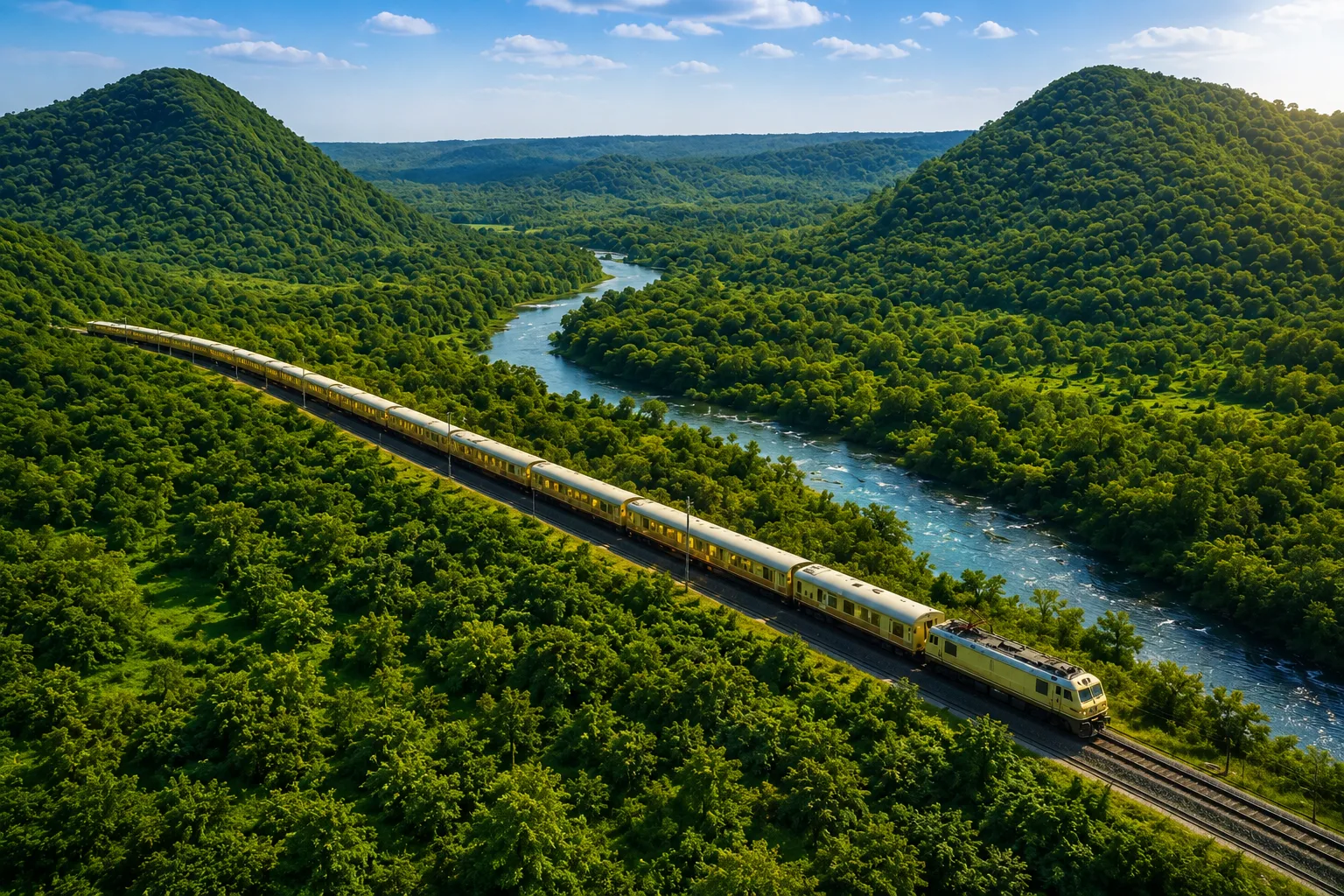
Most holidays ask travellers to move repeatedly between hotels, vehicles and attractions. Suitcases are packed in the morning, transferred into a car, carried into another property and opened again for a brief stay. Even a thoughtfully planned itinerary can begin to feel fragmented when every new destination requires another checkout, journey and arrival procedure.
A royal train reverses this relationship. The accommodation travels with the guest while cities, landscapes and historical regions appear beyond the window. Travellers return to the same cabin after each day’s exploration, recognise the same hospitality team and continue the journey without repeatedly rebuilding their temporary home.
This difference changes more than transportation. It affects the rhythm, emotion and continuity of the entire holiday.
The Journey Is No Longer Empty Time
In conventional travel, the hours between two destinations are frequently treated as a necessary inconvenience. Travellers wait at airports, navigate traffic or spend long periods inside a vehicle while anticipating the next hotel. The journey consumes time but contributes relatively little to the holiday.
On a luxury train, movement becomes part of the experience. Guests can dine, rest, converse and watch the landscape while travelling toward the next destination. There is no clear boundary between transportation and hospitality because both happen simultaneously.
A railway platform, changing scenery or evening departure can become as memorable as a monument. The traveller is not merely being transferred; the journey itself remains active and emotionally connected to the itinerary.
One Cabin Creates Continuity Across Several Destinations
Repeated hotel changes can make a multi-city holiday physically demanding. Guests must monitor luggage, remember room numbers, adjust to unfamiliar layouts and repeatedly learn how each new property functions.
A train cabin provides continuity. Travellers unpack, organise their belongings and return to the same private space after every destination. The view changes, but the personal environment remains familiar.
This consistency can be particularly valuable for couples, mature travellers and guests visiting India for the first time. They can experience several cities without repeatedly managing the practical disruptions normally associated with a long itinerary.
The cabin becomes more than accommodation. It becomes a private point of reference moving through the broader journey.
Every Morning Introduces a Different Destination
In a stationary hotel, guests wake up in the same surroundings throughout their stay. On a royal train, morning can introduce a new city, landscape or historical chapter.
One day may begin near the architectural heritage of Jaipur, while another opens toward the landscapes associated with Sawai Madhopur. Later stages of the journey introduce Chittorgarh, Udaipur, Jaisalmer, Jodhpur, Bharatpur and Agra before returning to New Delhi.
The official route is structured as a seven-night, eight-day journey from New Delhi through major destinations in Rajasthan and onward to Agra. This route allows guests to encounter royal architecture, wildlife landscapes, desert regions, lakes, forts, cultural traditions and Mughal heritage within one continuous experience. Official route and journey information
The Train Connects Places Through a Shared Story
A multi-city itinerary can sometimes feel like a collection of unrelated stops. A royal train has the ability to create a narrative between them.
Rajasthan’s princely histories, architecture, artistic traditions and landscapes develop gradually across the route. Jaipur introduces planned royal urbanism, Chittorgarh brings the memory of Rajput resistance, Udaipur reveals a landscape shaped by lakes and palaces, and Jaisalmer changes the visual world through golden sandstone and desert surroundings.
Jodhpur adds another expression of Rajput identity, Bharatpur introduces important natural heritage, and Agra extends the journey into Mughal history. The train connects these destinations physically, but thoughtful interpretation allows travellers to understand how they differ and relate.
The itinerary becomes a moving introduction to several layers of Indian history rather than a checklist of famous attractions.
Dining Continues the Journey Indoors
Food aboard a luxury train serves a practical function, but it can also connect travellers with the regions they are crossing. Meals create daily pauses in which guests gather, discuss what they have seen and prepare for what comes next.
The official train features dedicated restaurant spaces and presents dining as part of its wider royal hospitality experience. Cuisine, table service and interior atmosphere help preserve continuity between the destinations outside and life aboard the train.
Breakfast may introduce the day’s excursion, while dinner allows travellers to reflect after returning. Guests who began the journey as strangers may gradually recognise one another, exchange photographs and compare impressions of each destination.
This social continuity is difficult to reproduce during a conventional itinerary where travellers repeatedly change hotels and dining environments.
Hospitality Becomes Familiar Over Time
Service during a short hotel stay may last only one or two nights. On a week-long rail journey, guests interact with the hospitality team repeatedly. Staff members begin to understand preferences, schedules and individual requirements.
This familiarity can make assistance feel more personal. Guests know whom to approach, while the service team gains a clearer understanding of dietary needs, routines and comfort expectations.
The relationship does not need to become intrusive. Effective luxury hospitality often works quietly: cabins are prepared, meals remain coordinated, excursion transitions are communicated and guests receive support without repeatedly explaining their needs.
The train’s official website describes royal hospitality, fine cuisine, elaborate interiors and cabin experiences as central parts of the journey. Official train experience
The Cabin Must Balance Romance With Practicality
Royal train travel carries an atmosphere of nostalgia, but travellers should still evaluate the cabin as a functional living space. Railway accommodation follows different spatial conditions from a conventional hotel room.
Guests should review the selected cabin category, sleeping arrangement, storage, bathroom configuration and occupancy before booking. Packing thoughtfully becomes important because excessive luggage can reduce usable personal space.
The official website currently describes a combination of Deluxe, Suite, Super Deluxe and Presidential Suite cabin categories inspired by Rajasthan’s dynastic heritage. Travellers should confirm the latest configuration, availability and applicable tariff directly before reservation because operational details can change.
Excursions and Train Life Need to Work Together
A luxury train itinerary contains two connected experiences: time aboard the train and time exploring destinations. If excursions become too rushed, guests may return exhausted. If too little time is spent outside, the historical route loses its value.
The most satisfying journey balances guided exploration with meals, rest and quieter periods aboard. Travellers should understand that the itinerary can involve early starts, transfers, walking and changing weather conditions.
Comfortable footwear, appropriate clothing, sun protection and any prescribed medication should remain readily accessible. Guests with mobility requirements should discuss them before booking so that the current excursion arrangements can be evaluated realistically.
Windows Create Memories That Cannot Be Scheduled
Some of the journey’s most personal moments happen without appearing as formal itinerary items. A traveller may wake briefly and notice a quiet station, watch agricultural landscapes change through the afternoon or see the colours of the desert deepen before evening.
These moments are valuable because they are not staged. They reveal India between its famous monuments: towns, fields, railway communities and transitions in geography.
The window turns travel time into observation. Guests begin to understand distance and regional change in a way that air travel cannot provide. The country is not reduced to a series of isolated arrivals; it remains visible throughout the movement between them.
Why the Official Source Matters
Luxury trains attract considerable international interest, which means travellers may encounter many websites, agents and similarly branded pages. Information about departures, tariffs, cabins and offers can change, so the source must be verified before payment.
The Official Website of Palace on Wheels operates on the Rajasthan government domain and provides access to booking enquiries, itinerary information, cabin details, tariff pages, offers, policies and official contact channels.
Travellers should use this government website to verify current information even when obtaining assistance from an authorised sales representative. They should confirm the recipient, payment process, cancellation policy and booking documents before transferring money.
A Moving Hotel Requires a Different Travel Mindset
Guests who approach a royal train as a conventional hotel on tracks may miss much of its character. Railway movement can create sounds and sensations that are absent from a stationary property. Cabin space is intentionally designed within the physical dimensions of a train, and the daily rhythm follows departures, arrivals and excursions.
These characteristics are not imperfections to be hidden; they are central to the experience. The traveller is living inside a continuing journey rather than returning to a building that remains fixed.
Flexibility also matters. Railway operations, local conditions or unexpected circumstances can influence timing. Guests who remain open to the nature of rail travel are more likely to appreciate its distinctive pleasures.
A Historic Train With a Continuing Identity
The official website states that the train was launched in 1982 as a joint initiative involving the Rajasthan Tourism Development Corporation and Indian Railways. Its concept drew inspiration from the royal background associated with the personal coaches of former rulers. Official history
That history gives the experience a cultural identity beyond modern luxury. Interiors, cabin themes and hospitality attempt to interpret Rajasthan’s royal heritage within a functioning contemporary journey.
The train should not be understood as a museum reproduction. It is an operating hospitality experience that uses historical inspiration to shape how guests encounter present-day India.
Understanding Its Place in Global Luxury Rail Travel
Luxury trains around the world interpret geography and heritage differently. Some are known for mountain landscapes, others for historic routes or elaborate onboard design. India’s royal rail experience is distinguished by the density of cultural destinations connected within its itinerary.
The Luxury Train in The World travel category is not defined only by expensive interiors. Its deeper value comes from combining transportation, accommodation, dining, service and access to significant places in one coherent journey.
The official site also reports that the train received the top position in Condé Nast Traveler’s 2024 Readers’ Choice Awards in its stated category. Travellers should interpret recognition as one reference point while still reviewing the itinerary, cabin and practical requirements according to their own expectations.
Final Thoughts
A royal train journey changes the relationship between movement and rest. Guests do not repeatedly leave their accommodation behind; they carry it across landscapes, cities and historical regions. The cabin becomes familiar, hospitality develops continuity and the window keeps the journey visible even when no excursion is taking place.
The experience is not simply about reaching Jaipur, Udaipur, Jaisalmer or Agra. It is about understanding what happens between these destinations and how each new morning becomes part of one continuous story.
When transportation stops feeling like lost time and begins contributing to the memory of the holiday, the train achieves something a conventional itinerary rarely can: it turns the space between destinations into a destination of its own.