Starting music lessons can be exciting, but beginners sometimes don't know what they are supposed to learn first.
Should they memorize songs? Learn to read music? Practice scales? Study music theory? Work on technique?
The answer depends on the instrument and the student, but beginners generally benefit from developing a few fundamental skills before trying to move too quickly into advanced material.
A strong foundation makes later learning easier. It also helps students understand what they are playing rather than simply copying movements or memorizing individual songs.
Begin With Familiarity With the Instrument
The first step is becoming comfortable with the instrument itself.
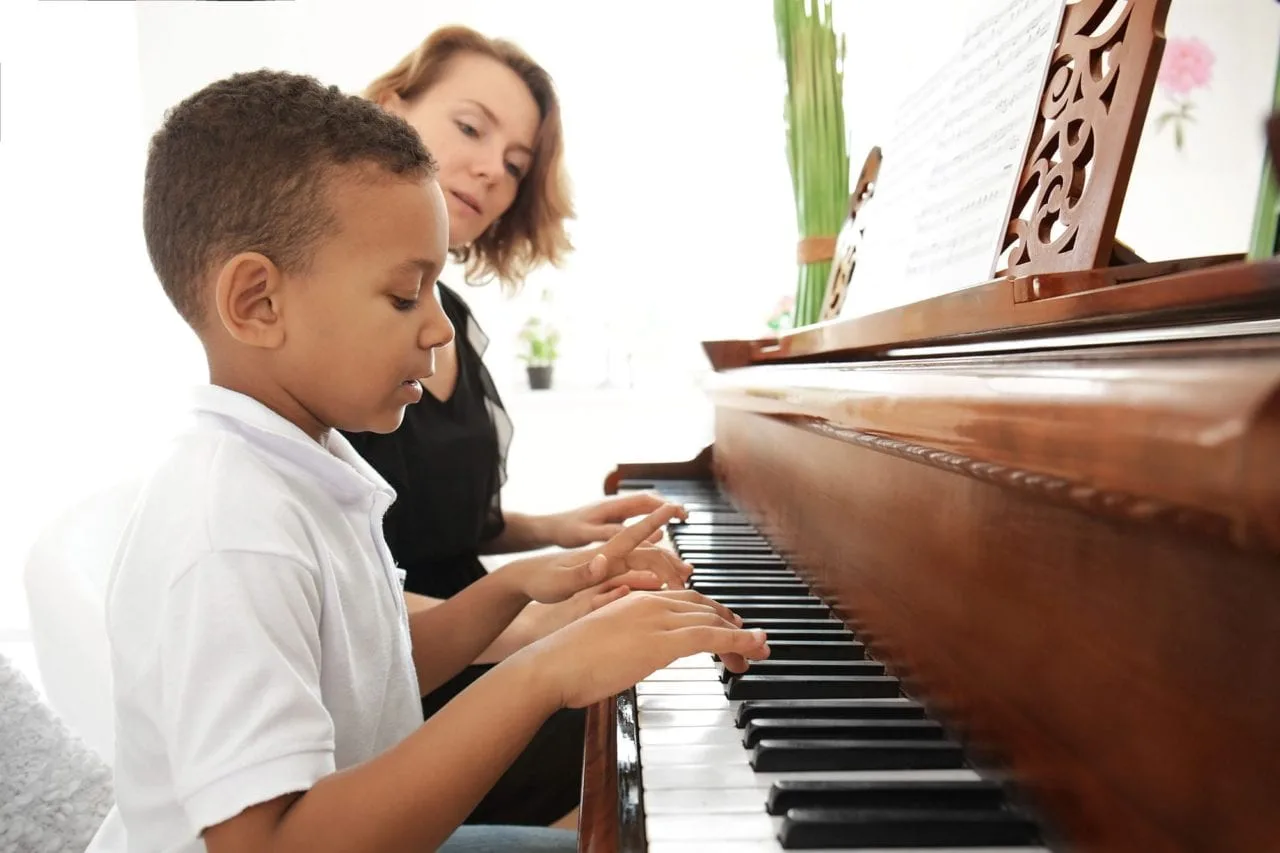
A piano student needs to understand the keyboard layout and basic hand position. A guitarist needs to learn how to hold the instrument and use a pick or fingers comfortably. A drummer needs to understand basic setup and stick technique.
These things may seem simple, but they establish habits that can affect playing for years.
Beginners should not feel pressured to master everything immediately. Early lessons are about becoming comfortable and building a foundation.
Learn Basic Technique
Technique is one of the most important parts of early music education.
Good technique helps students play more efficiently and reduces the risk of developing habits that become difficult to correct later.
For example, a beginner pianist may work on posture, hand position, and relaxed movement. A guitarist may learn how to form chords without unnecessary tension. A drummer may focus on controlled stick movement and consistent timing.
The goal isn't perfection.
It is learning how to use the instrument comfortably and correctly from the beginning.
Understand Rhythm
Rhythm is at the heart of almost every type of music.
A student can play the correct notes but still sound disconnected from the music if the timing is inconsistent.
Beginners should therefore spend time understanding beats, counting, note values, rests, and simple rhythmic patterns.
Clapping rhythms, counting aloud, playing along with a metronome, or listening carefully to music can all help develop timing.
For students learning drums, rhythm naturally becomes a major part of the early learning process. But it is equally important for piano, guitar, singing, violin, and other instruments.
Start Reading Music When Appropriate
Music reading can initially seem intimidating.
There are symbols, notes, rhythms, key signatures, dynamics, and other markings to understand.
The good news is that beginners don't need to learn everything at once.
A teacher can introduce music reading gradually, beginning with simple notation and connecting what students see on the page with what they hear and play.
For piano students in particular, learning to read music can provide a useful foundation for learning new pieces independently later.
This is one reason structured piano lessons in Toronto can be valuable for beginners who want to develop both practical playing skills and music-reading ability.
Learn Simple Songs
Technical exercises are important, but beginners also need music that feels rewarding.
Learning a simple song gives students an opportunity to apply the skills they have been practicing.
It also provides a clear sense of progress.
A student who spends several lessons learning a new technique may become much more motivated when that technique allows them to play a recognizable melody or song.
The song does not need to be difficult.
For beginners, playing something simple successfully can be more valuable than struggling through something far beyond their current level.
Introduce Music Theory Gradually
Music theory explains why music works the way it does.
Beginners can gradually learn concepts such as notes, scales, chords, keys, intervals, rhythm, and musical structure.
However, theory works best when it connects to actual music.
For example, learning about chords becomes more meaningful when a student can immediately hear those chords in a song. Understanding rhythm becomes easier when the student can apply it while playing.
The goal should be to make theory useful rather than treating it as a separate academic subject.
Develop Listening Skills
Good musicians don't only play.
They listen.
Beginners can benefit from learning to recognize differences in pitch, rhythm, dynamics, tempo, and musical expression.
Teachers can ask students to listen to a short musical phrase and identify what they hear. Students can also listen to recordings of pieces they are learning.
Over time, careful listening helps musicians become more aware of their own playing.
Build a Realistic Practice Routine
One of the biggest challenges for beginners is knowing how much to practice.
More practice isn't automatically better if the student is tired, distracted, or repeating mistakes without understanding them.
A short, focused practice session can be more useful than a long session without a clear purpose.
Beginners can divide practice into simple sections:
- Warm up with basic exercises.
- Review something learned previously.
- Work on a new skill.
- Practice a challenging section slowly.
- Finish by playing something enjoyable.
The exact routine will depend on the instrument and the student's age.
Consistency is usually more important than trying to complete an unrealistic number of practice hours.
Don't Compare Progress With Other Students
Two students can begin music lessons at the same age and progress at very different speeds.
One may quickly learn songs but struggle with music reading. Another may understand theory quickly but need more time to develop physical coordination.
That is normal.
Learning music involves several different skills, and people develop those skills at different rates.
Comparing students too closely can create unnecessary pressure. A better approach is to compare the student with their own previous ability.
Can they play something today that they couldn't play last month?
If the answer is yes, they are making progress.
Choose a Teacher Who Can Adapt
The teacher plays an important role in how beginners experience music.
A good teacher should be able to recognize the student's current ability and adjust lessons accordingly.
Some students need more repetition. Others need additional challenges. Some are motivated by songs, while others enjoy exercises and technical challenges.
This is why personalized instruction can be particularly useful for beginners.
Greater Toronto Music School offers music education for different ages and skill levels, with programs covering instruments such as piano, guitar, drums, singing, and violin.
Students and parents can explore the school's music lessons in Toronto to see the available options.
Choosing the Right First Instrument
There isn't a single instrument that every beginner should learn.
Instead, consider the student's interests.
Someone who enjoys melody and harmony may be attracted to piano. A student interested in contemporary songs might prefer guitar. Someone who loves rhythm may naturally gravitate toward drums.
For students who enjoy singing, voice lessons can provide a direct introduction to musical performance without requiring an instrument.
Interest matters because motivation can make practice easier to maintain.
What Beginners Should Not Worry About
Beginners sometimes put too much pressure on themselves.
They may worry about playing perfectly, learning quickly, or understanding every piece of music theory immediately.
Those things take time.
A beginner's job is to learn one step at a time.
Mistakes are part of the process. Difficult passages are expected. Progress may feel slow one week and suddenly become noticeable the next.
The important thing is to remain consistent and keep learning.
Building a Foundation for Long-Term Progress
The first months of music lessons are about establishing habits.
Students learn how to practice, how to listen, how to respond to feedback, and how to approach something they cannot yet play.
These habits can become just as important as the individual songs or exercises learned along the way.
A strong foundation also makes it easier to explore different musical styles later.
A student might begin with simple piano pieces and eventually explore jazz or popular music. A beginner guitarist might start with basic chords and later move into fingerstyle, rock, blues, or songwriting.
The early fundamentals remain useful regardless of where the student's musical interests eventually lead.
Final Thoughts
Starting music lessons doesn't require a student to know everything beforehand.
Beginners need patience, a supportive teacher, regular practice, and an instrument they are interested in learning.
The early focus should be on building good technique, understanding rhythm, developing listening skills, gradually learning music reading and theory, and enjoying simple pieces of music.
Most importantly, learning should feel like progress rather than a race.
With the right foundation, beginners can gradually move from playing their first notes to becoming confident musicians who understand not only how to play music, but also how to enjoy and express it.