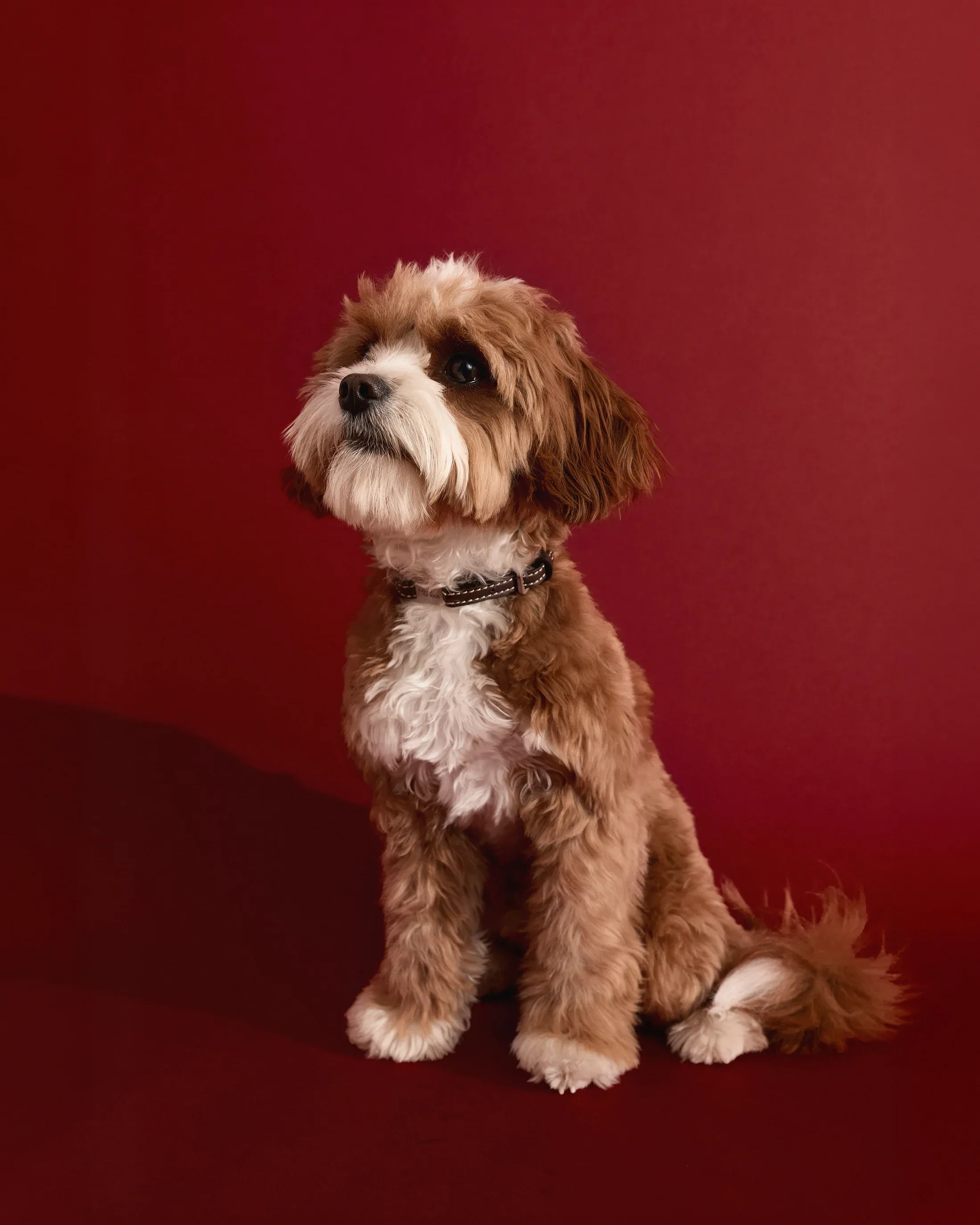
Walk down any pet-store aisle and you'll find a wall of collars and leashes that look more or less the same: nylon webbing, plastic clips, a stitched logo. They do the job. But there's a growing category of dog owners who have started asking a different question — not just will this hold my dog, but is this made well, will it last, and does it feel like something I actually want to carry every day? That shift, from disposable to considered, is quietly reshaping how people shop for their companions. Here's what actually separates a genuinely luxury dog accessory from a marked-up ordinary one — and why the distinction matters more than the price tag suggests. It starts with the leather Most "leather" dog collars aren't what buyers assume. The industry is full of terms designed to sound premium while describing something else entirely. Bonded leather is essentially scraps of hide glued together and coated — it cracks and flakes within a year or two. Genuine leather, despite the reassuring name, is one of the lower grades, made from the layers left over after the best part of the hide has been split away. The material that defines real quality is full-grain leather: the top, intact layer of the hide, complete with its natural grain. It hasn't been sanded down to hide imperfections, which means it keeps the fibre structure that makes leather strong. Full-grain doesn't wear out — it wears in. Over months of walks, sun, and handling, it develops a patina: a deepening of colour and character that cheaper materials can only imitate with a printed finish. There's also a meaningful difference in how the leather is tanned. Vegetable tanning — using natural tannins from bark and plants — is the slow, traditional method. It produces firm, durable leather that ages beautifully and is far kinder to the environment than the fast chrome-tanning process that dominates mass production. It's more expensive and takes weeks longer, which is exactly why you rarely see it on a supermarket collar. A quick way to gauge a brand's seriousness: look for a mention of the Leather Working Group (LWG), an independent body that audits tanneries on environmental performance. Brands sourcing from LWG Gold-rated tanneries are telling you the supply chain has been checked, not just described in marketing copy. European makers such as Studio Camour, a Milan-based house that handcrafts its pieces in a Northern Italian leather atelier, build their entire material story around this kind of traceability — full-grain and vegetable-tanned calf leather from certified tanneries, chosen specifically because it lasts a lifetime rather than a season. The hardware is where corners get cut You can spot a cheap accessory faster by its metal than its leather. The buckle, the clasp, the D-ring — this is where failures happen, and where manufacturers quietly save money. Look for solid brass rather than zinc alloy or plated pot metal. Brass is heavier, corrosion-resistant, and doesn't snap under sudden load the way cast alloy can. If a dog lunges at a squirrel, the hardware is what stands between control and a loose dog in traffic — so this is not the place for compromise. Two more details separate the considered from the ordinary. First, nickel-free hardware matters because nickel is a common contact allergen for both dogs and people; a coated, nickel-free finish protects sensitive skin and resists moisture from rain and grass. Second, watch for in-house designed hardware. When a brand tools its own clasps and buckles rather than buying generic parts from a catalogue, it usually signals a level of investment and quality control you don't get from assembled-from-stock products. Construction you can't see The parts that give out first are usually the ones you can't inspect on a product photo: the stress points where a leash meets its clip, or where a harness strap takes the full force of a pull. Quality here comes from internal reinforcement — a hidden layer built into the piece specifically to hold firm against repeated tension and wear. Stitching should be even and tight from the first pass to the last, not tidy at the edges and loose in the middle. Hand-finishing tends to reveal itself in this consistency: an atelier that gives each piece the time it needs will treat the final stitch with the same care as the first, because there's no assembly line rushing it along. This is the real argument for handcrafted over mass-produced. It isn't romance — it's that a person finishing a small number of pieces catches flaws a high-speed machine line is built to ignore. Comfort is a design decision, not an accident Here's the part owners tend to overlook. A beautiful collar that chafes, or a harness that restricts a dog's shoulder movement, is a failure no matter how good it looks. The best-designed accessories account for the animal wearing them: leather supple enough to sit softly against the body for smaller breeds, firmer and more structured for larger dogs that need it, with edges finished so they don't dig in. The most thoughtful brands treat this as a genuine dual requirement — the piece has to be right for the dog and right for the person choosing it, with neither ranked above the other. That "designed for two" philosophy is worth looking for, because it's the clearest sign a maker has thought past the product photo to the daily reality of a walk. Why any of this is worth it There's a practical case and an emotional one, and both hold up. Practically, a €250 collar that lasts a decade is cheaper than replacing a €30 one every year — and it won't fail at the moment you most need it to hold. The economics of buying well are genuinely better over time. Emotionally, the accessories we choose for our dogs say something about the relationship. The leash is the physical connection between you on every walk; the collar is what your companion wears every single day. Choosing something made with care isn't vanity. It's a small, daily acknowledgment that the bond is worth reflecting in the details. You don't need to spend a fortune to walk your dog. But if you've ever felt that a nylon clip and a printed logo didn't quite match what your companion means to you — that instinct is worth trusting. Look for full-grain leather, solid brass, honest construction, and a maker who designs for both ends of the leash. The difference isn't just visible. Over years of walks, it's the thing you'll still be holding.
https://studiocamour.com/
What Makes a Dog Accessory "Luxury"? A Guide to Leather, Craft, and the Bond Behind the Leash
Walk down any pet-store aisle and you'll find a wall of collars and leashes that look more or less the same: nylon webbing, plastic clips, a stitched logo. They do the job. But there's a growing category of dog owners who have started asking a different question — not just will this hold my dog, but