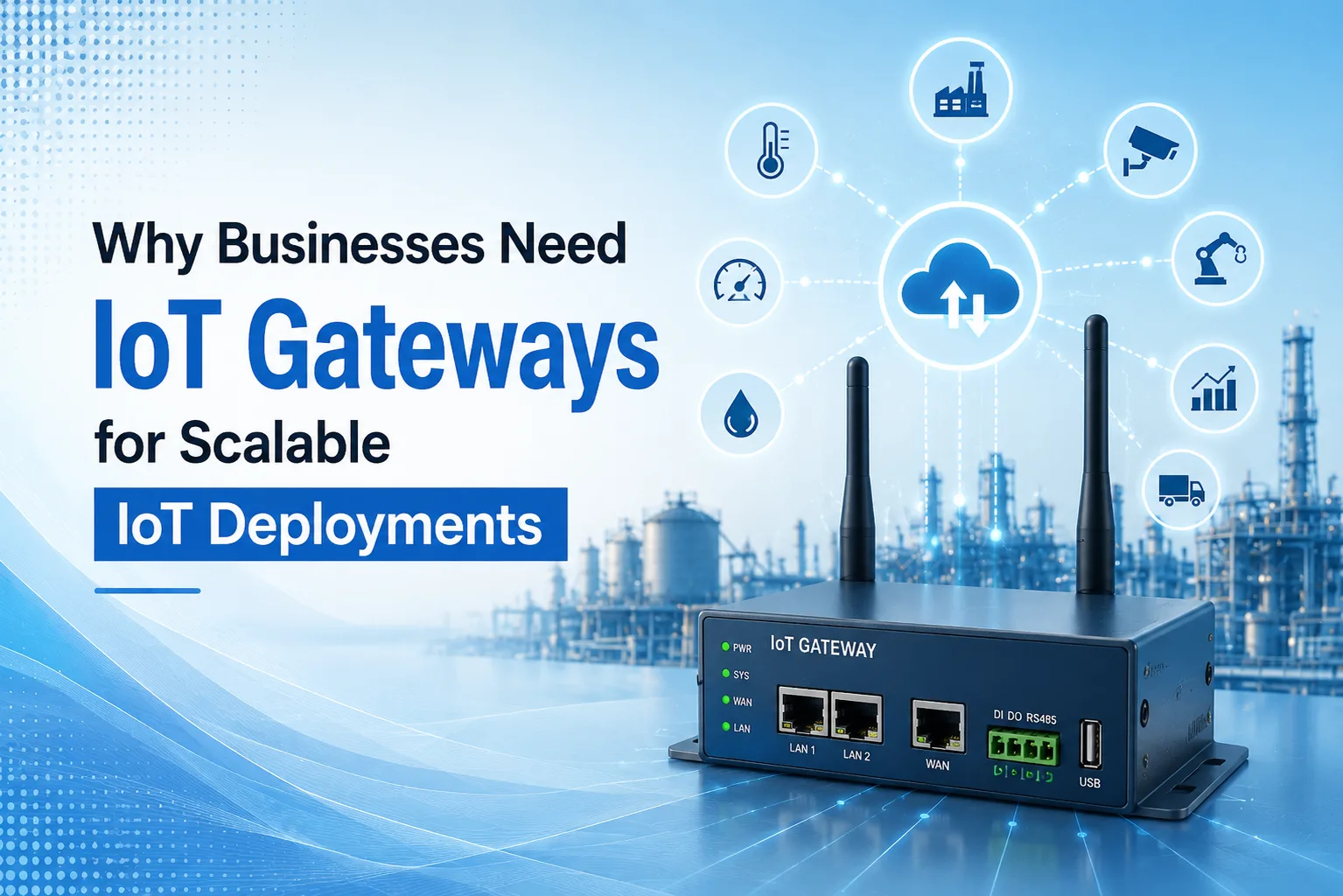
The Internet of Things (IoT) has changed the way businesses connect, monitor, and manage devices. From smart factories and healthcare systems to agriculture and smart cities, connected devices are generating huge amounts of data every second. However, these devices often use different communication protocols and cannot directly interact with cloud platforms. This is where What Is an IoT Gateway? Features, Benefits, and Use Cases becomes an important topic to understand. An IoT gateway acts as the bridge between connected devices and cloud applications, ensuring smooth communication, secure data transfer, and reliable device management.
Understanding an IoT Gateway
An IoT gateway is a hardware or software solution that connects IoT devices to the internet or cloud platform. It collects data from sensors and devices, processes the information when needed, and forwards it to cloud services for storage, analysis, and monitoring.
Many IoT devices use communication protocols such as Bluetooth, Zigbee, LoRaWAN, Modbus, or CAN. Cloud platforms usually communicate through internet protocols like HTTP or MQTT. A gateway translates these protocols, making communication possible between different systems.
Instead of every device sending data directly to the cloud, devices communicate with the gateway, which then securely transfers the information to the cloud.
How an IoT Gateway Works
An IoT gateway performs multiple tasks that help maintain reliable communication between devices and cloud systems.
The process typically follows these steps:
- IoT devices collect data from sensors.
- The gateway receives the data.
- The gateway processes or filters unnecessary information.
- The data is converted into a suitable communication protocol.
- Security checks such as encryption and authentication are applied.
- The processed data is sent to the cloud platform.
- Commands from the cloud are returned to devices through the gateway.
This entire process happens within seconds, allowing businesses to monitor devices in real time.
Key Features of an IoT Gateway
An IoT gateway includes several features that improve the efficiency and security of connected systems.
Protocol Translation
Different iot device management use different communication standards. The gateway converts one protocol into another, allowing devices from different manufacturers to work together.
Edge Data Processing
Instead of sending all raw data to the cloud, the gateway can process data locally. This reduces network traffic and improves response times.
Device Connectivity
A gateway supports multiple communication technologies, including:
- Wi-Fi
- Ethernet
- Bluetooth
- Zigbee
- LoRaWAN
- Cellular Networks
- RS485
- Modbus
This flexibility makes it suitable for various industrial and commercial environments.
Security Management
Security is one of the biggest concerns in IoT systems. Gateways provide:
- Data encryption
- User authentication
- Secure communication channels
- Firewall protection
- Device authorization
These security measures help protect sensitive business information.
Remote Device Management
Administrators can remotely monitor device health, update firmware, configure settings, and troubleshoot issues without visiting the installation site.
Data Filtering
Large IoT deployments generate enormous amounts of data. A gateway filters unnecessary information before sending valuable data to the cloud, reducing bandwidth usage and storage costs.
Benefits of Using an IoT Gateway
An IoT gateway provides several advantages for organizations deploying connected devices.
Improved Security
The gateway acts as the first line of defense between devices and the internet. By authenticating devices and encrypting communications, it minimizes cybersecurity risks.
Better Network Performance
Processing data locally reduces the amount of information sent to the cloud. This decreases bandwidth consumption and improves network efficiency.
Faster Decision Making
Since some data processing happens at the edge, businesses receive critical information faster. This is especially important in industries where immediate action is required.
Reduced Cloud Costs
Sending only meaningful data to the cloud lowers storage and data transfer expenses.
Easy Integration
Businesses often use devices from multiple manufacturers. A gateway simplifies integration by supporting various communication protocols.
Reliable Connectivity
Even if internet connectivity is temporarily unavailable, many gateways continue collecting and storing data locally until the connection is restored.
Simplified Device Management
Managing hundreds or thousands of devices becomes much easier through centralized monitoring and configuration.
Common Use Cases of IoT Gateways
IoT gateways are used across many industries to improve operational efficiency and automation.
Smart Manufacturing
Factories use gateways to connect production machines, monitor equipment performance, and detect maintenance requirements before failures occur.
Healthcare
Hospitals connect medical devices through gateways to securely collect patient information and support remote healthcare monitoring.
Agriculture
Farmers use gateways to gather data from soil moisture sensors, weather stations, and irrigation systems to improve crop productivity.
Smart Buildings
Commercial buildings use gateways to connect lighting systems, HVAC equipment, access control, and energy management solutions.
Transportation
Fleet management systems rely on gateways to monitor vehicle location, fuel consumption, engine health, and driver performance.
Energy and Utilities
Power companies use gateways to collect information from smart meters and monitor electricity distribution networks.
Retail
Retail stores connect inventory sensors, refrigeration systems, and security devices through gateways for better operational control.
Challenges Without an IoT Gateway
Organizations that connect devices directly to the cloud may face several challenges.
- Poor compatibility between devices
- Increased security risks
- Higher bandwidth consumption
- Greater cloud storage costs
- Increased network congestion
- Slower response times
- Difficult device management
An IoT gateway helps overcome these issues by acting as a centralized communication layer.
Choosing the Right IoT Gateway
Selecting the right gateway depends on business requirements. Consider the following factors before implementation:
Communication Protocol Support
Ensure the gateway supports all required communication standards used by your devices.
Processing Capability
Edge computing requires sufficient processor performance for local analytics and filtering.
Security Features
Look for encryption, secure boot, authentication, firewall support, and regular firmware updates.
Scalability
The gateway should support future business growth and additional connected devices.
Cloud Compatibility
Verify that the gateway integrates smoothly with your preferred cloud platform and enterprise applications.
Remote Management
Centralized monitoring and firmware updates save time and reduce maintenance costs.
The Future of IoT Gateways
As IoT deployments continue to grow, gateways are becoming more intelligent. Modern gateways increasingly support artificial intelligence, machine learning, and advanced edge computing capabilities.
Future gateways will process more data locally, reduce cloud dependency, improve cybersecurity, and enable faster automation. Businesses adopting these technologies will benefit from improved operational efficiency, lower costs, and more reliable connected systems.
Why Choose Karikala for IoT Solutions?
Building a successful IoT ecosystem requires more than just connected devices. It requires secure communication, reliable monitoring, scalable infrastructure, and expert implementation.
Karikala delivers comprehensive IoT solutions that help businesses connect devices, monitor assets, collect real-time data, and improve operational efficiency. Whether your organization operates in manufacturing, healthcare, agriculture, logistics, utilities, or smart infrastructure, Karikala provides customized IoT services designed to meet your business goals.
From IoT architecture design and device integration to gateway implementation, cloud connectivity, and ongoing support, Karikala helps organizations build secure, scalable, and future-ready IoT environments that drive digital transformation.
Learn more about Karikala's IoT services by visiting https://www.karikala.in/.
Final Thoughts
As connected technologies continue to reshape industries, having a reliable gateway has become essential for ensuring secure communication, efficient data management, and seamless connectivity between devices and cloud platforms. Businesses that invest in the right gateway solution can improve performance, reduce operational costs, strengthen security, and prepare for future growth.
If you're planning to modernize your connected infrastructure, Karikala offers the expertise and end-to-end IoT solutions needed to turn your vision into reality. Get in touch today and discover how the right IoT gateway solution can help your business build a smarter, more connected future.