The Person Behind the Plan
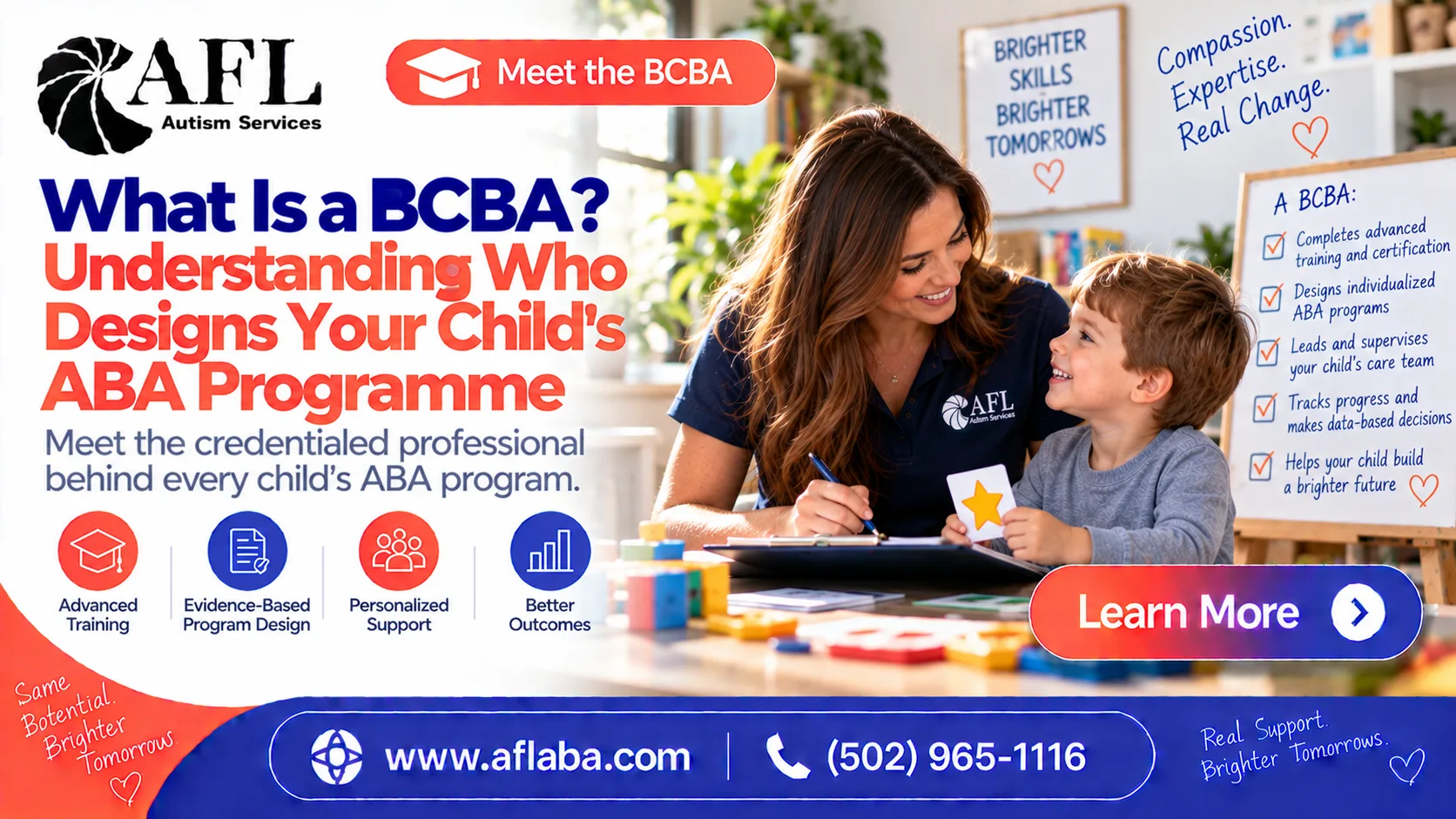
Parents starting ABA therapy encounter a lot of acronyms in the first week. The most important is BCBA Board Certified Behavior Analyst. This is the clinician who assesses your child, designs the treatment plan and supervises everyone delivering it.
If you understand what a BCBA does, you understand how the whole service should work.
Where the BCBA Fits in Clinic-Based ABA Therapy
In clinic-based ABA therapy, your child spends planned sessions in a purpose-built setting with trained staff nearby. The BCBA is not always in the room, but everything that happens there traces back to their decisions. They choose which skills to teach, in what order, and how progress will be measured.
Think of the BCBA as the person who holds the whole picture. Technicians see your child daily. The BCBA sees the pattern across weeks and decides what to change.
Qualification and Certification
Becoming a BCBA requires a master's degree, completion of specified graduate coursework in behaviour analysis, a substantial period of supervised fieldwork, and passing a certification examination. Certification is maintained through ongoing continuing education and adherence to a professional ethics code.
It is a regulated credential, not a job title a provider can assign informally.
What a BCBA Does in the First Few Weeks
The early weeks set the direction for everything that follows. A BCBA usually begins with an assessment that includes interviews with you, direct observation of your child, and structured tools that map current skills in communication, play, daily living and behaviour.
From that, they write a treatment plan with specific goals. Good goals are concrete. "Improve communication" is too vague. "Request a preferred item using a word or picture in four out of five opportunities" is something everyone can observe and measure.
You should be part of this process. Your priorities, routines and concerns shape which goals come first, because a plan that ignores family life rarely holds up.
BCBA, BCaBA and RBT: Who Does What
A BCBA assesses, designs and supervises. A BCaBA Board Certified Assistant Behavior Analyst holds a bachelor's-level certification and works under BCBA supervision. A Registered Behavior Technician delivers the day-to-day sessions under supervision.
All three roles are legitimate and necessary. What matters is that the structure is present and that supervision is genuine rather than nominal.
What Supervision Actually Means
Supervision is not an administrative formality. A BCBA should be observing sessions, reviewing data regularly, adjusting the programme when data indicates it is needed, and training technicians on your child's specific protocols.
Ask how many supervision hours your child receives per month and what proportion involve direct observation. The answer varies considerably between providers.
How a BCBA Uses Data
Data is the BCBA's main tool. During sessions, technicians record how your child responds to each teaching step. The BCBA reads those records to see what is working, what is stuck and what needs a different approach.
If a skill has not moved after several weeks, a good BCBA does not simply keep going. They look at the teaching method, the setting, the reinforcement being used and the way the goal was written. Then they change something and watch what happens.
This is why you should be able to ask to see progress data at any review. Graphs and summaries should make sense to you once the BCBA explains them.
Your Relationship With the BCBA
The BCBA is your primary clinical contact. They should explain the plan in language you understand, involve you in setting priorities, show you the data, and respond when you raise a concern.
If you cannot get a clear explanation of why a goal exists, that is worth raising directly.
Parent Training and Why It Matters
Therapy hours are only part of your child's week. Skills last longer when they carry over to home, school and the community, so a strong BCBA teaches parents as well as children.
This might mean a short coaching session on how to prompt a request, or a walk-through of a strategy for transitions between activities. It should feel practical and respectful, not like a lecture. If your BCBA never talks about what happens at home, ask them to.
Choosing a Provider With Strong Clinical Leadership
When you compare providers, look past the facility and ask about the people leading the clinical work. How many children does each BCBA oversee? How long have they worked with children at your child's age and level of need? Who covers when your BCBA is away?
Location also affects how involved you can be, since easy access makes it simpler to attend reviews and observe sessions. You can see all AFL clinic locations to check what is near you.
Questions Worth Asking
How many BCBA supervision hours does my child receive monthly? How often is the treatment plan formally reviewed? Who do I contact between reviews? How will progress data be shared with me?
A well-run clinic answers all four immediately.
Finding the Right Fit
The BCBA shapes your child's experience more than any other single role. Qualifications matter, but so do clear communication, steady supervision and a willingness to adjust the plan when your child's needs change.
Take your time with the first conversations. A provider that welcomes your questions about clinic-based ABA therapy and explains each part of the plan plainly is usually one that will keep doing so.
Frequently Asked Questions
Is a BCBA a doctor?
No. A BCBA holds a graduate-level certification in behaviour analysis. Autism diagnosis is typically made by a psychologist or physician.
Will my child work directly with the BCBA?
The BCBA assesses your child and observes sessions. Day-to-day therapy is usually delivered by an RBT under BCBA supervision.
How do I check a BCBA's certification?
The Behavior Analyst Certification Board maintains a public registry of certificants.
Can I request a different BCBA?
Yes. Fit between family and clinician matters, and most providers will discuss this if you raise it.
ADAPT FOR LIFE AFL AUTISM SERVICES
Adapt For Life provides applied behavior analysis therapy, autism diagnostic services and speech therapy for children and families across Indiana, Kentucky, North Carolina and Illinois. Programmes are designed and supervised by Board Certified Behavior Analysts and built around each child's individual assessment.
Address: Clinic locations across Indiana, Kentucky, North Carolina and Illinois
Phone: (317) 383-0188
Email: [email protected]
Hours: Monday Friday, 8:00 AM 5:00 PM
Services: Clinic-Based ABA Therapy, Autism Diagnostic Services, Speech Therapy
Website: https://aflaba.com/locations/
To book an assessment, call (317) 383-0188, email [email protected] or visit Adapt For Life Autism Services.