Cholesterol is a waxy, fat-like substance that your body needs for important functions. It helps your body make hormones, vitamin D, and substances needed for digestion. However, having too much cholesterol in the blood can increase the risk of heart and blood vessel problems.
One important thing to understand is that high cholesterol symptoms are often not noticeable. A person can have high cholesterol for years without feeling anything unusual. This is why regular cholesterol testing is important, especially if you have risk factors such as a family history of high cholesterol, excess weight, an unhealthy diet, or low physical activity.
Does High Cholesterol Cause Symptoms?
In most cases, high cholesterol itself does not cause clear symptoms. You may feel completely healthy even when your cholesterol level is higher than it should be.
The only reliable way to know your cholesterol level is through a blood test. The test can measure total cholesterol and different types, including LDL and HDL cholesterol.
This is why waiting for physical signs may not be helpful. Instead, regular health checks can help identify a problem before it contributes to more serious issues.
Common High Cholesterol Symptoms to Know
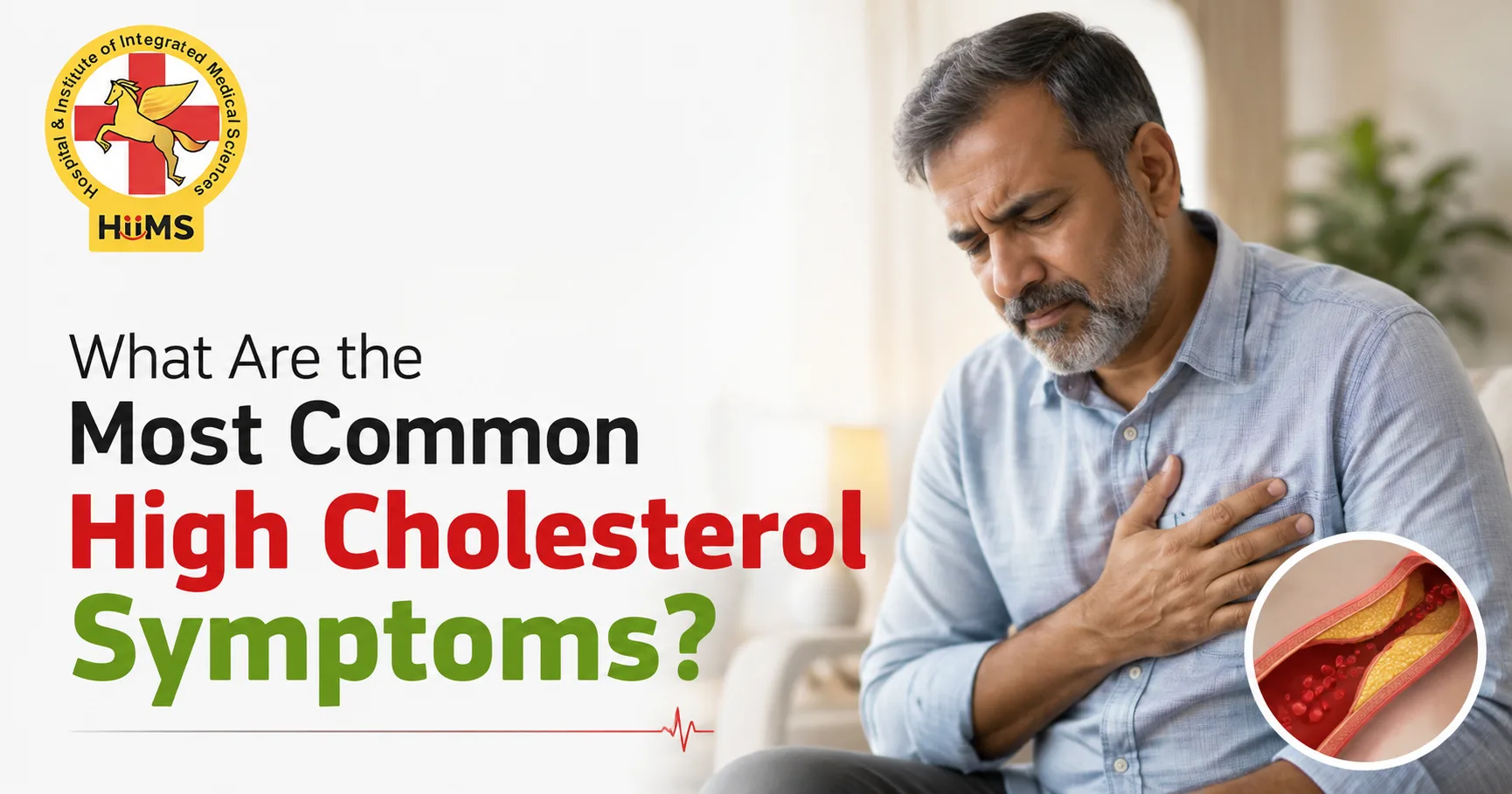
Although high cholesterol itself usually does not produce symptoms, problems can develop when cholesterol contributes to a buildup in the arteries. This can reduce blood flow to important parts of the body.
Here are some signs that should not be ignored:
1. Chest Discomfort
Chest pain or discomfort can occur when the blood supply to the heart is reduced. This is not a direct symptom of high cholesterol, but it can be a sign of heart disease associated with narrowed or blocked arteries.
If chest discomfort is severe, sudden, or occurs with sweating, breathing difficulty, nausea, or pain spreading to the arm, jaw, back, or shoulder, seek urgent medical care.
2. Shortness of Breath
Breathing difficulty can have many causes. However, when cholesterol buildup affects the blood vessels supplying the heart, reduced blood flow may contribute to heart-related symptoms, including shortness of breath.
Do not assume that breathing problems are caused by cholesterol alone. They should be properly checked.
3. Pain or Weakness in the Legs
Cholesterol buildup can affect arteries outside the heart as well. When blood flow to the legs becomes reduced, some people may experience pain, tiredness, or weakness while walking that improves after resting.
These symptoms can have many other causes, so medical evaluation is important if they continue or become worse.
4. Dizziness or Sudden Weakness
Problems with blood flow to the brain can sometimes lead to serious symptoms such as sudden weakness, dizziness, trouble speaking, or difficulty moving one side of the body.
These are not typical high cholesterol symptoms. They may indicate a serious problem such as a stroke and require immediate medical attention.
5. Yellowish Skin or Deposits Around the Eyes
People with certain inherited forms of very high cholesterol may develop fatty deposits under the skin or around the eyes. These signs are not seen in most people with high cholesterol.
If you notice unusual yellowish patches around the eyes or firm lumps around tendons, it is worth discussing them with a healthcare professional.
Why Can High Cholesterol Be Difficult to Notice?
High cholesterol is sometimes called a silent problem because it can develop without obvious warning signs. A person may continue with their normal routine and feel perfectly well while cholesterol is gradually contributing to plaque buildup inside the arteries.
Over time, this buildup may narrow the arteries and make it harder for blood to flow properly. Depending on where this happens, it can increase the risk of heart disease, stroke, and other circulation problems.
This is why knowing your cholesterol level is more useful than looking for high cholesterol symptoms alone.
How Is High Cholesterol Checked?
A blood test is the main way to check cholesterol. It can provide information about total cholesterol, LDL cholesterol, HDL cholesterol, and other blood fats.
Your ideal cholesterol levels may depend on your age, health history, and risk of heart and circulation problems. A healthcare professional can help you understand what your results mean for you.
If you have never had your cholesterol checked, or if you have a family history of high cholesterol or heart disease, ask a healthcare professional whether testing is appropriate for you.
What Can Help Maintain Healthy Cholesterol Levels?
Simple daily habits can support healthy cholesterol levels. Eating a balanced diet, staying physically active, maintaining a healthy weight, avoiding tobacco, and limiting unhealthy foods can all be helpful.
It is also important to remember that lifestyle changes should be based on your individual health needs. If your cholesterol is high, do not stop or change any prescribed treatment without speaking with your healthcare professional.
For people looking for an integrated approach to cholesterol care, Jeena Sikho HiiMS provides information and care focused on cholesterol management.
Final Thoughts
The most important thing to remember about high cholesterol symptoms is that there may be no noticeable symptoms at all. Regular cholesterol testing, healthy eating, physical activity, and appropriate health guidance can help you manage your cholesterol and protect your heart health.
If you are concerned about your cholesterol levels or want support with cholesterol management, Jeena Sikho HiiMS offers an integrated approach that focuses on Ayurveda, healthy lifestyle habits, diet, and overall well-being.
Frequently Asked Questions
1. What are the most common high cholesterol symptoms?
High cholesterol usually does not cause noticeable symptoms. It is generally detected through a blood test rather than by physical signs. Symptoms may appear later if cholesterol contributes to problems with blood flow.
2. Can you have high cholesterol without symptoms?
Yes. Most people with high cholesterol do not feel any different. This is why regular cholesterol testing can be important, particularly for people with risk factors.
3. Can high cholesterol cause chest pain?
High cholesterol itself does not usually cause chest pain. However, cholesterol buildup can contribute to narrowed arteries and heart disease, which may cause chest pain.
4. How can I know if my cholesterol is high?
A blood test is the most reliable way to check your cholesterol. It can measure total cholesterol and different types of cholesterol, including LDL and HDL.
5. Can lifestyle changes help with high cholesterol?
Yes. Healthy eating, regular physical activity, maintaining a healthy weight, and avoiding tobacco can support healthier cholesterol levels. Your healthcare professional can advise you based on your individual needs.