Most people judge a leather bag the day they buy it. It looks sharp in the store, the zippers glide, the color matches everything in the closet. But that first impression says almost nothing about how the leather bag will hold up once it becomes part of a daily routine. The real test starts around year one, and it only gets more revealing from there.
If you want to know whether a leather bag was a smart purchase, don't look at it on day one. Look at it after it has been dropped on a train platform, rained on twice, stuffed with a laptop charger and a change of clothes, and left in the trunk of a car for a weekend. That's when the material shows its true character.
The Store Shelf Doesn't Tell the Whole Story
Retail lighting and a fresh display are designed to make almost anything look premium. A leather bag made from a coated synthetic can sit right next to a genuine leather piece and, to the untrained eye, appear nearly identical. The differences only become obvious once daily use starts wearing away the surface.
Coated materials rely on a thin outer layer to do all the work. Once that layer starts to crack or peel, usually somewhere between the twelve and twenty-four month mark, there isn't much left underneath to fall back on. The leather bag doesn't age so much as it deteriorates.
Natural materials behave differently because the wear happens through the material itself, not on top of it. That's part of the reason certain leather bags seem to get more comfortable and more attractive the longer they're used, while others simply look tired.
The One-Year Mark Is Where leather bags Start Telling the Truth
Ask anyone who has owned several leather bags over the years and they'll usually point to the twelve-month mark as the moment a leather bag reveals what it's really made of. Straps that once felt sturdy start to sag. Corners that looked sharp begin to round out unevenly. Zippers that pulled smoothly start catching.
This is also where cost per use starts to matter more than sticker price. A budget leather bag that needs replacing every year or two ends up costing more over a five-year period than a single well-made piece that's still going strong. It's a pattern that shows up again and again once you start tracking actual ownership costs rather than just the checkout total. Some detailed breakdowns of full-grain leather leather bags compared with synthetic alternatives lay this cost difference out clearly, and the gap tends to widen the longer you own the leather bag.
What Five Years of Wear Actually Looks Like
By the five-year point, the gap between materials is no longer subtle.
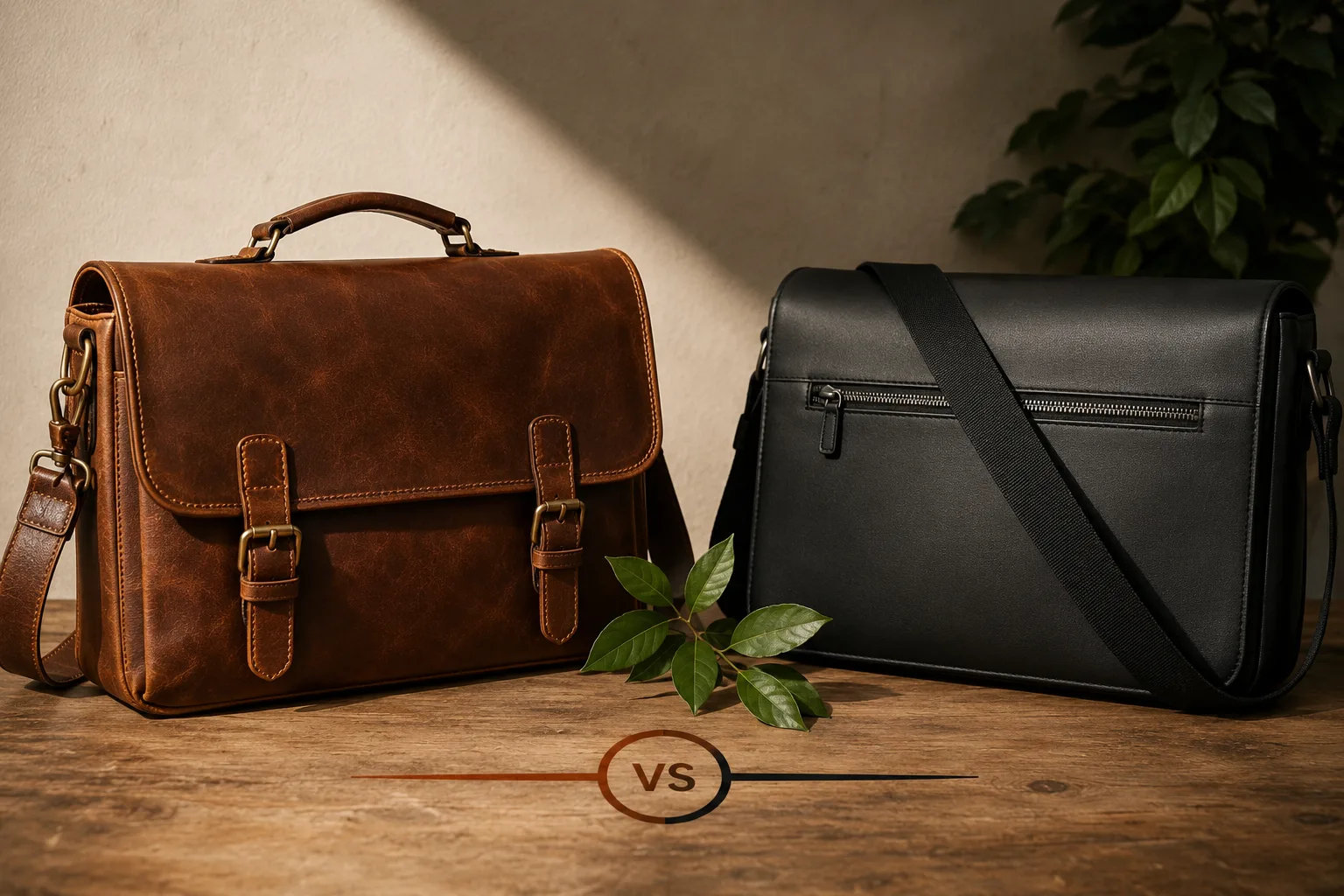
What a synthetic leather bag usually looks like after five years
- Cracked or peeling coating along the fold lines and corners
- Hardware that has started to loosen or discolor
- A shape that no longer holds on its own without something inside it
- A stiff, brittle feel where the material used to flex
- Visible wear even on leather bags that were well cared for, since the damage happens at the material level rather than the surface
What a well-made leather bag from a durable material usually looks like after five years
- A surface that has darkened slightly and picked up small marks from genuine use, not damage
- A shape that still holds because the structure comes from the material itself, not from stiffeners or coatings
- Straps that carry weight the way they did on day one, sometimes better, as natural fibers soften into a more comfortable break-in
- Fewer visible repairs needed, since there's no coating layer to fail
- A look that reads as "worn in" rather than "worn out"
This is the part that's easy to underestimate before you own a leather bag long enough to see it happen. Wear and aging aren't the same thing. One is decline. The other is character.
A Few Signs Worth Checking Before You Buy
You don't need to own a leather bag for five years to get a sense of how it will hold up. A few checks at the point of purchase tell you most of what you need to know.
- Bend a corner or fold it gently. Material that creases sharply and stays creased is a warning sign. Material that flexes and settles back into shape is a better sign of long-term durability.
Check the stitching around stress points. Look closely at the strap attachments and the base. Even, tight stitching usually points to more careful construction, while loose or uneven stitching tends to be the first thing to fail under regular use.
- Compare how it feels to how it looks. A surface that looks rich in photos but feels stiff or plasticky in hand is often coated rather than solid through. That distinction matters more than color or finish once the leather bag starts seeing regular use.
- Trust your nose. Genuine hide has a distinct, faint natural scent. A strong chemical smell usually points to heavy synthetic treatment.
- Ask about the hardware, not just the material. Zippers and buckles that feel light or wobble under light pressure are often the first point of failure, regardless of what the body of the leather bag is made from.
The Bigger Picture
None of this means every synthetic leather bag is a poor choice or every leather leather bag is worth the investment. Budget and short-term needs are legitimate factors, and there are situations where a lower-cost leather bag genuinely makes sense for a season or two of use.
But if a leather bag is meant to be a long-term companion, something carried daily for work, travel, or everyday errands, the material it's built from ends up mattering more than almost any other factor. The leather bags that still look good and function well after five years tend to share a set of predictable traits, and the ones that don't tend to fail in equally predictable ways.
The next time you're weighing two leather bags that look similar on the shelf, it's worth picturing what each one will look like a year from now, and then five years from now. That mental exercise, more than the price tag or the packaging, is usually the better guide to which one is actually worth buying.