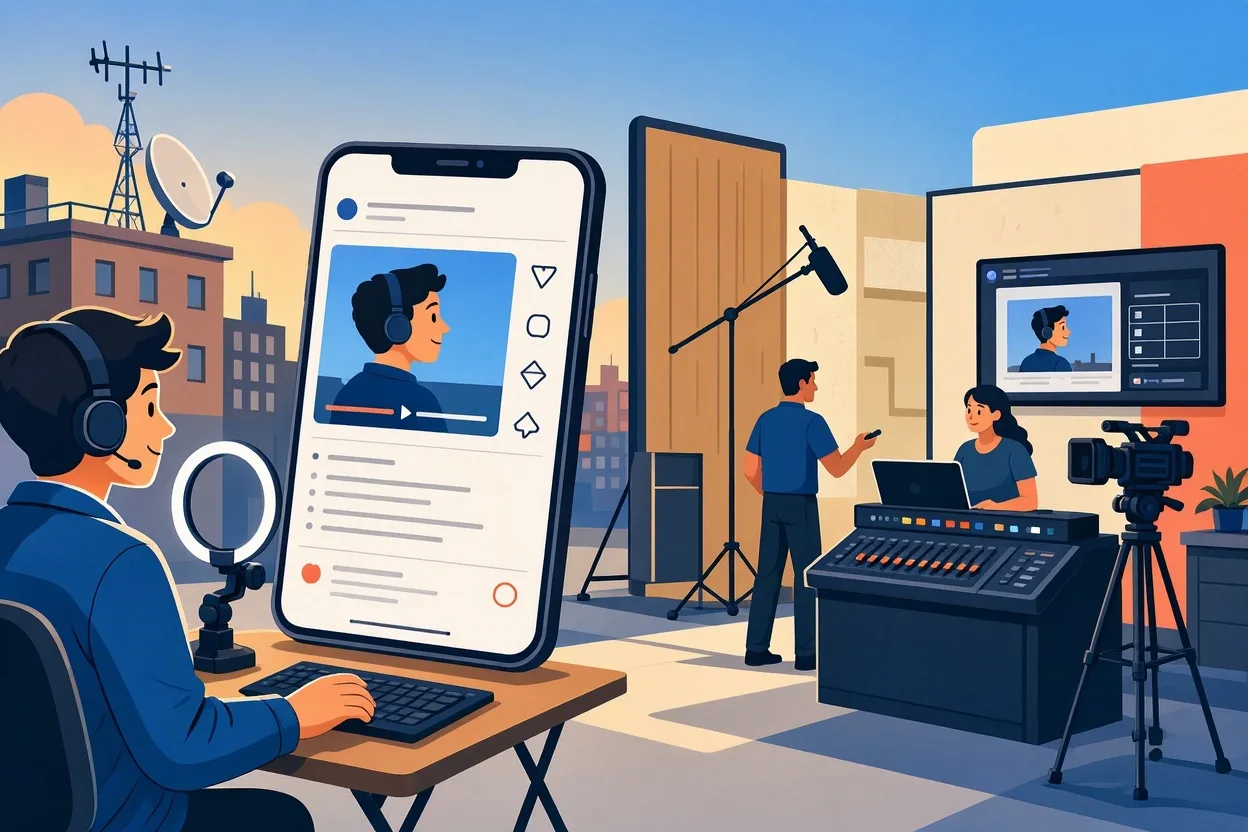
Every video operation runs on two clocks.
The live clock measures seconds. A two-second delay makes the auction feel fake and the Q&A feel dead. The library clock measures years — and decides whether a two-year-old recording still earns its keep or just eats storage.
Most teams are decent at one clock and quietly terrible at the other. In 2027, the winning teams stopped choosing.
The Line Between Live and VOD Just Dissolved
There was a time when "the stream is over" meant the work was over. Not anymore.
Town halls, product drops, classes, matches — every event is a broadcast now, and every broadcast instantly becomes an asset people expect to find, search, and rewatch. The live doesn't truly end when the camera stops. It ends when the recording is tagged, clipped, and findable.
That handoff used to take a week and three people. In 2027, it takes minutes and nobody.
The Library Clock: Where Assets Earn Their Keep
Here's what actually happens the moment a stream ends: the recording should flow straight into a system that auto-tags it, transcribes it, chapters it, and makes it publishable everywhere — web, mobile apps, smart TVs — from one master file.
That's the real job of video content management software. Less a filing cabinet, more a launchpad:
- Instant ingest from live sessions, no manual uploads
- AI-generated tags, transcripts, and chapters on arrival
- Version control, so nobody ships last month's rough cut
- Permissions that decide who sees what, before it goes anywhere
- APIs that plug the whole library into your site and apps
End-to-end platforms like Muvi Flex treat this layer as the foundation — which is why more teams spend their Monday improving content instead of hunting for it.
The Live Clock: Seconds Are the Product
Now flip back to the first clock, because the audience never left it.
The moment a stream drifts a few seconds behind reality, the room splits in two. Half the viewers are cheering a goal that hasn't happened on their screens. Chat answers questions the host hasn't asked yet. The illusion collapses — and interaction, the entire point of live, collapses with it.
That's why teams heading into 2027 treat low latency live streaming as the baseline, not the upgrade. Sub-second delivery, powered by mature WebRTC and 5G, is what makes live commerce feel like a store, a watch party feel like a couch, and a remote Q&A feel like the same room. End-to-end setups like Muvi Live ship this speed out of the box, at global scale.
The Afterglow Window
Here's the loop that ties the clocks together.
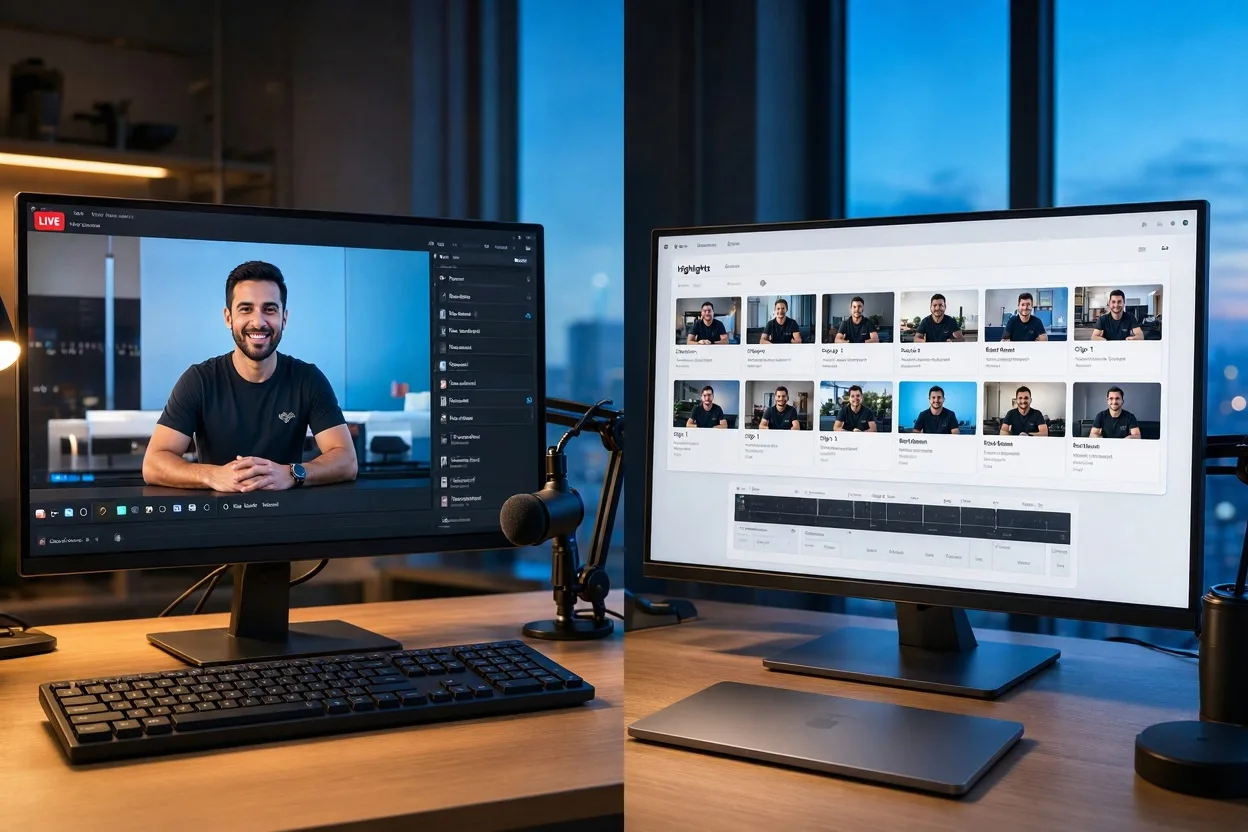
Interest in an event peaks the second it ends — then decays fast. If the recording lands in your library within the hour, auto-clipped into highlights and chapters, you catch the second wave: the people who saw the buzz and came looking. If it lands next Tuesday, you've published into silence.
Live feeds the library. The library extends the live. Teams that automate that loop get twice the return from every event they run.
A 60-Second Checklist Before You Choose
- Recordings flow from live to library automatically
- AI tagging, transcripts, and chapters out of the box
- Sub-second latency for interactive formats
- One-click clipping while the buzz is still hot
- Publish once, deliver everywhere — no per-platform rework
The Bottom Line
Seconds make the moment believable. The library makes it last. Pick a stack that respects both clocks, and every event you run pays you twice.
Nail the seconds. Own the years.