
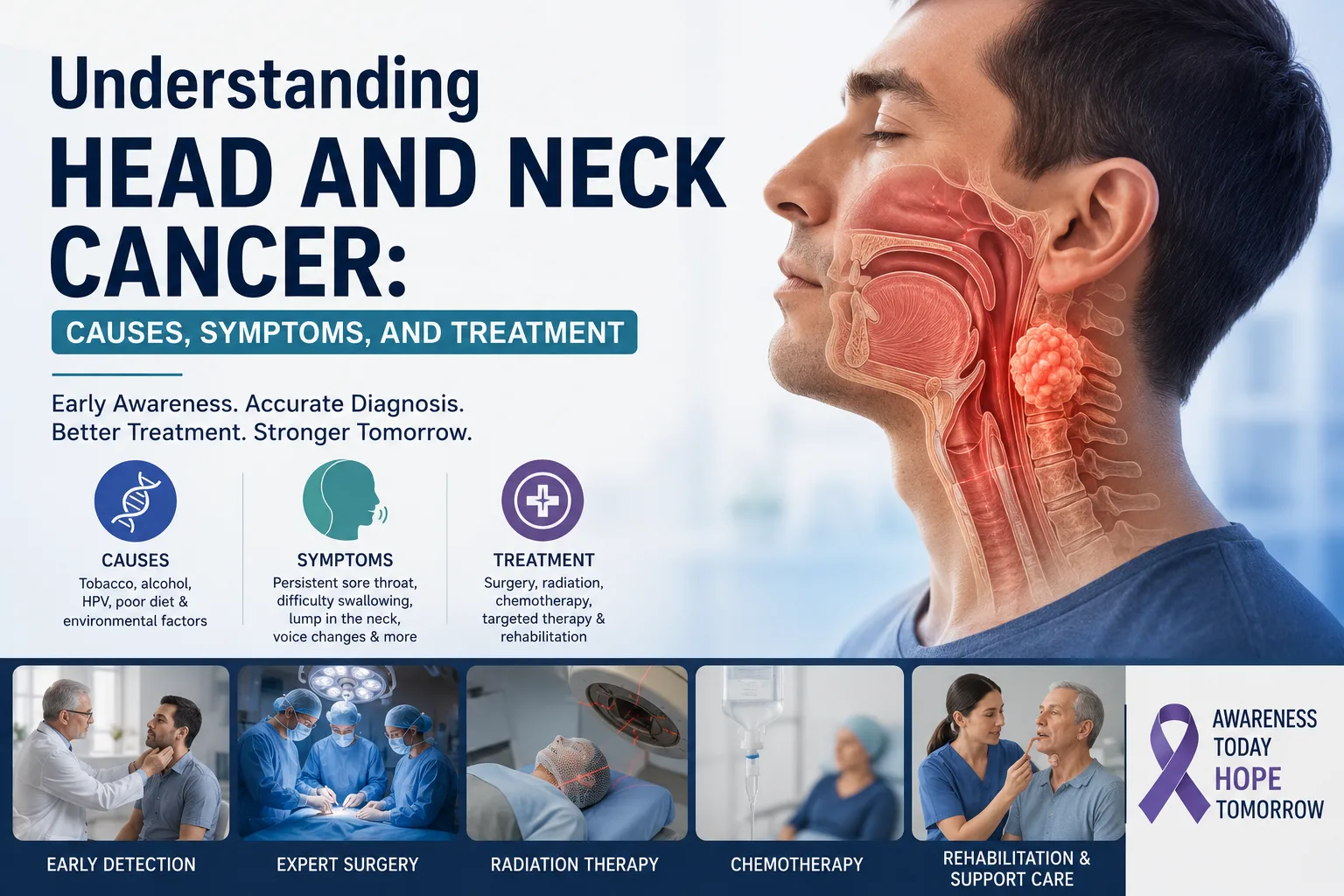
Head and neck cancer is a broad term used to describe cancers that develop in the mouth, throat, voice box, sinuses, salivary glands, and nasal cavity. While it accounts for a significant number of cancer cases worldwide, awareness about its causes, warning signs, and treatment options remains limited. Early detection can make a tremendous difference in outcomes, which is why understanding this disease — and knowing when to consult a specialist such as a head and neck cancer surgeon in Ahmedabad — is so important.
What Is Head and Neck Cancer?
Head and neck cancer refers to a group of cancers that originate in the squamous cells lining the moist surfaces inside the head and neck region — including the mouth, nose, sinuses, salivary glands, throat, and larynx (voice box). It does not typically include cancers of the brain, eye, or thyroid, which are classified separately due to their distinct biology and treatment pathways.
Depending on where the cancer starts, it may be categorized as:
- Oral cavity cancer – affecting the lips, tongue, gums, and inner lining of the cheeks
- Pharyngeal cancer – affecting the throat, including the nasopharynx, oropharynx, and hypopharynx
- Laryngeal cancer – affecting the voice box
What Causes Head and Neck Cancer?
Several risk factors are strongly associated with the development of head and neck cancers. Understanding these can help with prevention and early recognition.
Tobacco use is the single biggest risk factor, whether smoked or chewed. Products like gutka, khaini, and paan masala — commonly used in parts of India — are strongly linked to oral cancers.
Alcohol consumption, particularly when combined with tobacco use, dramatically increases risk. The combination has a synergistic effect, meaning the risk is far higher than either factor alone.
Human papillomavirus (HPV) infection has emerged as a significant cause of oropharyngeal cancers, particularly among younger, non-smoking individuals. HPV-related head and neck cancers have been rising globally in recent years.
Betel nut and paan chewing are common practices in India that are closely linked to oral cavity cancers, especially cancers of the cheek and gums.
Recognizing the Symptoms
Head and neck cancer symptoms can often be mistaken for less serious conditions, which sometimes delays diagnosis. Being aware of persistent or unusual symptoms can prompt earlier evaluation.
Common warning signs include:
- A sore or ulcer in the mouth that doesn't heal within a few weeks
- A persistent lump or swelling in the neck, jaw, or mouth
- Difficulty or pain while swallowing
- Persistent hoarseness or changes in voice lasting more than two to three weeks
- Unexplained weight loss
How Is Head and Neck Cancer Diagnosed?
Diagnosis typically begins with a detailed clinical examination, during which the doctor inspects the mouth, throat, and neck for any unusual lumps, lesions, or abnormalities. Based on the findings, further tests are usually recommended.
A biopsy is the definitive way to confirm cancer, involving the removal of a small tissue sample for laboratory analysis. Imaging studies such as CT scans, MRIs, or PET scans help determine the size and extent of the tumor, as well as whether it has spread to nearby lymph nodes or other parts of the body. In some cases, an endoscopic examination using a thin, flexible camera allows doctors to closely examine areas like the throat or voice box that aren't visible during a standard exam.
Treatment Options for Head and Neck Cancer
Treatment approaches depend on the type, location, and stage of the cancer, as well as the patient's overall health. Most treatment plans involve one or a combination of the following approaches.
Surgery is often the primary treatment, particularly for early-stage cancers. The goal is to remove the tumor along with a margin of healthy tissue to reduce the risk of recurrence. In more advanced cases, surgery may also involve removing affected lymph nodes in the neck. Reconstructive surgery is frequently performed alongside tumor removal to restore appearance and function, especially when significant tissue has been removed.
Radiation therapy uses high-energy beams to destroy cancer cells and is often used either as a primary treatment or in combination with surgery to reduce the risk of recurrence. It may also be used when surgery isn't a suitable option.
The Importance of Choosing the Right Specialist
Given the complexity of head and neck cancer and its impact on essential functions like speaking, eating, and breathing, choosing an experienced specialist is critical. A qualified head and neck cancer surgeon brings not only surgical expertise but also an understanding of reconstructive techniques and coordinated multidisciplinary care, which together play a major role in achieving the best possible outcomes.
Final Thoughts
Head and neck cancer is a serious but often treatable condition, especially when caught early. Understanding the risk factors, recognizing warning symptoms, and seeking prompt medical attention can make a significant difference in treatment success and quality of life. If you or someone you know is experiencing persistent symptoms, don't delay — early consultation with a specialist remains one of the most powerful tools in the fight against head and neck cancer.
Original Source: https://likelylike.com/understanding-head-and-neck-cancer-causes-symptoms-treatment