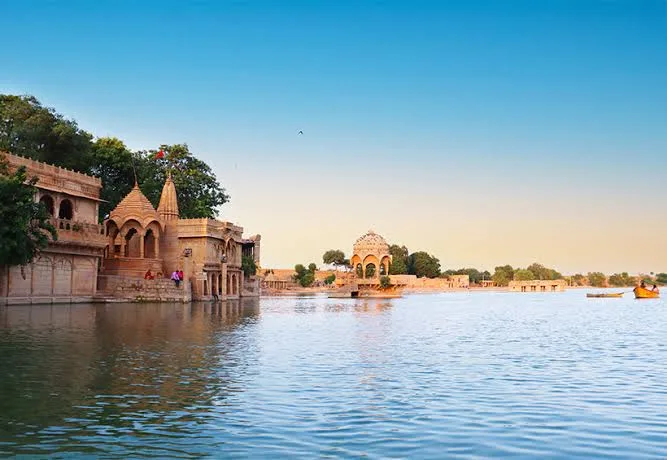
Rising dramatically from the golden sands of the Thar Desert, Jaisalmer is one of India's most visually striking destinations. Known as the Golden City due to the distinctive yellow sandstone used in virtually all its architecture, Jaisalmer packs centuries of royal Rajput history, living medieval traditions, and sweeping desert landscapes into a compact, walkable destination.
Forty-eight hours in Jaisalmer provides the ideal window to experience both sides of the city: the historic fortified old town and the remote dunes of the Thar. Booking a reliable Jaisalmer cab service allows you to navigate comfortably between the city’s narrow lanes, outlying heritage monuments, and deep desert camps without losing precious time to transit logistics.
Day 1: Living Fort Heritage, Carved Havelis, and Sunset Waters
Morning: Explore the Living Jaisalmer Fort (Sonar Qila)
Begin your journey early at Jaisalmer Fort, built in 1156 AD by Rawal Jaisal. Unlike most historical forts in India that serve strictly as tourist monuments, Sonar Qila is a living fort home to thousands of residents whose families have lived within its 99 bastions for generations.
- Raj Mahal (Royal Palace): Explore the seven-story palace museum displaying royal armaments, portraits, and traditional marble thrones.
- Jain Temples: Within the fort walls sits an interconnected complex of seven yellow-sandstone Jain temples dating from the 12th to the 15th centuries. The intricate Dilwara-style stone carvings inside the Parshvanatha and Rishabhanatha temples are architectural highlights of western India.
- Canon Point Viewpoint: Walk the ramparts near the fort edge for a panoramic 360-degree view over the flat rooftops and golden houses of the city below.
Midday: Marvel at the Havelis of Merchant Nobles
Head down the ramparts into the city center to visit the opulent mansions constructed by wealthy 19th-century merchants who grew rich along the Silk Road trading routes.
- Patwon Ki Haveli: A cluster of five interconnected mansions built by Brocade merchant Ghuman Chand Patwa for his sons. It features over 60 intricately carved sandstone balconies (jharokhas) that resemble delicate wooden lace.
- Nathmal Ki Haveli: Built in 1885 by two architect brothers, Hathi and Lalu, who carved the left and right wings simultaneously without blueprints, resulting in subtle architectural asymmetries.
Take a break at a traditional rooftop restaurant near Manak Chowk to savor regional specialties like Dal Baati Churma, Ker Sangri (desert berry curry), and Gatte ki Sabzi.
Late Afternoon to Evening: Serenity at Gadisar Lake
Head south to Gadisar Lake, a historic man-made water reservoir constructed in the 14th century by Maharawal Gadsi Singh. Pass through the ornate Tilon Ki Pol gateway, take an evening pedal-boat ride, and photograph the carved stone chhatris standing directly in the water as dusk turns the sky amber.
Day 2: Royal Cenotaphs, Ghost Villages, and Desert Dunes
Morning: Royal Cenotaphs and the Mystery of Kuldhara
Begin the second day with an early start to explore the historical sights situated outside the main town on a dedicated Jaisalmer Sightseeing Tour.
- Bada Bagh: Located 6 km north of the city, Bada Bagh houses a serene collection of carved sandstone chhatris (cenotaphs) dedicated to the Maharawals of Jaisalmer. The site is framed by modern wind turbines on the desert ridge, creating a striking contrast between past and present.
- Kuldhara Abandoned Village: Situated roughly 18 km southwest of Jaisalmer, this 13th-century settlement was once home to the prosperous Paliwal Brahmin community. Legend holds that the villagers abandoned all 84 surrounding hamlets in a single night in the 1820s to escape the tyranny of a local minister, leaving behind haunting stone ruins that remain untouched today.
Afternoon to Night: Thar Desert Safari at Sam Sand Dunes
After lunch, make the 40 km journey west toward the Sam Sand Dunes, where the scrubland gives way to expansive rolling sand hills.
- Jeep Dune Bashing: Hop into an open 4x4 vehicle for high-speed dune bashing across the shifting sand crests.
- Sunset Camel Safari: Mount a camel for a relaxed trek into the interior dunes to watch the desert sunset unobstructed by modern structures.
- Desert Camp Cultural Night: Check into a traditional Swiss tent camp. The evening features live Manganiyar folk music, dynamic Kalbelia gypsy dance performances around a bonfire, and a traditional Rajasthani buffet dinner under the desert night sky.
Practical Tips for Your 48-Hour Trip
- Best Season: October through March offers comfortable daytime temperatures (20°C to 28°C) and crisp nights. Avoid summer months when temperatures regularly exceed 42°C.
- Clothing: Pack light, breathable cotton clothing for daytime walking, comfortable slip-on shoes for visiting active temples, and a warm fleece or jacket for the desert dunes, where nighttime temperatures can drop sharply.
- Local Commute: Narrow old-city streets require walking or auto-rickshaws, while private cabs are essential for seamless transit to Bada Bagh, Kuldhara, and the Sam desert belt. Using Jaisalmer Cab ensures fixed pricing, air-conditioned comfort, and experienced local drivers familiar with desert highway routes.