For many South Asian brides in the UK, choosing a wedding outfit is about more than finding something beautiful. It is about wearing something that feels connected to family, culture and tradition while still reflecting who you are today.
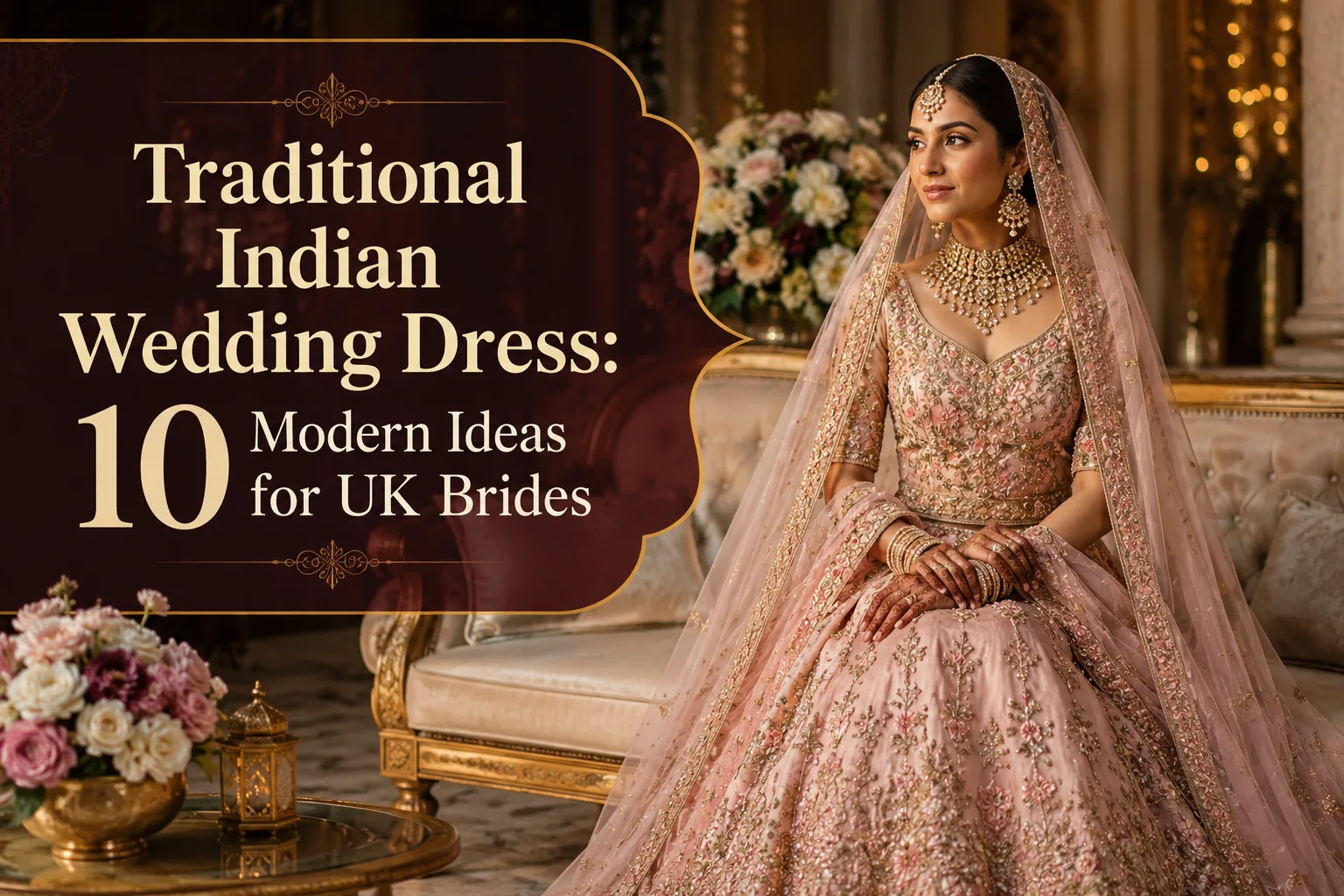
That is why the traditional Indian wedding dress is evolving. Brides are keeping beloved elements such as intricate embroidery, dupattas, lehengas and rich craftsmanship, while experimenting with softer colours, lighter fabrics, contemporary blouses and more personalised styling.
Current UK bridalwear trends also show growing interest in modern silhouettes, lighter designs and bespoke outfits that combine Indian craftsmanship with contemporary aesthetics.
For a bride planning her wedding in London, Birmingham, Leicester, Manchester or elsewhere in the UK, the goal does not have to be traditional versus modern. The most beautiful bridal looks often sit somewhere in between.
Here are 10 ways to give a traditional Indian wedding dress a fresh, contemporary feel without losing its cultural character.
What Makes a Traditional Indian Wedding Dress?
Before modernising your bridal look, it helps to understand what makes Indian bridalwear so distinctive.
A traditional Indian wedding dress may take the form of a lehenga, saree, sharara or another regional bridal outfit. Rich embroidery such as zari, zardozi, sequins, stonework and threadwork can add depth and occasion to the outfit, while colours such as red, maroon and gold have long been associated with bridal celebrations.
However, tradition is not one fixed style. Indian weddings span different regions, religions, communities and family customs. Modern designers are increasingly adapting traditional craftsmanship through new silhouettes, colour combinations and tailoring techniques.
Sonas Couture, for example, currently features both traditional and contemporary lehengas, including pastel, ice-blue, turquoise, mauve and contemporary blouse designs.
10 Modern Traditional Indian Wedding Dress Ideas for UK Brides
1. Choose a Contemporary Bridal Lehenga Silhouette
The lehenga remains one of the most recognisable choices for an Indian bride, but you do not have to choose an extremely heavy, structured design.
Consider an A-line, layered or softly flared silhouette that gives you room to move. A well-cut blouse can also completely change the character of the outfit.
If you are searching for a bridal lehenga UK brides can wear comfortably for several hours, pay attention to the overall weight, waist construction and length of the skirt.
Your outfit should look impressive when you walk into the room, but it should also let you sit, walk, greet guests and dance without constantly adjusting it.
2. Try Ivory, Blush or Pastel Instead of Classic Red
Red will always have a special place in Indian bridal fashion, but it is no longer the only option.
Modern UK brides are increasingly considering:
- Ivory and champagne
- Blush pink
- Powder blue
- Peach
- Sage and mint
- Mauve
- Burgundy
- Deep navy
The important thing is that choosing a different colour does not mean abandoning tradition. You can retain traditional embroidery, a detailed dupatta and classic jewellery while using a softer base colour.
Current UK bridal collections show this shift clearly, with contemporary designs appearing in shades such as nude pink, turquoise, ice blue and mauve alongside classic bridal colours.
3. Mix Traditional Embroidery With Minimalist Design
More embroidery does not necessarily mean a more luxurious outfit.
If you prefer a refined bridal aesthetic, consider using detailed craftsmanship selectively. A heavily embroidered border, statement blouse or beautifully worked dupatta can become the focal point while the rest of the outfit remains relatively clean.
Tonal embroidery is another elegant option. Instead of contrasting thread and embellishments, similar shades can create a subtle effect that looks sophisticated in person and photographs beautifully.
This approach works particularly well if your definition of a traditional Indian wedding dress includes craftsmanship but not excessive visual weight.
4. Consider a Lightweight Traditional Indian Wedding Dress
UK weddings can involve long ceremonies, photography sessions, travel between venues and hours of socialising. Your bridal outfit therefore needs to work in real life, not just in photographs.
Lightweight fabrics such as georgette, organza and suitable silk blends can help create movement without making the outfit unnecessarily heavy. Layering can also give you the visual richness of traditional bridalwear while keeping individual pieces more manageable.
This is one reason lightweight contemporary bridal collections have become an important part of the UK market.
A practical test is simple: when you try the outfit, walk around in it for several minutes. Sit down. Raise your arms. Take a few steps. If something feels uncomfortable in the fitting room, it is unlikely to feel better after several hours at your wedding.
5. Modernise the Blouse or Choli
Sometimes the easiest way to modernise a traditional Indian wedding dress is to change the blouse.
You could consider:
- Corset-inspired cholis
- Structured bodices
- High necklines
- Longline blouses
- Statement sleeves
- Contemporary back detailing
- Sleeveless or modern-cut designs
A contemporary blouse can create a striking contrast with a traditional embroidered lehenga. It allows you to keep the heritage elements of the outfit while adding a silhouette that feels more personal.
6. Style a Traditional Saree in a Contemporary Way
If a lehenga does not feel like you, consider the saree.
A pre-draped saree can provide the elegance of traditional Indian clothing while making movement and dressing more straightforward. A belt can define the waist, while a contemporary blouse can make the entire outfit feel more fashion-forward.
You could also experiment with:
- Statement pleats
- A different pallu drape
- A minimalist blouse
- A statement belt
- Modern jewellery
- A contrasting dupatta or veil
For a reception, a contemporary saree can also provide a refreshing change after a more traditional wedding lehenga.
7. Create Different Looks for Every Wedding Event
One outfit does not need to define your entire wedding wardrobe.
Many South Asian weddings involve several celebrations, so you can give each event its own personality.
EventPossible LookMehendiLightweight lehenga or shararaHaldiBright, comfortable outfitSangeetContemporary embellished lehengaWeddingTraditional bridal lehengaReceptionSaree, gown-inspired lehenga or fusion outfitThis approach also gives you more freedom to experiment. You might choose a colourful contemporary outfit for the Sangeet and reserve the most traditional details for the ceremony.
8. Blend Indian Bridalwear With UK Wedding Style
A UK wedding can have a very different setting from a traditional celebration in India. You might be getting married in a modern hotel, a countryside venue, a banquet hall or a multicultural ceremony combining different traditions.
Your Indian bridal wear UK choice can reflect that setting without losing its identity.
For example, a winter wedding may call for a richer fabric or an additional layer, while a summer celebration could benefit from breathable, lighter materials.
A contemporary venue may also complement a cleaner silhouette, while a grand traditional setting could work beautifully with elaborate embroidery.
The key is coordination rather than imitation. Your outfit, venue, jewellery and overall styling should feel like parts of the same wedding story.
9. Personalise the Outfit With Meaningful Details
The most memorable bridal outfits often have a story behind them.
Instead of simply following the latest trend, think about what you want your outfit to represent.
You could add:
- Your initials or wedding date
- A family motif
- Regional embroidery
- A meaningful colour
- A special piece of jewellery
- An heirloom detail
- A personalised dupatta
These small choices can transform an outfit from something fashionable into something genuinely yours.
If you are choosing a traditional Indian wedding dress, this is also a wonderful opportunity to honour family traditions while interpreting them through your own style.
10. Let Accessories Modernise the Bridal Look
You do not need to change the entire outfit to create a modern bridal appearance. Accessories can do much of the work.
Consider pairing your lehenga with statement earrings, a contemporary matha patti, a traditional nath, a waist belt, modern footwear or a structured potli bag.
A simple rule can help: choose one main statement accessory and let the rest support it.
For example, if your jewellery is elaborate, keep your blouse and dupatta styling relatively clean. If the outfit itself is heavily embellished, understated jewellery may create a more balanced result.
How to Choose the Right Traditional Indian Wedding Dress in the UK
Before ordering your outfit, look beyond photographs and trends.
Consider these practical factors:
- Wedding venue: Is it a hotel, banquet hall, religious venue or outdoor setting?
- Season: Will you need additional layers for a winter UK wedding?
- Number of events: Could one outfit be restyled across different celebrations?
- Comfort: Can you sit, walk and dance comfortably?
- Fabric weight: Does the material suit the length of your wedding day?
- Colour palette: Does it complement your venue and personal style?
- Alterations: Can the outfit be tailored properly to your measurements?
- Budget: Consider the complete look, including accessories and alterations.
- Delivery timeline: Made-to-measure bridalwear may require significant preparation time.
- Personal style: Most importantly, does it actually feel like you?
For example, Sonas Couture states that its bridal outfits can be made to individual measurements and that brides can choose aspects such as shade, fabric and style, with alterations suggested for fit.
Traditional vs Modern Indian Bridalwear: Which Is Right for You?
You do not have to choose one side.
Traditional ApproachModern ApproachClassic redPastel, ivory or contemporary coloursHeavy embroiderySelective or tonal embroideryTraditional blouseContemporary blouseFull-volume lehengaLightweight silhouetteTraditional jewellery setMixed traditional and modern jewelleryClassic drapingPre-draped or structured styling
The strongest bridal looks often combine both. A classic red lehenga can have a modern blouse. An ivory outfit can feature traditional embroidery. A contemporary saree can be paired with heritage jewellery.
What to Look for When Buying Indian Bridal Wear UK
Shopping for Indian bridal wear UK brides can rely on requires more than choosing a beautiful photograph online.
Before placing an order, check:
- Fabric and embroidery quality
- Accurate measurements and sizing
- Alteration options
- Made-to-order lead times
- Delivery arrangements
- Cleaning and care requirements
- How the outfit looks under different lighting
- Whether individual pieces can be reused later
It is also worth asking how much customisation is possible. A small change to a sleeve, neckline, colour or length can sometimes make a significant difference to how confident you feel on the day.
How Sonas Couture Can Fit Into a Modern UK Bridal Wardrobe
For brides comparing designers and boutiques, Sonas Couture can be considered alongside other UK bridalwear options based on its combination of traditional and contemporary Indian bridal styles.
Its current bridal collection includes classic designs alongside modern silhouettes and colours, including contemporary blouses, pastel shades and reception-focused lehengas. The brand also highlights made-to-measure and customisation options.
Rather than choosing an outfit simply because it is trending, compare each design against your venue, comfort requirements, cultural preferences and personal style. The right designer or boutique should help you build a bridal look that feels considered rather than copied.
Final Thoughts
A modern traditional Indian wedding dress does not need to leave tradition behind.
The beauty of contemporary Indian bridal fashion is that you can keep the elements that matter to you while changing the details that do not.
You can choose a lighter silhouette, experiment with colour, modernise the blouse, style a saree differently or add personal details that carry family meaning.
For brides searching for a bridal lehenga UK options can offer, or comparing Indian bridal wear UK, the best choice is ultimately the one that feels comfortable, beautiful and authentically yours.
Whether you prefer a timeless red lehenga, a pastel contemporary design or a fusion-inspired reception look, your wedding outfit should tell your story. Trends may influence the details, but the most memorable bridalwear is the kind you look back on years later and still recognise as yourself.
For UK brides considering Sonas Couture, the same principle applies: use the available styles, fabrics, colours and customisation options as a starting point, then shape the final look around your wedding, your heritage and your personality.