Toy packaging design usually comes down to three competing priorities: how much of the product to show, how well it protects what's inside, and how clearly it communicates the brand. Most packaging decisions in this category are really a trade-off between those three, and the choice a brand makes says a lot about what kind of buying behavior they're trying to create.
Visibility vs. Mystery: Two Opposite Strategies
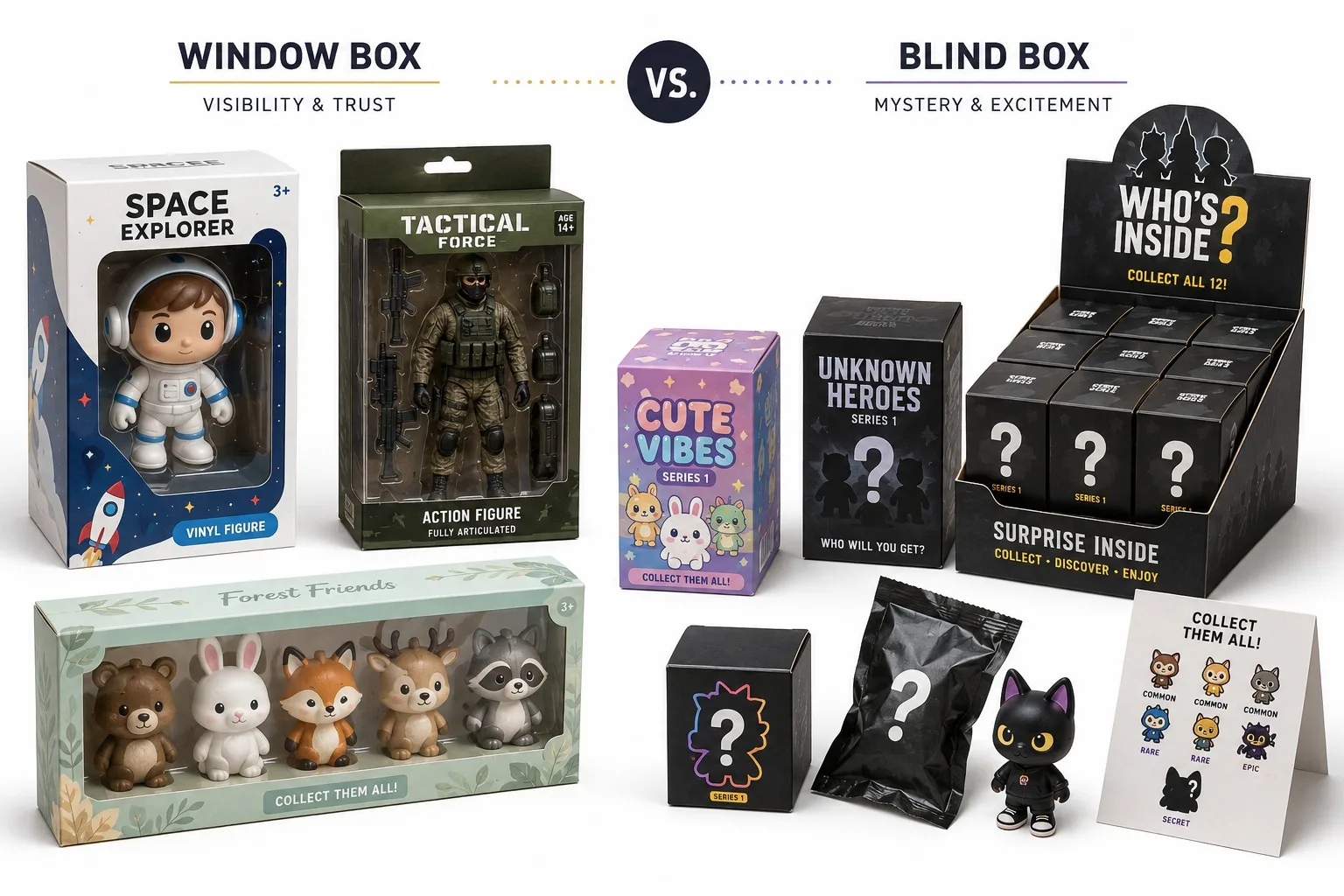
Window boxes solve for transparency. A clear plastic window lets a customer examine the toy before buying, paired with a sturdy paperboard or cardboard structure that still protects it in transit. This works well for parents making a considered purchase, where seeing exactly what's inside reduces hesitation at the shelf.
Sealed, non-transparent packaging does the opposite on purpose. It hides the contents entirely, and that uncertainty is the actual product. This format has become one of the fastest-growing formats in the category, driven by collectible lines built around figures, mini-figures, and character series where buyers don't just want the toy, they want the surprise of finding out which one they got.
Why Sealed Mystery Formats Keep Growing
The appeal isn't just novelty. A custom blind box format turns a single purchase into a repeatable behavior, since completing a series or chasing a rare variant gives buyers a reason to purchase again rather than stopping at one unit. That mechanic is doing more to drive repeat purchases than most traditional marketing tactics, because the packaging itself is the source of the incentive, not an ad or a discount code.
What makes this format work structurally- A fully sealed, tamper-evident closure, so the surprise element can't be compromised before purchase.
- A durable outer shell, cardboard or paperboard, that survives handling on a shelf or during shipping without giving away clues about the contents.
- Compact, stackable sizing, since these formats are often sold in bulk displays or subscription-style batches rather than as single standalone units.
Branding Still Has to Do Its Job Without Showing the Product
This is where mystery packaging gets genuinely difficult from a design standpoint. Without a product image to lean on, the box has to sell the idea of the series itself, through consistent color systems, a recognizable brand mark, and artwork that signals what kind of characters or items might be inside without confirming which one. Package design architecture, a term used across the industry for the dominant visual element that anchors a brand's shelf presence, matters even more here than it does for packaging that can rely on a photo of the product.
Sustainability Is Now Part of the Design Brief Too
Materials matter beyond structural performance. Recyclable cardboard and reduced plastic components are increasingly expected rather than a bonus, particularly as parents factor environmental impact into purchase decisions across the toy category generally. A brand building out a mystery or collectible line has to solve this alongside the durability and tamper-evidence requirements, not instead of them.
Where Smaller Brands Can Compete
Chasing an established collectible franchise's packaging budget isn't realistic for most brands entering this format. What is realistic is applying the same structural logic at a smaller scale: a properly sealed format, a consistent visual system across the series, and materials sized to keep unit costs manageable at lower volumes. Custom toy packaging built around a specific product's dimensions and series concept, rather than adapted from a generic template, is what lets a smaller brand execute this format credibly instead of looking like an imitation of a bigger one.
Frequently Asked Questions
What is blind box packaging?
Blind box packaging is a sealed, non-transparent format that hides the toy or collectible inside until the box is opened, creating a surprise element that encourages repeat purchases.
Why are blind boxes so popular in the toy industry right now?
The format turns a single purchase into a repeatable behavior, since collectors often buy multiple units to complete a set or chase a rare variant.
Does packaging design matter more for window boxes or blind boxes?
Both require careful design, but for blind boxes it matters more, since the box has to build interest and trust in the brand without showing the actual product inside.
The Real Design Decision
Choosing between visibility and mystery isn't really a design preference, it's a decision about what kind of buying behavior a brand wants to create. Transparency builds confidence in a single purchase. A sealed format builds momentum toward the next one.