The Growing Demand for Digital Business Skills
The world of business has undergone significant changes over the last decade. Companies are rapidly adopting technologies that enhance customer experiences, streamline operations, and expand their reach into global markets. As businesses continue to embrace Artificial Intelligence (AI), cloud computing, data analytics, and digital marketing, the demand for professionals who understand both business fundamentals and digital technologies has grown significantly. This increasing demand is encouraging students to enroll in Digital Business Management Courses, which prepare them for today's technology-driven business environment.
Modern organizations need professionals who can make data-driven decisions, manage digital projects, and develop innovative business strategies. Traditional management education alone is no longer enough to meet the evolving expectations of employers. Students recognize this shift and are increasingly choosing programs that combine core business knowledge with practical digital skills. As industries continue to undergo digital transformation, graduates with expertise in digital business management are expected to enjoy excellent career opportunities.
Why Students Prefer Digital Business Management Courses
One of the main reasons students choose these programs is their strong focus on solving real-world business challenges. Unlike traditional business courses, Digital Business Management programs integrate technology, innovation, and management into a comprehensive curriculum. Students gain practical experience through live projects, case studies, simulations, and industry collaborations, making them job-ready even before graduation.
Another major advantage is the wide range of career opportunities available after completing the course. Graduates can pursue roles such as Digital Business Analyst, Digital Marketing Manager, E-commerce Manager, Product Manager, Digital Transformation Consultant, CRM Specialist, and Operations Manager. Since almost every industry is adopting digital technologies, these professionals are in high demand across sectors such as healthcare, banking, retail, manufacturing, logistics, education, and information technology.
The growing popularity of e-commerce and online businesses has also increased the demand for these programs. Companies are looking for professionals who understand customer behavior, online branding, digital sales, and business analytics. Students view these courses as a pathway to stable careers, competitive salaries, and long-term professional growth.
Essential Skills Students Learn
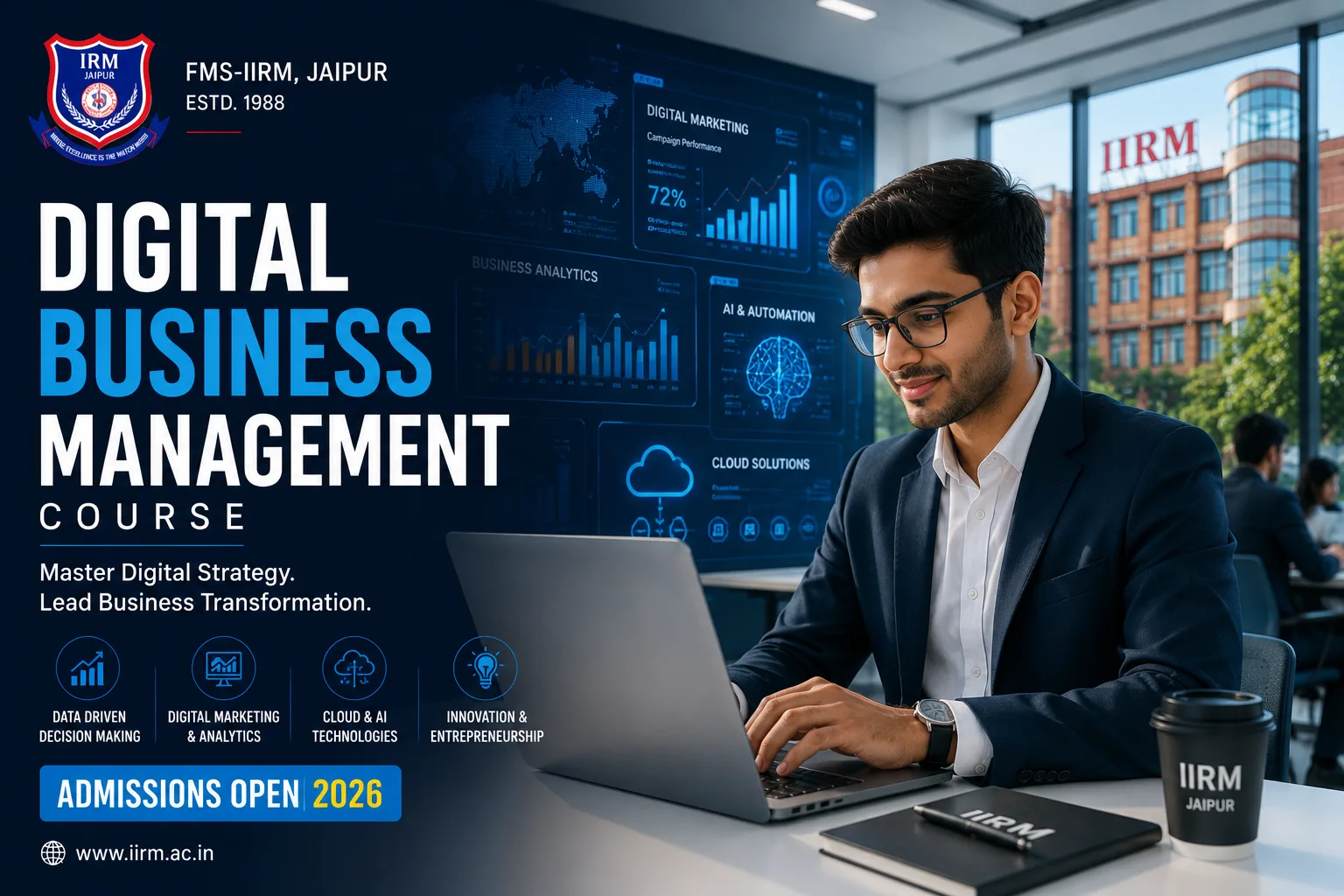
A Digital Business Management course equips students with a balanced combination of technical and managerial skills. One of the core areas of study is Digital Marketing, where students learn Search Engine Optimization (SEO), social media marketing, content strategy, email marketing, and online advertising. These skills help businesses attract customers, strengthen their online presence, and compete effectively in today's digital marketplace.
Students also study Business Analytics, which enables them to interpret data, evaluate business performance, and make informed decisions. As organizations increasingly rely on data for strategic planning, analytical thinking has become one of the most valuable workplace skills. In addition, students develop leadership, communication, problem-solving, and project management skills that prepare them to lead teams and manage business operations effectively.
Innovation and entrepreneurship are equally important components of the curriculum. Students are encouraged to identify new business opportunities, develop technology-driven solutions, and adapt to changing market trends. This practical approach helps graduates remain competitive in a fast-changing business environment.
Future Scope of Digital Business Management
The future of Digital Business Management is extremely promising. Businesses around the world continue to invest in digital transformation, automation, AI-powered solutions, and customer-centric technologies. As a result, there is a growing demand for professionals who can bridge the gap between business strategy and digital innovation.
Graduates can build successful careers with multinational corporations, technology companies, startups, consulting firms, and government organizations. Many also pursue entrepreneurship by launching their own digital businesses or consulting firms. As remote work and global collaboration become increasingly common, digital business professionals have greater flexibility to work across industries and international markets.
The continuous advancement of technology makes lifelong learning essential. Students entering this field benefit from long-term career opportunities because digital skills remain valuable across nearly every industry. Employers highly value professionals who can adapt to technological changes while maintaining strong business knowledge, making Digital Business Management one of the most future-ready career choices available today.
Conclusion
Digital Business Management Courses have become a preferred choice for students who want careers that combine technology, innovation, and leadership. These programs provide practical industry exposure, develop highly sought-after digital skills, and prepare graduates for a wide range of management roles. As businesses continue their digital transformation journey, professionals with expertise in digital business management will remain in high demand. Choosing this course today can open the door to rewarding career opportunities, global exposure, and long-term professional success.
FAQs
1. What is a Digital Business Management course?
A Digital Business Management course combines business management principles with digital technologies such as digital marketing, business analytics, e-commerce, Artificial Intelligence (AI), and business strategy.
2. Who should study digital business management?
Students interested in business, technology, entrepreneurship, marketing, or management careers can greatly benefit from this course.
3. What career opportunities are available after completing this course?
Graduates can pursue careers as Digital Business Analysts, Digital Marketing Managers, E-commerce Managers, Product Managers, Digital Transformation Consultants, and Project Managers, among many other roles.
4. Is Digital Business Management a good career choice?
Yes. As businesses continue to adopt digital technologies, there is a strong and growing demand for professionals with expertise in digital business management.
5. What skills do students gain through this course?
Students develop valuable skills in digital marketing, business analytics, leadership, communication, strategic planning, project management, innovation, entrepreneurship, and problem-solving, preparing them for successful careers in the digital economy.