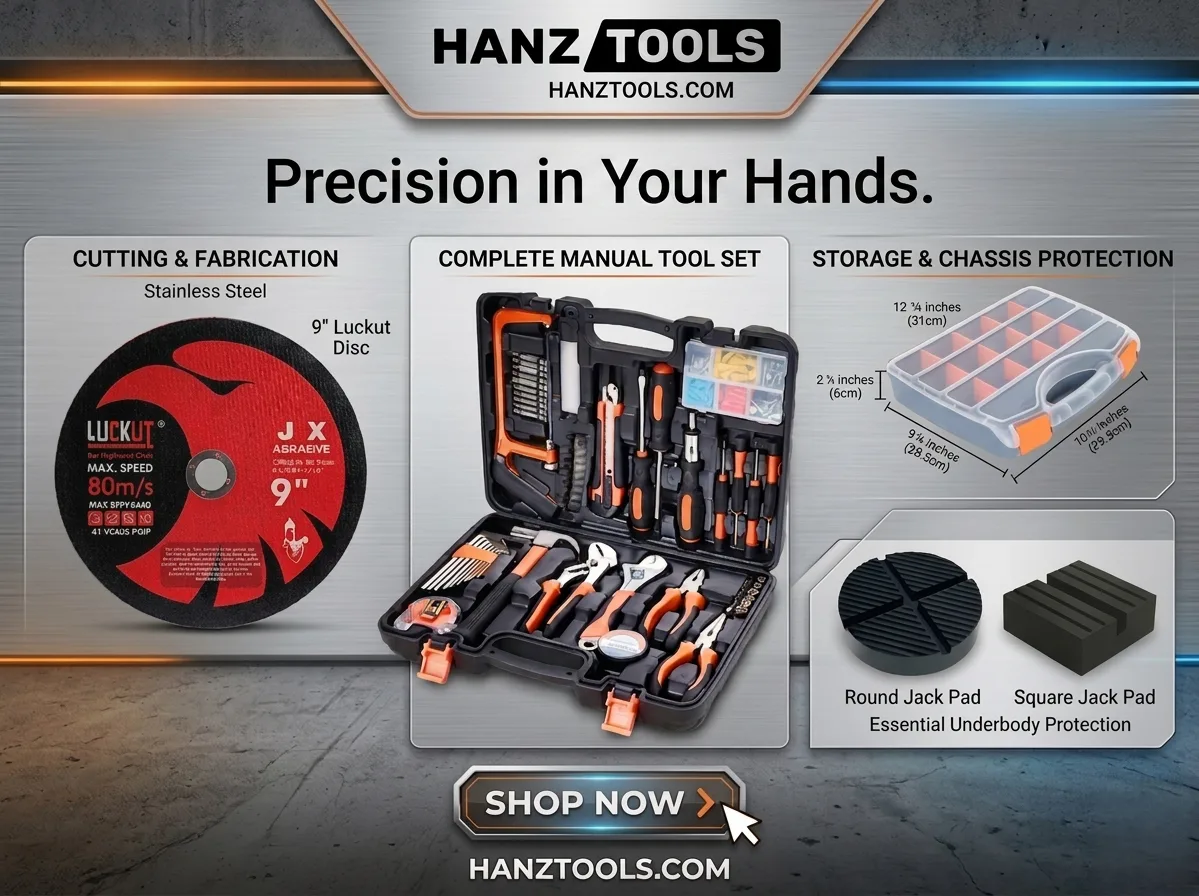
Tools and equipment are the foundation of any workshop, garage, or DIY workspace. Whether for home improvement, vehicle maintenance, construction, or professional trade work, having the right setup directly impacts the quality, speed, and safety of every task.
In practical terms, “tools” usually refer to handheld or manually operated items used for specific tasks such as measuring, cutting, tightening, or assembling. “Equipment,” on the other hand, refers to supporting devices or larger systems that help extend capability, improve efficiency, or enable more complex operations. Together, tools and equipment create a complete working environment.
Importance of Tools and Equipment in Workshops
A well-organized workshop relies on a combination of essential tools and equipment to function efficiently. Without the right setup, even simple tasks can become time-consuming or inaccurate. Proper tools and equipment help ensure:
- Better precision and measurement accuracy
- Safer working conditions
- Faster task completion
- Reduced physical effort
- Improved consistency in results
For both DIY users and professionals, these benefits are critical for maintaining productivity and quality.
Common Types of Workshop Tools
Most workshops include a core set of essential tools, such as:
- Measuring tools for layout and precision work
- Cutting tools for shaping and material processing
- Fastening tools for assembly and repair tasks
- General-purpose hand tools for everyday maintenance
These tools are used across almost all industries, from automotive repair to home renovation and construction.
Types of Workshop Equipment
In addition to basic tools, equipment plays an important role in supporting more advanced tasks. Workshop equipment may include:
- Workbenches and storage systems
- Lifting or support equipment for vehicles and heavy items
- Specialized machines for cutting, grinding, or shaping materials
- Safety equipment for protection during operation
These items help improve workflow efficiency and allow users to complete more complex tasks safely and effectively.
Why Quality Matters
Investing in high-quality tools and equipment is essential for long-term performance. Low-quality products may wear out quickly, reduce accuracy, and increase safety risks. In contrast, durable and well-designed tools provide:
- Longer service life
- More consistent performance
- Improved safety
- Lower long-term replacement costs
For professionals especially, reliability is not optional—it is necessary for daily operations.
Tools and Equipment for DIY vs Professional Use
DIY users and professionals often have different needs, but the importance of quality remains the same. DIY users typically prioritize versatility and ease of use, while professionals require durability, precision, and efficiency under frequent use conditions.
Regardless of experience level, choosing the right tools and equipment ensures better results and a smoother working experience.
Building a Practical Workshop Setup
A complete workshop does not require every available tool, but rather the right combination of essential tools and equipment suited to the tasks being performed. Starting with basic hand tools and gradually adding specialized equipment is often the most practical approach.
Well-chosen tools reduce mistakes, improve workflow, and make projects more enjoyable and efficient.
For reliable workshop and automotive tools and equipment designed for real-world applications, you can explore more here:
👉 https://hanztools.com/