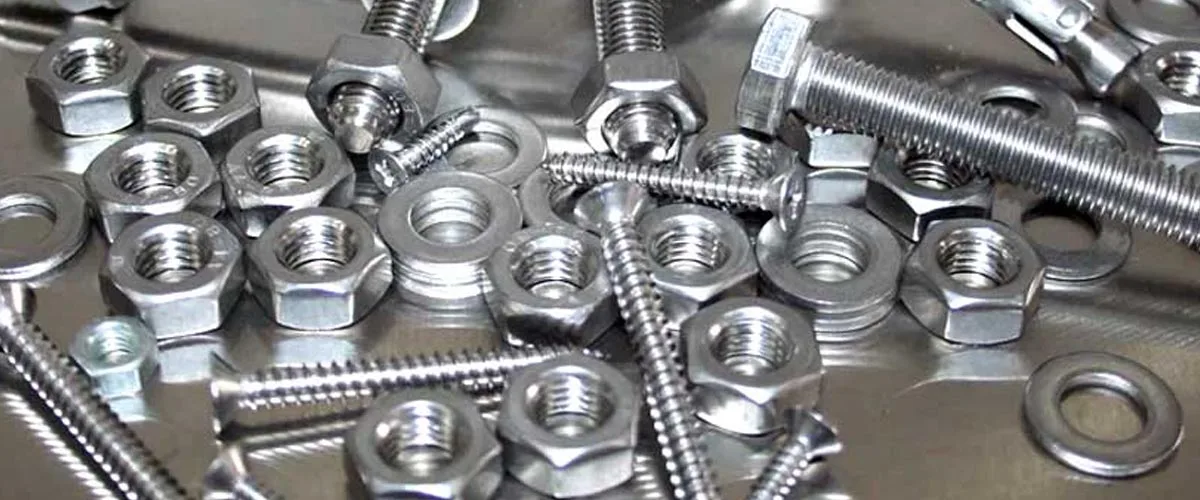
In demanding industrial environments, fasteners are exposed to much more than mechanical loads. Moisture, seawater, chemicals, temperature variations, and corrosive process fluids can affect the service life of conventional fastening materials. For applications where corrosion resistance, low weight, and dependable mechanical performance are important, Titanium Grade 2 Fasteners can be an effective material choice.
Titanium Grade 2 is a commercially pure, unalloyed titanium grade identified as UNS R50400. ASTM B348/B348M identifies Grade 2 as unalloyed titanium, while ASTM F467/F467M is used for titanium and titanium-alloy nuts and ASTM F468/F468M for titanium and titanium-alloy bolts, screws, studs, and similar fasteners.
For industrial buyers, engineers, OEMs, procurement teams, and fabricators, understanding the properties and applications of Titanium Grade 2 Fasteners is important when selecting fastening components for corrosion-sensitive equipment.
What Are Titanium Grade 2 Fasteners?
Titanium Grade 2 Fasteners are fastening components manufactured from commercially pure titanium Grade 2. The grade is known for its combination of corrosion resistance, moderate strength, ductility, formability, and weldability.
Depending on the assembly requirements, Titanium Grade 2 Fasteners can include:
- Titanium Grade 2 Bolts
- Titanium Grade 2 Nuts
- Titanium Grade 2 Screws
- Titanium Grade 2 Washers
- Titanium Grade 2 Stud Bolts
- Titanium Grade 2 Threaded Rods
- Socket Head Cap Screws
- Hex Head Bolts
- Countersunk Screws
- Custom-machined fasteners
The appropriate fastener type depends on the joint design, load requirements, dimensions, thread configuration, and applicable specification.
Why Choose Titanium Grade 2 Fasteners?
The main advantage of Titanium Grade 2 is the balance between corrosion resistance and mechanical performance.
Grade 2 is stronger than Grade 1 commercially pure titanium while retaining good formability and weldability. It is therefore commonly selected when corrosion resistance and fabrication characteristics are more important than the maximum strength offered by higher-strength titanium alloys.
For industrial customers, the key advantages include:
- Excellent corrosion resistance
- Relatively low density
- Moderate mechanical strength
- Good ductility
- Good formability
- Good weldability
- Nonmagnetic characteristics
- Long service potential in suitable environments
Titanium Grade 2 Fasteners Chemical Composition
Titanium Grade 2 is an unalloyed titanium grade, meaning titanium forms the balance of the composition and there are no intentional aluminum or vanadium additions as found in Grade 5 titanium.
Typical maximum composition requirements include:
ElementMaximum / RequirementTitaniumBalanceIron0.30%Oxygen0.25%Carbon0.10%Nitrogen0.03%Hydrogen0.015%Exact limits can vary depending on the applicable fastener specification, so industrial buyers should verify the required standard before purchasing.
Mechanical Properties of Titanium Grade 2 Fasteners
Titanium Grade 2 provides moderate strength compared with high-strength titanium alloys. Commonly specified minimum values include approximately 275 MPa yield strength, 345 MPa tensile strength, and 20% elongation, depending on the applicable specification and product condition.
PropertyTypical MinimumYield Strength275 MPaTensile Strength345 MPaElongation20%DensityApproximately 4.5 g/cm³The actual requirements should always be confirmed against the applicable ASTM or customer specification.
Corrosion Resistance of Titanium Grade 2 Fasteners
Corrosion resistance is one of the strongest reasons for using Titanium Grade 2 Fasteners.
Titanium naturally forms a stable passive oxide layer on its surface. This protective layer contributes to the material's resistance to many corrosive environments.
Titanium Grade 2 is therefore used in applications involving:
- Seawater
- Marine environments
- Chemical processing
- Water-treatment systems
- Desalination equipment
- Heat exchangers
- Selected industrial chemical environments
However, corrosion resistance should never be interpreted as universal resistance to every chemical. Engineers should evaluate the actual chemical concentration, temperature, pressure, contaminants, and operating conditions before specifying the fastener.
Lightweight Advantage of Titanium Grade 2 Fasteners
Titanium has a density of approximately 4.5 g/cm³, making it significantly lighter than conventional steel fastening materials.
This can be advantageous when weight reduction is important.
For example, lightweight fasteners can be useful in:
- Aerospace-related equipment
- Marine systems
- Transportation equipment
- Specialized machinery
- Lightweight fabricated structures
- Equipment where component weight is a design consideration
The weight advantage should be evaluated alongside mechanical requirements and total project cost.
Types of Titanium Grade 2 Fasteners
Titanium Grade 2 Bolts
Titanium Grade 2 Bolts are used to create detachable mechanical joints. Hex bolts, socket-head bolts, and other configurations can be selected according to the assembly design.
Titanium Grade 2 Nuts
Nuts are internally threaded components used with compatible bolts and studs. For industrial applications, the nut and bolt combination should be specified for compatible dimensions, threads, and material requirements.
Titanium Grade 2 Screws
Titanium Grade 2 Screws are used in machinery, equipment, fabrication, and specialized assemblies where corrosion resistance and low weight are valuable.
Titanium Grade 2 Washers
Washers can distribute the load under a bolt head or nut and can be specified in suitable dimensions for the fastening assembly.
Titanium Grade 2 Stud Bolts
Stud bolts are commonly used in flanged and equipment connections. The required thread configuration and dimensions should be specified according to the applicable standard.
Titanium Grade 2 Threaded Rods
Threaded rods provide continuous external threading and can be used in fabricated assemblies, mounting systems, and specialized industrial applications.
Industrial Applications of Titanium Grade 2 Fasteners
Titanium Grade 2 Fasteners are particularly relevant to industries where corrosion resistance and weight reduction are important.
1. Chemical Processing Industry
Chemical-processing equipment can be exposed to aggressive chemicals and corrosive process fluids.
Titanium Grade 2 Fasteners can be considered for suitable assemblies where their corrosion resistance matches the process conditions.
Potential applications include:
- Chemical-processing equipment
- Tanks
- Heat exchangers
- Piping assemblies
- Pumps
- Valves
- Process equipment
Material compatibility should always be evaluated against the actual chemical environment.
2. Marine Industry
Marine equipment is exposed to seawater and humid environments where corrosion can become a major concern.
Titanium Grade 2 Fasteners can be used in selected marine applications where corrosion resistance and lower weight are beneficial.
3. Desalination Plants
Desalination equipment operates in highly saline environments. Titanium Grade 2 is associated with heat exchangers and other equipment used in desalination and water-treatment systems.
Fasteners manufactured from a compatible titanium grade can be considered for suitable assemblies.
4. Heat Exchanger Equipment
Heat exchangers can operate with aggressive process fluids and water systems. Titanium Grade 2 is widely used in heat-exchanger applications because of its corrosion resistance.
Fastener selection should consider the complete equipment design and fluid environment.
5. Oil and Gas Industry
Oil and gas equipment can involve demanding combinations of pressure, temperature, chemicals, and corrosive fluids.
Titanium Grade 2 Fasteners may be considered for specialized applications where the grade provides the required corrosion performance and mechanical characteristics.
6. Aerospace Applications
Titanium's low density and corrosion resistance make titanium fasteners attractive for selected aerospace applications. However, aerospace procurement normally requires strict material, dimensional, testing, and certification requirements.
7. Pharmaceutical and Specialized Equipment
Titanium can be selected for specialized equipment where corrosion resistance, cleanliness, and material performance are important.
The actual grade and fastener specification should be determined according to the equipment's technical requirements.
Titanium Grade 2 Fasteners vs Stainless Steel Fasteners
Industrial buyers often compare titanium fasteners with stainless steel fasteners.
FeatureTitanium Grade 2Stainless Steel 304Material typeCommercially pure titaniumAustenitic stainless steelDensityLowerHigherCorrosion resistanceExcellent in many environmentsGood to excellent depending on environmentWeightLightweightHeavierStrengthModerateVaries by fastener grade/conditionTypical advantageCorrosion resistance + low weightCost and broad availabilityTitanium Grade 2 may be more attractive where weight reduction and corrosion resistance justify the higher material cost.
For general industrial applications where weight is less important and corrosion conditions are moderate, stainless steel can be a more economical choice.
Titanium Grade 2 vs Titanium Grade 5 Fasteners
Grade 2 and Grade 5 are frequently considered for different engineering priorities.
FeatureTitanium Grade 2Titanium Grade 5UNSR50400R56400MaterialCommercially pure titaniumTitanium alloyMain alloying elementsNone intentionally addedAluminum + VanadiumStrengthModerateHigherCorrosion resistanceExcellentExcellentFormabilityGoodLower than Grade 2Typical selection priorityCorrosion resistance and fabricationHigh strength-to-weight ratioASTM identifies Grade 2 as UNS R50400 unalloyed titanium and Grade 5 as UNS R56400 titanium alloy containing aluminum and vanadium.
Therefore, the choice should be based on the application's engineering requirements rather than simply selecting the stronger grade.
Standards for Titanium Grade 2 Fasteners
Standards are important when purchasing industrial fasteners because they establish requirements for material, mechanical properties, dimensions, and testing.
Commonly referenced specifications include:
- ASTM F467/F467M – Titanium and titanium-alloy nuts
- ASTM F468/F468M – Titanium and titanium-alloy bolts, screws, studs, and similar fasteners
- ASTM B348/B348M – Titanium and titanium-alloy bars and billets
- Applicable ASME, DIN, ISO, or other dimensional standards where specified
ASTM B348/B348M specifically lists Grade 2 as UNS R50400 unalloyed titanium.
Industrial buyers should always specify the exact standard required for the finished fastener rather than relying only on the material grade.
How to Select Titanium Grade 2 Fasteners
Before ordering Titanium Grade 2 Fasteners, procurement teams should evaluate the following parameters.
Material Grade
Confirm:
Titanium Grade 2 / UNS R50400
Fastener Type
Specify whether the requirement is for:
- Bolts
- Nuts
- Screws
- Washers
- Studs
- Threaded rods
- Custom fasteners
Dimensions
Provide:
- Diameter
- Length
- Thread size
- Thread pitch
- Head dimensions
- Washer dimensions where applicable
Thread Standard
Specify whether metric, UNC, UNF, or another thread configuration is required.
Mechanical Requirements
Confirm the required tensile strength, yield strength, elongation, hardness, and other mechanical requirements.
Operating Environment
Consider:
- Chemical exposure
- Chloride exposure
- Seawater
- Temperature
- Pressure
- Humidity
- Outdoor exposure
Certification
For critical industrial projects, customers may require:
- Material Test Certificates
- Chemical analysis
- Mechanical test reports
- Dimensional inspection
- Heat/lot traceability
- Third-party inspection
Manufacturing Considerations for Titanium Grade 2 Fasteners
Manufacturing titanium fasteners requires suitable machining, forming, threading, and inspection practices.
Fastener manufacturers may use processes such as:
- CNC machining
- Cold forming where applicable
- Forging
- Threading
- Thread rolling where suitable
- Surface finishing
- Dimensional inspection
The manufacturing process should be appropriate for the required fastener size, geometry, specification, and production quantity.
For critical industrial applications, buyers should confirm the manufacturer's quality-control and inspection procedures before placing an order.
Benefits of Titanium Grade 2 Fasteners for Industrial Customers
Excellent Corrosion Resistance
Titanium Grade 2 provides strong corrosion resistance in many industrial and marine environments.
Lower Component Weight
Its relatively low density can help reduce overall assembly weight.
Good Ductility
The material provides useful ductility for appropriate fastening applications.
Good Fabrication Characteristics
Grade 2 has good formability and weldability compared with many higher-strength titanium alloys.
Suitable for Specialized Applications
Titanium Grade 2 Fasteners can be considered for chemical, marine, desalination, heat-exchanger, aerospace, and other specialized applications.
How to Buy Titanium Grade 2 Fasteners
Industrial buyers should avoid specifying fasteners only by the phrase "Titanium Grade 2."
A proper purchase specification should ideally include:
Product: Titanium Grade 2 Fasteners
Grade: Titanium Grade 2
UNS: R50400
Standard: Applicable ASTM/ASME specification
Fastener type: Bolt/Nut/Screw/Washer/Stud
Diameter: Required size
Length: Required length
Thread: Metric/UNC/UNF/etc.
Quantity: Required quantity
Testing: As required
Certification: As required
Inspection: As required
Providing complete information helps suppliers quote the correct product and reduces the risk of receiving fasteners that do not meet the project's requirements.