Introduction
Why do some exhibition booths attract crowds while others struggle to generate meaningful conversations?
The answer often has less to do with booth size and budget and more to do with how effectively the space is designed to engage visitors. In today's competitive trade show environment, exhibitors have only a few seconds to capture attention and encourage attendees to stop, explore, and interact.
According to industry research from the Centre for Exhibition Industry Research (CEIR), face-to-face interactions remain one of the most effective ways to build business relationships, evaluate buyer interest, and influence purchasing decisions. This is one of the key reasons companies continue to invest heavily in exhibitions and trade shows despite the growth of digital marketing.
Whether you're planning a custom exhibition stand or looking for ways to improve your trade show marketing strategy, the right booth design can significantly impact visitor engagement and lead generation. Here are ten proven exhibition booth design elements that can help maximise your event success.
Why Booth Design Directly Impacts Trade Show ROI
Trade shows remain one of the most effective marketing channels for businesses that want to generate leads, build relationships, and increase brand visibility. However, exhibiting at an event requires a significant investment in exhibition space, booth construction, logistics, staffing, travel, and promotional activities. To justify these costs, exhibitors need measurable results.
This is where exhibition booth design becomes a critical factor.
Many companies focus heavily on attracting visitors to their stand, but fewer realize that booth design directly influences visitor behavior. The way a booth looks, feels, and functions can determine whether attendees stop to engage, walk past, or remember the brand after the event.
A well-designed exhibition stand helps create a positive first impression, communicate brand value quickly, and guide visitors through a seamless experience. From open layouts and strategic branding to interactive displays and comfortable meeting spaces, every design element contributes to visitor engagement and lead generation.
Research consistently shows that attendees are more likely to enter booths that appear welcoming, easy to navigate, and visually appealing. When visitors spend more time at a stand, exhibitors have more opportunities to start conversations, demonstrate products, understand customer needs, and qualify potential leads.
Beyond attracting foot traffic, effective booth design can also improve lead quality. Visitors who clearly understand your products, services, and value proposition are more likely to become meaningful business prospects rather than casual attendees.
Simply put, exhibition success is not measured by the number of people who walk past your booth. It is measured by the number of meaningful interactions, qualified leads, and business opportunities generated during the event. A thoughtfully designed booth helps turn visitor interest into measurable outcomes, making it one of the most important drivers of trade show ROI.
1. Open Layouts Make Booths More Approachable
One of the most common exhibition mistakes is creating barriers between visitors and the booth. Large reception counters, enclosed walls, and crowded displays can unintentionally make a stand feel difficult to enter.
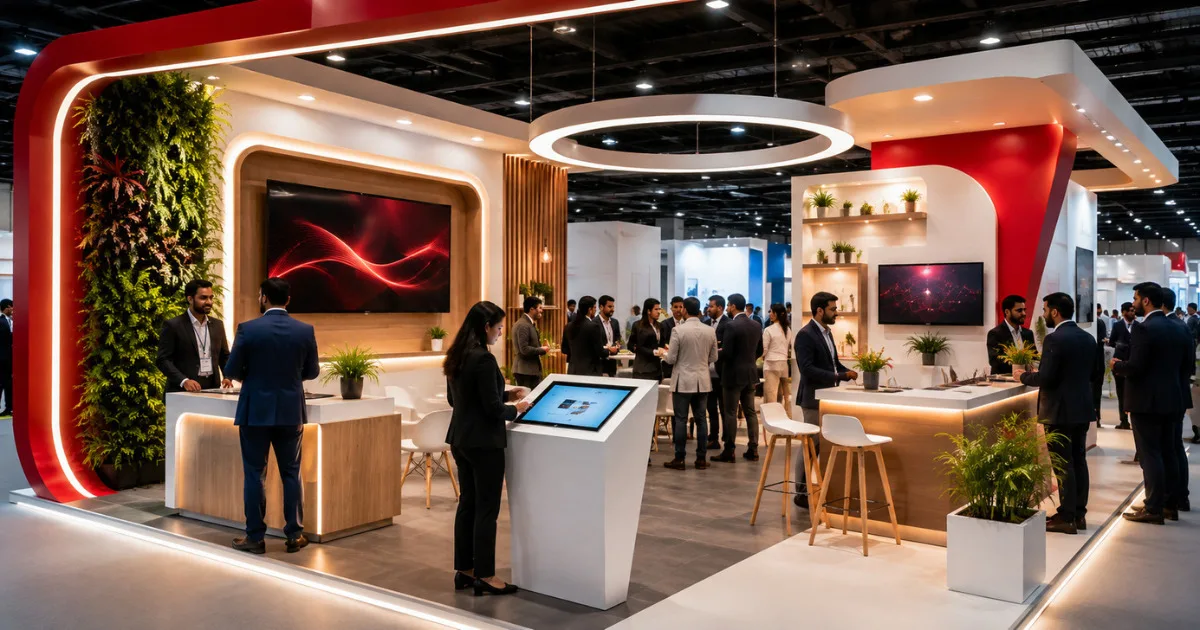
Successful exhibitors focus on creating open and welcoming spaces. Wide entry points, clear walkways, and visible product displays encourage attendees to step inside and explore naturally. Visitors are more likely to engage when they can easily understand what your company offers without feeling pressured.
An open layout also improves visitor flow during busy periods, allowing multiple attendees to explore the booth comfortably while creating more opportunities for conversations.
Why It Matters: Open layouts remove barriers, increase foot traffic, and create more opportunities for meaningful visitor engagement.
2. Strong Branding Captures Attention Quickly
Trade show attendees are exposed to hundreds of exhibitors throughout the day. Most visitors decide within seconds whether a booth is worth exploring.
Your logo, brand colours, and value proposition should be visible from a distance and easy to understand at a glance. Effective exhibition stand design ensures that visitors immediately recognise who you are and what your company offers.
Strong branding extends beyond logos. Consistent visuals across graphics, displays, digital screens, and promotional materials help reinforce brand identity and improve recall.
Why It Matters: Strong branding improves visibility, attracts relevant visitors, and increases brand recognition long after the event ends.
3. Strategic Lighting Enhances Booth Appeal
Lighting is one of the most overlooked elements of exhibition booth design, yet it has a significant impact on visitor perception.
A well-planned lighting strategy highlights products, draws attention to key messaging, and creates a welcoming atmosphere. Accent lighting can showcase featured products, while backlit graphics can improve visibility from across the exhibition floor.
Modern LED lighting solutions also help create a more professional and polished appearance without dramatically increasing costs.
Why It Matters: Strategic lighting helps your booth stand out, improves visual focus, and encourages visitors to stop and engage.
4. Interactive Experiences Increase Engagement
Today's attendees expect more than static displays and brochures. They want opportunities to interact with products, explore solutions, and experience brands firsthand.
Interactive elements such as touchscreens, augmented reality experiences, product configurators, and digital presentations encourage active participation. These experiences make complex products easier to understand while creating memorable interactions.
Interactive technologies can also provide valuable insights into visitor interests, helping booth staff deliver more personalised conversations.
Why It Matters: Interactive experiences increase participation, improve product understanding, and encourage visitors to spend more time at your booth.
5. Live Demonstrations Build Trust Faster
Seeing a product in action is often more convincing than reading about it.
Whether showcasing machinery, software, consumer products, or services, live demonstrations help visitors understand real-world applications and benefits. Demonstrations also create natural gathering points that attract additional attention from nearby attendees.
To maximise impact, demonstrations should focus on solving customer challenges rather than simply listing product features.
Why It Matters: Live demonstrations build credibility, reduce uncertainty, and generate higher-quality conversations.
6. Comfortable Meeting Areas Encourage Meaningful Conversations
While attracting visitors is important, many valuable business opportunities emerge through one-on-one discussions.
Trade shows can be noisy and crowded, making it difficult to discuss business requirements effectively. Dedicated meeting areas provide a quieter environment where exhibitors and visitors can have productive conversations.
Even a small seating area can create a more comfortable setting for relationship-building and lead qualification.
Why It Matters: Comfortable meeting spaces support stronger business discussions and improve the likelihood of generating qualified leads.
7. Clear Messaging Outperforms Clever Messaging
Visitors move quickly through exhibition halls. If your messaging is unclear or overly complex, they may continue walking before understanding your value.
The most effective exhibition stands communicate a simple message. Visitors should immediately understand who you are, what you offer, and how your solution solves a problem.
Short headlines, benefit-focused statements, and concise supporting text typically outperform lengthy explanations filled with technical jargon.
Why It Matters: Clear messaging attracts the right audience, reduces confusion, and improves engagement rates.
8. Memorable Experiences Create Lasting Impressions
Trade show attendees often visit dozens of booths during a single event. The experiences they remember are usually the ones that stand out.
Hands-on product trials, educational presentations, competitions, and interactive challenges help visitors connect with your brand in meaningful ways. The most effective experiences are closely aligned with your products or services and provide genuine value.
Memorable experiences can also encourage social sharing and word-of-mouth promotion, extending your visibility beyond the exhibition floor.
Why It Matters: Memorable experiences increase brand recall and encourage visitors to continue the conversation after the event.
9. Digital Lead Capture Improves Follow-Up
Generating booth traffic is only valuable if the resulting connections can be converted into business opportunities.
Digital lead capture tools such as QR codes, badge scanners, mobile apps, and digital forms help exhibitors collect and organize visitor information efficiently. These systems reduce manual work while capturing valuable insights about visitor interests and buying intent.
Fast and organized follow-up often plays a critical role in converting exhibition leads into customers.
Why It Matters: Effective lead capture transforms visitor engagement into measurable business results.
10. Great Booth Staff Make the Biggest Difference
Even the most impressive exhibition stand cannot replace the value of genuine human interaction.
Visitors may be attracted by the design, but it is the booth staff who determine whether interest turns into opportunity. Successful teams know how to start conversations naturally, understand visitor needs, and provide relevant information.
Preparation is equally important. Staff should understand products, messaging, event objectives, and lead qualification processes before the exhibition begins.
Why It Matters: Well-trained booth staff build trust, strengthen relationships, and convert conversations into qualified leads.
Frequently Asked Questions
How can I increase visitor engagement at a trade show booth?
Focus on creating an open layout, incorporating interactive experiences, providing live demonstrations, and ensuring your messaging is clear and easy to understand.
What booth design elements generate the most leads?
Interactive displays, live demonstrations, effective lead capture systems, and knowledgeable booth staff typically have the greatest impact on lead generation.
Why is exhibition booth design important?
Exhibition booth design influences first impressions, visitor engagement, brand perception, and the overall effectiveness of your trade show marketing efforts.
How can exhibitors improve lead capture at events?
Using digital lead capture tools such as QR codes, badge scanners, and mobile applications helps streamline data collection and improve follow-up efficiency.
Common Exhibition Booth Design Mistakes That Reduce Visitor Engagement
Even companies with strong products and experienced sales teams can struggle at trade shows if their booth design creates barriers to engagement. Avoiding these common mistakes can significantly improve visitor experience and increase lead generation opportunities.
1. Creating Physical Barriers at the Entrance
Large reception counters, enclosed walls, and cluttered displays can make visitors feel hesitant to enter the booth. If attendees cannot easily access the space, they are more likely to walk past.
What to Do Instead: Use open layouts, wide entry points, and clear pathways that invite visitors inside.
2. Overloading the Booth with Information
Trying to communicate too many messages at once often creates confusion. Visitors typically spend only a few seconds deciding whether a booth is relevant to them.
What to Do Instead: Focus on one clear value proposition and use concise, benefit-driven messaging.
3. Poor Branding Visibility
If attendees cannot quickly identify your company or understand what you offer, you risk losing potential opportunities before conversations even begin.
What to Do Instead: Display your logo, brand colors, and key messaging prominently so they are visible from a distance.
4. Ignoring Lighting Strategy
A poorly lit booth can appear uninviting and fail to attract attention, especially in large exhibition halls filled with competing displays.
What to Do Instead: Use strategic lighting to highlight products, graphics, and important areas of the stand.
5. Relying Only on Brochures and Static Displays
Modern trade show visitors expect interactive experiences. Booths that rely solely on printed materials often struggle to hold attention.
What to Do Instead: Incorporate product demonstrations, digital displays, touchscreens, or hands-on experiences whenever possible.
6. Lack of Comfortable Meeting Space
Without a dedicated area for discussions, it can be difficult to move conversations beyond a quick introduction.
What to Do Instead: Include a small meeting area where visitors and booth staff can discuss business needs more comfortably.
7. Poor Visitor Flow and Navigation
Crowded layouts, misplaced displays, and narrow walkways can create bottlenecks and discourage visitors from exploring the booth.
What to Do Instead: Design the space to support smooth movement and easy access to key attractions.
8. Focusing on Design Instead of Visitor Experience
An impressive-looking booth may attract attention, but if visitors cannot easily understand your products or interact with your team, engagement will remain low.
What to Do Instead: Balance visual appeal with functionality, accessibility, and visitor comfort.
9. Not Having a Lead Capture Strategy
Many exhibitors invest heavily in booth design but fail to capture visitor information efficiently, resulting in missed opportunities after the event.
What to Do Instead: Use digital lead capture tools, QR codes, or badge scanners to collect and organize prospect information.
10. Unprepared Booth Staff
Even the best-designed exhibition stand cannot compensate for staff who are disengaged, uninformed, or overly aggressive in their approach.
What to Do Instead: Train staff before the event so they can confidently engage visitors, answer questions, and qualify leads.
Final Thoughts
Successful exhibition booths are designed around the visitor experience. Open layouts, strong branding, strategic lighting, interactive displays, live demonstrations, and effective lead capture systems all contribute to higher engagement and stronger business outcomes.
However, great exhibition stand design is only part of the equation. The most successful exhibitors focus on creating an environment where meaningful conversations can happen. When visitors feel comfortable, informed, and engaged, the likelihood of generating qualified leads increases significantly.
At the end of the day, the best exhibition booths are not necessarily the largest or most expensive. They are the ones that make it easy for people to stop, connect, learn, and remember the brand long after the event has ended.
Discover our work at https://youngmirchies.com/