Biotechnology is transforming the way we approach healthcare, agriculture, environmental sustainability, and pharmaceutical innovation. From developing life-saving medicines to improving crop productivity and advancing personalized healthcare, biotechnology has become one of the most promising engineering disciplines. As industries increasingly adopt technologies like artificial intelligence, bioinformatics, and genetic engineering, students need more than theoretical knowledge to succeed. Choosing the right engineering program is now an important step toward building a future-ready career.
Students searching for the Best B.Tech Biotechnology College in UP often compare factors such as curriculum quality, laboratory facilities, research opportunities, faculty expertise, and industry exposure. While placements remain important, employers today also value practical skills, problem-solving abilities, and experience with modern laboratory techniques. Institutions that combine academic excellence with hands-on learning help students develop the competencies required for a rapidly changing biotechnology landscape.
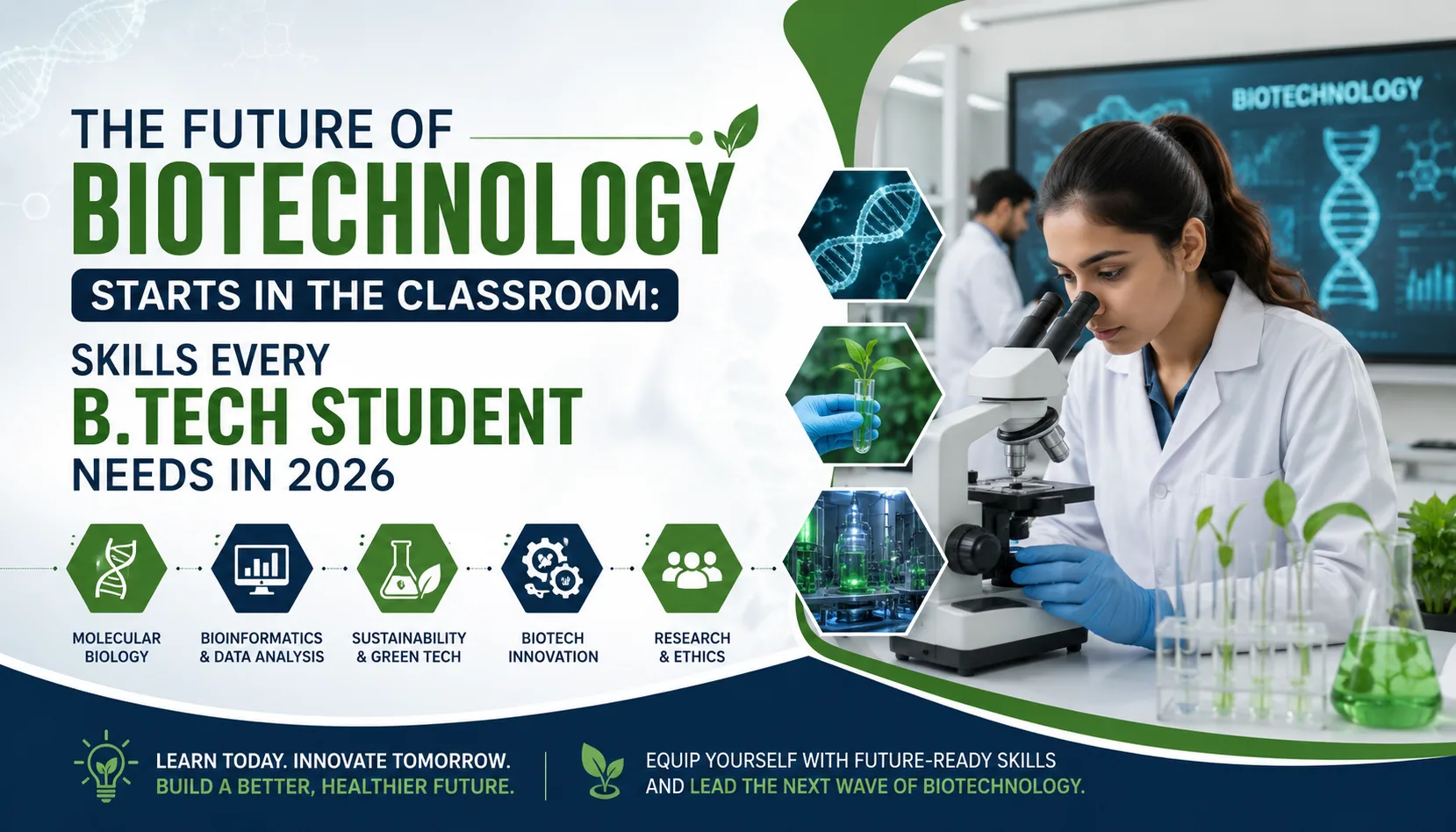
One of the biggest shifts in biotechnology education is the growing emphasis on interdisciplinary learning. Biotechnology is no longer limited to biology and chemistry. Modern professionals frequently work with data science, artificial intelligence, computational biology, and automation to solve complex scientific challenges. Learning these complementary skills during a B.Tech program can significantly improve career prospects after graduation.
Practical experience also plays a crucial role in student development. Laboratory training, industrial internships, research projects, workshops, and innovation programs allow students to apply classroom concepts in real-world environments. These experiences not only strengthen technical knowledge but also improve analytical thinking, teamwork, and communication skills that employers value across biotechnology industries.
Students evaluating Top Biotechnology Engineering Colleges in Delhi NCR or institutions in other regions should look beyond rankings and promotional claims. Important considerations include research infrastructure, collaboration with pharmaceutical and biotechnology companies, opportunities for innovation, experienced faculty members, and support for higher education or entrepreneurship. A balanced evaluation helps students select an institution that aligns with their career aspirations.
The biotechnology industry continues to expand across diverse sectors including pharmaceuticals, healthcare, agriculture, food technology, environmental management, and biomedical research. Graduates can explore roles such as biotechnology engineer, research associate, quality analyst, clinical research professional, bioprocess engineer, regulatory affairs specialist, and bioinformatics analyst. With continuous technological advancements, professionals who keep updating their skills remain highly competitive in the job market.
As biotechnology evolves, students should adopt a mindset of continuous learning. Participating in research activities, attending industry seminars, learning emerging software tools, and staying informed about scientific developments can create long-term career advantages. Developing both technical expertise and professional skills prepares graduates to contribute meaningfully to innovation and scientific progress.
If you're planning to pursue biotechnology engineering, investing time in choosing the right institution and building practical skills can make a significant difference in your future career. A strong academic foundation combined with research exposure and industry experience creates opportunities across multiple sectors in India and abroad.
Read the complete blog here: The Future of Biotechnology Starts in the Classroom: Skills Every B.Tech Student Needs in 2026