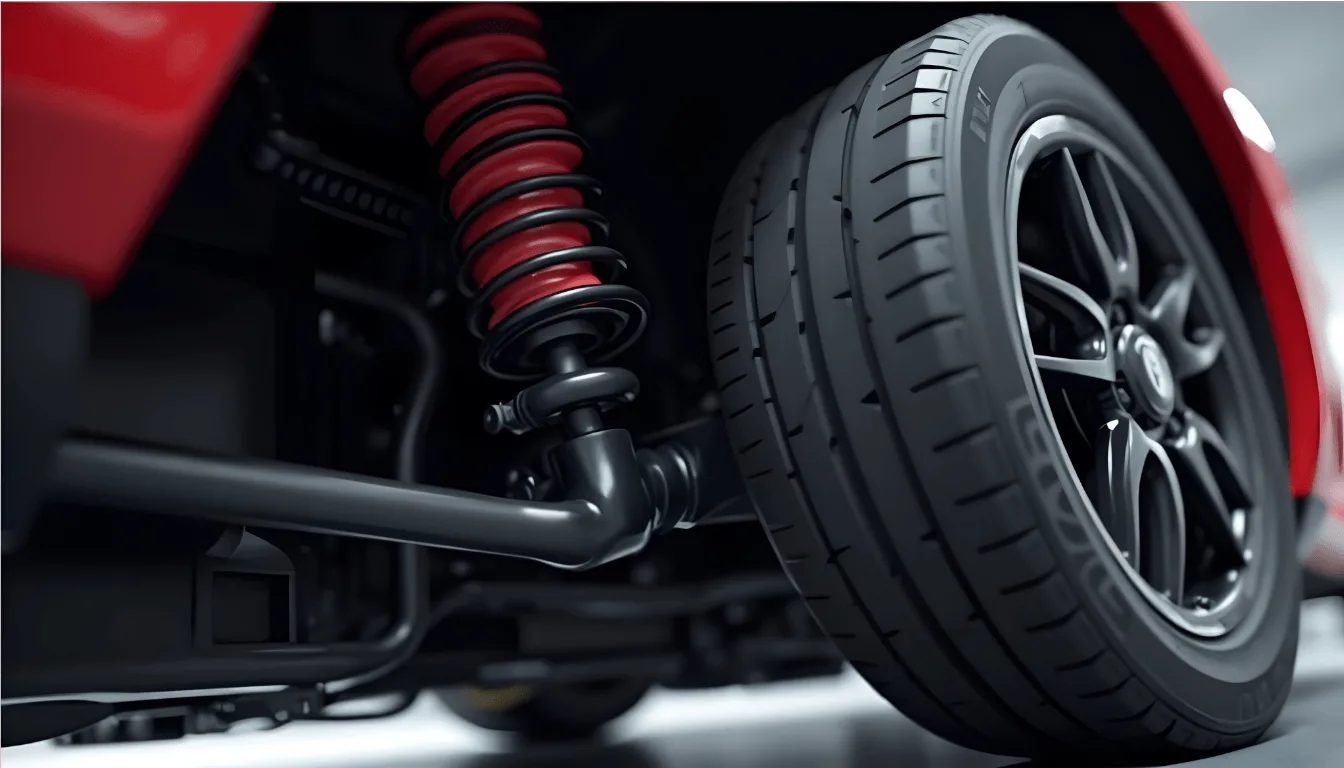
Suspension tuning often sounds more complicated than it really is. A lot of people assume it requires a professional workshop, specialist equipment, or deep mechanical knowledge. While advanced setups do benefit from experience, basic suspension tuning can be done at home with a small set of tools and a careful approach.
The key is not having a garage full of expensive equipment, but understanding what each tool does and why it matters. Suspension setup is about precision. Small changes in ride height, alignment, or damping can noticeably affect how a car feels on the road.
Here’s a practical look at the essential tools you need if you want to start tuning your suspension safely and effectively.
A Reliable Jack And Axle Stands
Before anything else, you need a safe way to lift and support the vehicle. A hydraulic floor jack is the most common choice for home use because it offers stability and control. Once the car is lifted, axle stands are essential for holding it securely in place.
This is not just about convenience—it’s about safety. Suspension work often requires time spent under the vehicle or with wheels removed, and relying on a jack alone is not safe.
A stable setup also makes adjustments more accurate. If the car shifts or settles unevenly, it can affect measurements like ride height or alignment.
Coilover Spanners For Ride Height Adjustment
If your vehicle uses coilover suspension, a set of coilover adjustment spanners is one of the most important tools you’ll need.
These spanners are used to adjust the threaded collars on coilover units, which control ride height and preload. Without the correct tool, it is easy to damage the components or make uneven adjustments.
Small changes in ride height can have a noticeable impact on handling and comfort. Lowering a car too much, for example, can reduce suspension travel and make the ride harsh, while uneven adjustments can affect balance and tyre wear.
Coilover spanners make it possible to fine-tune height accurately and consistently across all corners of the vehicle.
Torque Wrench For Proper Fastening
A torque wrench is often overlooked by beginners, but it plays a critical role in suspension tuning.
Suspension components are under constant load and movement. Bolts need to be tightened to specific torque settings to ensure safety and performance. Over-tightening can damage threads or components, while under-tightening can lead to movement and instability.
A torque wrench allows you to apply the correct amount of force as specified by the manufacturer. This is especially important when working on control arms, dampers, and wheel assemblies.
It also ensures consistency. When all four corners of the car are tightened correctly, the suspension behaves as intended.
Tyre Pressure Gauge For Baseline Setup
While not technically part of the suspension system, tyre pressure has a direct effect on how suspension behaves.
A simple tyre pressure gauge helps ensure that all tyres are inflated correctly before making any suspension adjustments. Uneven or incorrect tyre pressures can mask suspension issues or lead to misleading results when tuning.
For example, a softer tyre may make a suspension setup feel smoother than it actually is, while an overinflated tyre can make it feel harsh and unbalanced.
Checking tyre pressure is a quick step, but it provides a reliable baseline before making any other changes.
Measuring Tape Or Ride Height Tool
Consistency is important in suspension tuning, and a simple measuring tape is often enough to track changes accurately.
Ride height is typically measured from a fixed point on the car—such as the wheel arch to the centre of the wheel hub or ground. Taking measurements before and after adjustments helps ensure that changes are even across all corners.
Some enthusiasts use dedicated ride height gauges, but a standard tape measure works well for most home setups.
The important part is consistency in how measurements are taken. Small differences in method can lead to incorrect assumptions about setup balance.
Camber Gauge Or Alignment Tools
Wheel alignment plays a major role in handling, and even basic camber adjustments can change how a car corners and wears tyres.
A camber gauge helps measure the angle of the wheels relative to vertical. While professional alignment machines offer higher precision, handheld gauges allow for basic adjustments at home.
Some suspension setups include adjustable camber bolts or top mounts, making it possible to fine-tune alignment without specialist equipment.
Even small camber changes can affect grip, especially during cornering. Too much negative camber can increase tyre wear, while too little can reduce cornering stability.
Socket Set And Breaker Bar
A good-quality socket set is essential for almost every suspension task. Suspension components are often secured with large, high-torque bolts that require strong tools to loosen and tighten safely.
A breaker bar is particularly useful for loosening stubborn bolts that have been tightened to high specifications. It provides extra leverage without relying on impact tools.
Having the right sockets ensures you don’t round off bolt heads or damage components during adjustments.
Pen, Notebook, Or Setup Log
One of the simplest but most effective tools is something to record changes.
Suspension tuning is a process of adjustment and evaluation. Keeping track of what you change—ride height, damping settings, or alignment—helps you understand how each adjustment affects the car.
Without notes, it’s easy to lose track of what worked and what didn’t. A basic log allows you to return to a previous setup if needed and refine changes more systematically.
Patience And Consistency Matter Most
While tools are important, the most valuable part of suspension tuning is not something you can buy.
Changes should be made gradually, with testing between each adjustment. Making multiple changes at once makes it difficult to understand what actually improved or worsened performance.
Road testing should always be done in safe, controlled conditions. The goal is to feel how the car responds, not to push limits immediately.
Tuning Your Suspension From Home
Suspension tuning at home doesn’t require a professional workshop, but it does require the right basic tools and a careful approach. A jack and axle stands provide safety, spanners and torque tools allow precise adjustments, and simple measuring tools help track changes accurately.
Beyond equipment, the key is consistency. Small, controlled adjustments combined with clear record-keeping lead to better results than large, unpredictable changes.
With the right setup and a methodical approach, even basic home tuning can significantly improve how a vehicle feels and performs on the road.