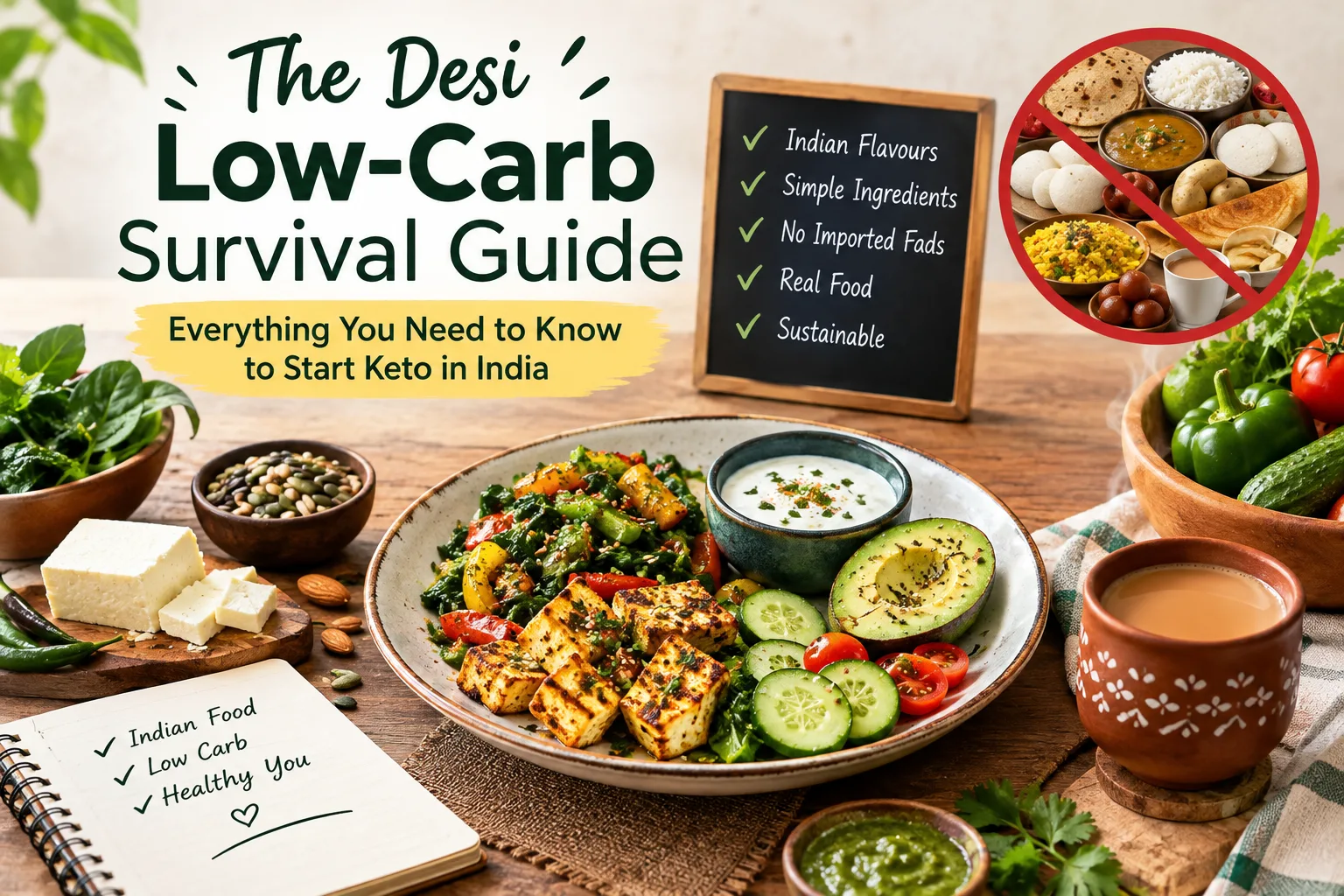
Starting keto in India can feel difficult when everyday meals revolve around roti, rice, dal, poha, dosa, idli, potatoes, sweets, and chai. But a low-carb lifestyle does not require imported ingredients, expensive products, or a complete rejection of Indian flavours.
With the right approach, you can prepare satisfying Indian meals using paneer, eggs, tofu, curd, coconut, vegetables, nuts, seeds, and traditional spices. The key is to understand what keto means, identify the main carbohydrate sources in your diet, plan practical substitutions, and avoid common mistakes.
A ketogenic diet is a very-low-carbohydrate, high-fat eating pattern that aims to move the body into ketosis, a state in which it relies more heavily on fat-derived ketones for energy. It may help some people lose weight in the short term, but it is not suitable for everyone and should not be treated as a universal cure or a substitute for medical care.
Medical note: Speak with a doctor or qualified dietitian before starting keto if you have diabetes, kidney or liver disease, pancreatitis, heart disease, high cholesterol, a history of eating disorders, or take regular medication. Pregnancy, breastfeeding, insulin use, and SGLT2 inhibitor use require particular caution.
What Does Keto Mean?
A low-carbohydrate diet and a ketogenic diet are not exactly the same.
- A low-carb diet reduces carbohydrate intake but may still include fruit, pulses, whole grains, or small portions of rice and roti.
- A ketogenic diet usually restricts carbohydrates much more severely so that ketosis becomes possible.
- A balanced calorie-controlled diet may include carbohydrates in moderate portions while still supporting weight loss.
Strict keto often limits foods that are considered healthy in other dietary patterns, including many fruits, legumes, whole grains, and root vegetables. That does not mean these foods are unhealthy. It means they may not fit a strict ketogenic carbohydrate target.
For many Indians, a moderate low-carb approach may be easier to follow than strict keto. It can reduce sugar, refined flour, sweet drinks, large rice portions, and frequent snacking without completely removing culturally important foods.
Start With Your Current Diet
Do not begin by buying keto flour, protein bars, or expensive supplements. First identify where your carbohydrates are coming from.
For three days, write down everything you eat and drink, including:
- Tea or coffee sugar.
- Biscuits and namkeen.
- Roti, paratha, rice, poha, or upma.
- Potatoes and other starchy vegetables.
- Fruit juices and sweetened lassi.
- Sweets and desserts.
- Packaged sauces and ready-made foods.
- Snacks eaten while working or travelling.
This exercise often reveals that the largest carbohydrate load comes from repeated small servings rather than one meal. Two sugary teas, a biscuit snack, a large rice lunch, and an evening namkeen can add up quickly.
Once you know your habits, make changes in stages rather than attempting to redesign your entire kitchen overnight.
Indian Foods to Limit
Strict keto usually limits or avoids the following foods because they are carbohydrate-dense:
- Wheat roti, naan, kulcha, and regular paratha.
- Rice, biryani, pulao, poha, and flattened rice.
- Idli, dosa, uttapam, and traditional upma.
- Potatoes, sweet potatoes, corn, and large servings of peas.
- Sabudana and tapioca products.
- Sugar, jaggery, honey, syrups, and sweetened beverages.
- Sweets, biscuits, cakes, and most bakery foods.
- Large portions of dal, rajma, chana, and other legumes.
- Bananas, mangoes, dates, chikoo, grapes, and fruit juices.
The amount that fits depends on whether you are following strict keto or simply reducing carbohydrates. A small serving of dal or fruit may fit a moderate low-carb plan even if it does not fit strict keto.
Desi Keto Foods to Build Around
A useful Indian keto plate should combine protein, low-carbohydrate vegetables, healthy fats, and flavourful seasonings.
Protein sources
- Paneer.
- Tofu.
- Eggs.
- Chicken.
- Fish.
- Meat.
- Greek yogurt or hung curd.
- Cheese in moderate portions.
- Seeds and nuts as supporting foods.
Lower-carbohydrate vegetables
- Spinach and other leafy greens.
- Cauliflower.
- Cabbage.
- Broccoli.
- Cucumber.
- Zucchini.
- Mushrooms.
- Capsicum.
- Brinjal.
- Okra.
- Bottle gourd.
- Ridge gourd.
- Green beans in controlled portions.
- Radish and turnip in moderate quantities.
Fats and flavourings
- Ghee.
- Mustard oil.
- Coconut oil.
- Butter.
- Olive oil.
- Coconut milk.
- Almonds and walnuts.
- Flax, chia, sesame, and pumpkin seeds.
- Cumin, coriander, turmeric, ginger, garlic, chilli, mint, lemon, and fresh herbs.
Fats add flavour and help make meals satisfying, but they are not unlimited. Ghee, butter, cream, cheese, coconut, and nuts are calorie-dense, so measure portions if weight loss is your goal.
Easy Indian Food Swaps
Usual foodLower-carb alternativeRiceCauliflower ricePohaCauliflower pohaPotato fillingPaneer, cabbage, spinach, or cauliflower fillingRegular dosaEgg dosa or paneer-based low-carb dosaRotiFlax, coconut, almond, or psyllium-based low-carb flatbreadMasala dosaPaneer or egg filling with unsweetened coconut chutneyPotato curryCauliflower, mushroom, brinjal, or cabbage currySweet lassiUnsweetened salted chaasSugar in teaGradually reduced sugar or a suitable non-sugar sweetenerFried namkeenRoasted seeds, measured nuts, cucumber, or paneer cubesRice kheerChia-coconut pudding without added sugarTraditional pakoraShallow-cooked or air-fried vegetable and paneer bites
A substitute is useful only if it remains enjoyable and practical. If every meal feels like a compromise, the plan is unlikely to last.
Seven-Day Desi Keto Starter Plan
This sample menu is intended as a planning illustration, not a prescription. Portion sizes and food choices should be individualized.
Day 1
- Breakfast: Paneer bhurji with spinach.
- Lunch: Palak paneer with cauliflower rice.
- Dinner: Chicken or tofu tikka with cabbage salad.
- Snack: Unsweetened tea with a few walnuts.
Day 2
- Breakfast: Masala omelette or tofu scramble.
- Lunch: Cabbage and paneer stir-fry with cucumber raita.
- Dinner: Fish curry or mushroom curry with sautéed spinach.
- Snack: Coconut pieces or measured pumpkin seeds.
Day 3
- Breakfast: Chia seeds soaked in unsweetened coconut milk with a few almonds.
- Lunch: Egg curry without potatoes and a side of cauliflower.
- Dinner: Grilled paneer with capsicum and mushrooms.
- Snack: Plain full-fat yogurt.
Day 4
- Breakfast: Low-carb paneer chilla.
- Lunch: Tofu and brinjal curry with cucumber salad.
- Dinner: Cauliflower upma with eggs or paneer.
- Snack: Roasted seeds in a small portion.
Day 5
- Breakfast: Eggs with sautéed mushrooms and spinach.
- Lunch: Cream-free chicken curry or paneer curry with cabbage.
- Dinner: Zucchini or cabbage noodles with tofu.
- Snack: Salted chaas without sugar.
Day 6
- Breakfast: Hung-curd bowl with chia and a few nuts.
- Lunch: Paneer tikka salad with mint yogurt dressing.
- Dinner: Fish, chicken, tofu, or egg curry with low-carb vegetables.
- Snack: Cucumber slices with coconut chutney.
Day 7
- Breakfast: Cauliflower poha with peanuts in a controlled portion.
- Lunch: Mixed vegetable curry with paneer or eggs.
- Dinner: Tandoori-style tofu or chicken with grilled vegetables.
- Snack: Unsweetened coffee or tea with a small amount of cheese.
If you follow a vegetarian diet, rotate paneer, tofu, eggs, curd, seeds, and nuts rather than relying on cheese alone.
How to Handle Chai, Snacks, and Social Meals ?
Chai and coffee
Sugar in tea can become a daily source of hidden carbohydrates. Reduce it gradually if removing it immediately feels difficult. Avoid replacing sugar with large amounts of honey or jaggery, because they still provide sugar.
Use unsweetened milk tea, black tea, green tea, coffee, or a suitable non-sugar sweetener according to your preference and tolerance.
Office and travel snacks
Keep practical options available:
- Boiled eggs.
- Paneer cubes.
- Unsweetened yogurt.
- Roasted seeds.
- Small portions of almonds or walnuts.
- Cucumber and carrot sticks, depending on your carbohydrate target.
- Homemade coconut bites without sugar.
Do not carry an entire packet of nuts and eat directly from it. Measure a portion before leaving home.
Weddings and festivals
You do not need to avoid every social event. Prioritize grilled foods, paneer, eggs, meat, vegetables, salads, and curd-based dishes. Limit fried breads, sweets, sugary drinks, and large rice portions.
If you choose to eat a traditional dessert, enjoy a small portion mindfully rather than treating one deviation as failure.
The First Two Weeks
Some people experience headaches, fatigue, nausea, constipation, muscle cramps, dizziness, or irritability when sharply reducing carbohydrates. These symptoms are sometimes called “keto flu.” Research suggests that initiation symptoms commonly appear within the first few days and may improve over the following weeks, but severe or persistent symptoms should not be dismissed.
During the transition:
- Drink enough water.
- Eat adequate protein.
- Include permitted vegetables for fibre.
- Avoid cutting calories too aggressively.
- Change your diet gradually if necessary.
- Monitor blood glucose if advised by your doctor.
- Stop and seek medical help for fainting, confusion, severe vomiting, chest pain, or unusual weakness.
Do not self-prescribe electrolyte supplements if you have kidney disease, heart failure, high blood pressure, or a medical restriction on sodium or potassium.
Common Beginner Mistakes
Eating unlimited fat
Adding butter, cream, ghee, cheese, and nuts to every meal can prevent weight loss even when carbohydrates are low.
Forgetting vegetables
A plate of paneer and butter is not nutritionally complete. Include leafy greens and other permitted vegetables regularly.
Under-eating protein
Keto should not mean surviving on coffee, coconut oil, and handfuls of nuts. Include an appropriate protein source at each main meal.
Using too many packaged keto foods
Keto cookies, bars, bread, and desserts may be expensive and highly processed. Check serving size, total carbohydrates, added sugar, fibre, and fat quality.
Confusing net carbs with unlimited carbs
Fibre may be subtracted from total carbohydrate when calculating net carbohydrates, but this does not make a food unlimited. Almond flour, coconut flour, and low-carb products still contain calories.
Making restaurant meals the default
Restaurant gravies may contain sugar, flour, large amounts of oil, or hidden starch. Home cooking makes ingredients and portions easier to control.
Expecting instant results
Early weight loss may partly reflect changes in water and glycogen rather than only body fat. Track progress over several weeks using body weight, waist measurement, energy, hunger, and relevant health markers.
Keto and Indian Dietary Guidance
The ICMR-NIN dietary guidance promotes a varied diet containing vegetables, fruits, legumes, dairy, grains, and other food groups, while limiting excess fat, sugar, salt, and highly processed foods. It is not a ketogenic guideline, and strict keto should not be presented as the only healthy eating pattern.[employmentnews.gov][nihfw.ac]
This distinction matters. If your goal is general health or gradual weight loss, you may not need to eliminate all grains, pulses, or fruit. A balanced Indian diet with controlled portions, adequate protein, more vegetables, less sugar, and regular physical activity may be easier to maintain.
Keto may be considered a more restrictive dietary strategy for specific goals, but it should be selected thoughtfully and monitored when medical conditions or medications are involved.
Who Should Avoid Starting Keto Without Supervision ?
Obtain professional advice before beginning a strict ketogenic diet if you:
- Have type 1 or type 2 diabetes.
- Use insulin, sulfonylureas, or SGLT2 inhibitor medicines.
- Are pregnant or breastfeeding.
- Have kidney, liver, gallbladder, or pancreatic disease.
- Have familial high cholesterol or significant heart disease.
- Have a history of anorexia or another eating disorder.
- Have a condition affecting fat metabolism.
- Are recovering from a major illness or surgery.
Potential concerns reported with ketogenic diets include constipation, kidney stones, nutrient deficiencies, elevated blood lipids, and other metabolic effects. Monitoring is especially important for people with liver, pancreatic, renal, or metabolic conditions.
Final Thoughts
Starting keto in India becomes easier when you stop trying to copy Western keto menus and build around familiar desi ingredients. Replace rice with cauliflower, use paneer or tofu instead of relying only on roti, prepare vegetables generously, reduce sugar and refined flour, and measure calorie-dense fats.
At the same time, remember that strict keto is not the only path to weight loss or better health. A moderate low-carb Indian diet may offer more flexibility and may be easier to sustain for many people. The best approach is one that supports your health, fits your culture and budget, and can be followed safely over time.
This article is for educational purposes and is not a substitute for individualized medical or dietary advice.
FAQ's
Is keto possible with Indian vegetarian food?
Yes, but it requires planning. Paneer, tofu, eggs if consumed, curd, cheese, seeds, nuts, coconut, and low-carbohydrate vegetables can provide the foundation. Dal, rajma, chana, grains, and many fruits may need portion control on strict keto.
Can I eat dal on keto?
Small portions may fit a moderate low-carb diet, but dal contains carbohydrates and may not fit a strict ketogenic plan in large amounts. The answer depends on your daily carbohydrate target.
Can I eat roti on keto?
Regular wheat roti is generally too high in carbohydrates for strict keto. Low-carb flatbread alternatives can be used, but they still require portion control.
Is paneer unlimited on keto?
No. Paneer contains protein and fat but is calorie-dense. Use a measured serving and prepare it with a sensible amount of cooking fat.
Can I eat fruit while following keto?
Some lower-sugar fruits may fit in small portions, depending on your carbohydrate target. Fruit juice, dried fruit, dates, mangoes, bananas, and large portions of grapes are usually difficult to include in strict keto.
How long should I follow keto?
There is no universal duration. The appropriate timeframe depends on your goal, health status, response, nutritional adequacy, and ability to sustain the plan. A doctor or dietitian can help determine whether continuing is appropriate.
Can keto cure diabetes?
No. Keto should not be marketed as a cure. Some people may experience improved blood glucose or reduced medication needs, but diabetes treatment must be monitored by a healthcare professional.