In the oilfield, there’s a saying: what happens downhole stays downhole — until it doesn’t. When sand and fine formation particles begin migrating into the wellbore, the impact is anything but hidden. Equipment damage, production decline, and rising operating costs can escalate quickly.
Today, forward-thinking operators are no longer reacting to these problems — they’re engineering wells to prevent them from the start. Effective sand control and downhole isolation have become essential pillars of modern well completion design.
The Hidden Cost of Poor Sand Control
Sand production rarely causes immediate failure — it’s a slow, compounding problem that quietly erodes performance over time.
Fine particles can:
- Erode chokes and downhole equipment
- Plug gravel packs and screens
- Damage artificial lift systems
- Destabilize the near-wellbore formation
The result? Premature pump failures, frequent interventions, and costly workovers that eat into profitability.
This is especially critical in unconsolidated formations and deepwater reservoirs, where sand influx is a persistent challenge. Operators who implement proactive sand management strategies — including mechanical sand exclusion, chemical consolidation, and monitoring — consistently achieve higher uptime and longer well life.
Downhole Isolation: Small Tools, Big Impact
While sand control protects the well from solids, zonal isolation tools ensure that each section of the well performs exactly as intended.
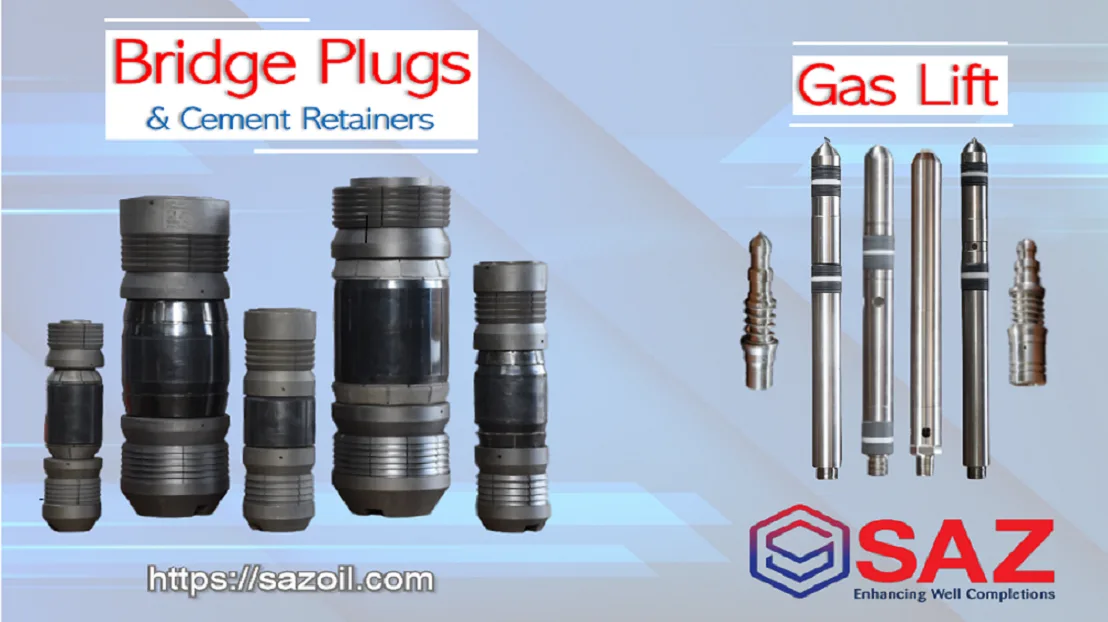
Bridge Plugs & Cement Retainers
Bridge plugs and cement retainers may not be the most glamorous tools, but they are fundamental to well integrity.
- Bridge plugs isolate lower zones, allowing safe operations in upper intervals
- Cement retainers ensure effective squeeze cementing during remedial work
When isolation fails, it can compromise the entire well — leading to fluid loss, crossflow, and expensive corrective operations.
Liner Hanger Systems
Modern liner hanger systems do more than just suspend casing strings. They provide:
- Reliable mechanical support
- Pressure integrity at the liner top
- Advanced metal-to-metal sealing for high-pressure environments
Their evolution has made them critical in complex and high-risk well designs.
Downhole Packers
Downhole Packers play a central role in isolating zones for production, stimulation, and injection.
They are especially vital in:
- Horizontal wells
- Multistage fracturing operations
- Multilateral well configurations
Properly placed packers ensure that each zone contributes effectively, preventing fluid from bypassing intended pathways.
Integration: The Key to High-Performance Wells
The real advantage doesn’t come from individual tools — it comes from how they work together.
A well-designed completion integrates:
- Sand control systems
- Zonal isolation tools
- Structural components like liner hangers
When these elements are engineered as a unified system, operators gain:
- Improved reliability
- Better production efficiency
- Reduced intervention frequency
- Enhanced long-term asset value
This approach transforms well construction from a reactive process into a strategic advantage.
Building Wells That Last
As reservoirs become deeper and more complex, the tolerance for failure continues to shrink. Operators who invest in robust sand control and downhole isolation strategies are not just protecting their wells — they’re positioning themselves for sustained performance and competitive advantage.
In today’s environment, smarter wells don’t happen by chance. They start underground — with the right design, the right tools, and the right integration strategy.
Looking to optimize your well completions? A tailored approach to sand control and zonal isolation can significantly improve performance, reduce risk, and extend the life of your assets.