Water is one of the most important resources for commercial and industrial operations. From office buildings and shopping malls to manufacturing plants and warehouses, every facility depends on a reliable water supply for daily activities. However, rising water costs, aging infrastructure, and increasing environmental concerns make efficient water management more important than ever. Smart Water Management Using IoT is helping businesses overcome these challenges by providing real-time monitoring, accurate data, and automated insights that reduce water waste and improve operational efficiency.
In this blog, we'll explore how IoT-powered water management systems work, their benefits for commercial and industrial facilities, and why investing in smart technology is a step toward a more sustainable future.
What Is IoT-Based Water Management?
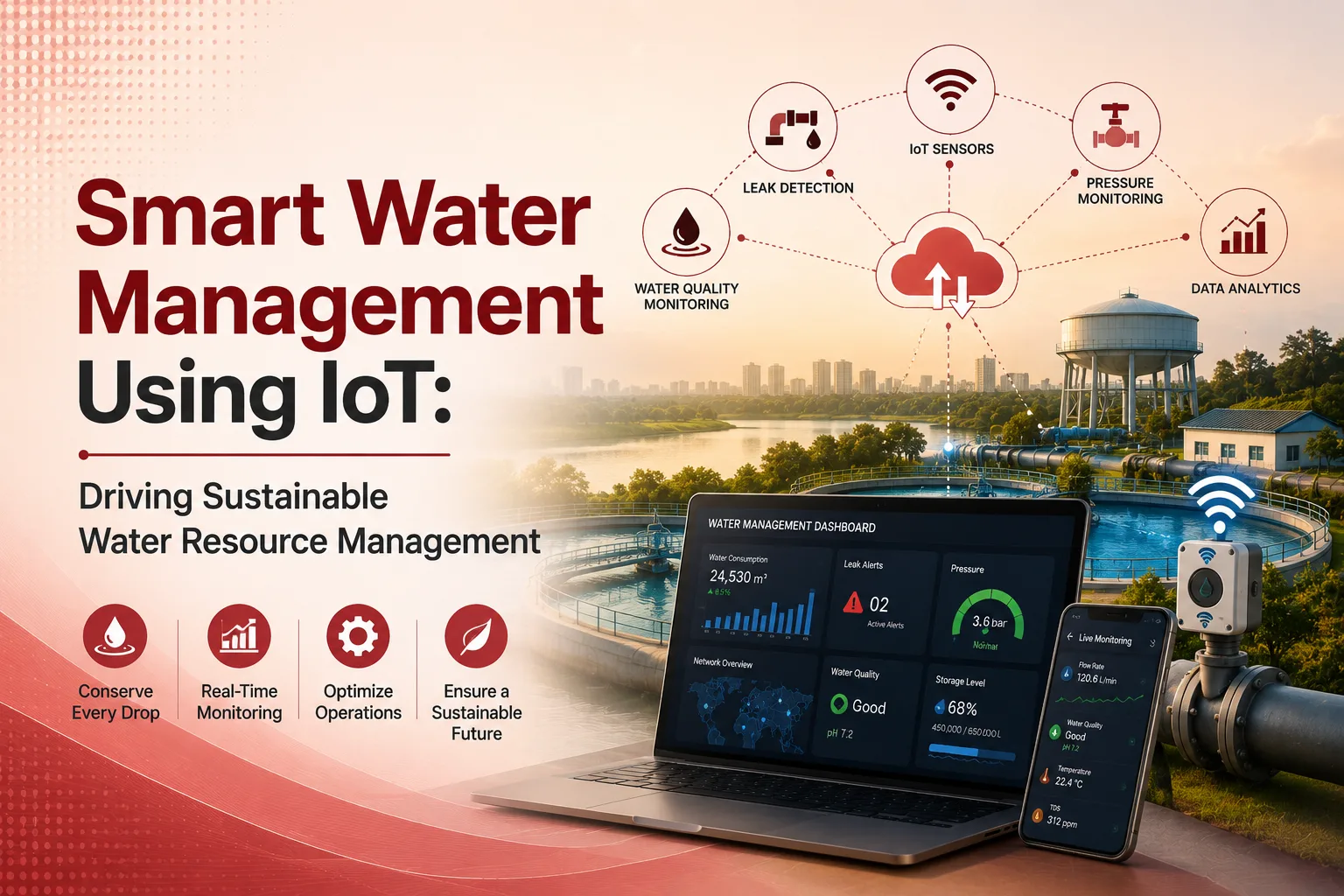
The Internet of Things (IoT) connects physical devices through the internet, allowing them to collect, share, and analyze data automatically. In water management, IoT technology combines smart sensors, water meters, communication devices, and cloud-based software to monitor water usage continuously.
Unlike traditional systems that rely on manual inspections or monthly meter readings, IoT-based solutions provide real-time information about water consumption, pressure, flow rates, and system performance. This enables facility managers to detect problems quickly and make informed decisions before issues become costly.
Why Commercial and Industrial Facilities Need Smarter Water Management
Large commercial and industrial properties consume significant amounts of water every day. Without proper monitoring, businesses may experience unnoticed leaks, inefficient equipment, excessive consumption, and high utility bills.
Manual monitoring methods often fail to identify these problems early. As a result, businesses waste water, spend more on maintenance, and face unexpected operational expenses.
IoT technology addresses these challenges by offering continuous visibility into water systems, helping organizations manage resources more efficiently while reducing unnecessary waste.
Real-Time Water Monitoring
One of the biggest advantages of IoT technology is continuous, real-time monitoring.
Connected sensors collect water usage data every minute and send it to a centralized platform. Facility managers can access this information from computers, tablets, or mobile devices at any time.
Real-time monitoring helps businesses:
- Track daily water consumption
- Monitor multiple buildings from one platform
- Identify unusual water usage instantly
- Improve operational visibility
- Respond quickly to changing conditions
Having immediate access to water data allows organizations to take action before small issues become major problems.
Early Leak Detection
Water leaks are one of the leading causes of unnecessary water loss in commercial and industrial facilities. Even a minor leak can waste thousands of liters over time while increasing utility bills and maintenance costs.
IoT systems continuously monitor water flow and pressure. If abnormal activity is detected, automated alerts notify maintenance teams immediately.
Early leak detection provides several important benefits:
- Prevents water wastage
- Reduces repair expenses
- Protects equipment and infrastructure
- Minimizes downtime
- Prevents structural damage
Quick response to leaks helps businesses save money while protecting valuable assets.
Improved Operational Efficiency
Managing water efficiently contributes directly to better operational performance.
IoT technology eliminates the need for frequent manual inspections by collecting data automatically. Maintenance teams can focus on solving actual problems instead of performing routine checks.
Organizations can also identify inefficient equipment, optimize water usage, and improve overall facility management.
The result is lower operational costs and better resource utilization.
Data-Driven Decision Making
One of the greatest strengths of IoT technology is its ability to transform raw data into meaningful insights.
Water management platforms generate detailed reports that help facility managers understand:
- Daily and monthly water usage
- Peak consumption periods
- High-consumption departments
- Equipment performance
- Long-term usage trends
These insights support better budgeting, maintenance planning, and conservation strategies.
Instead of relying on assumptions, businesses make decisions based on accurate information.
Predictive Maintenance
Traditional maintenance often follows a fixed schedule, regardless of actual equipment condition.
IoT systems continuously monitor pumps, pipelines, valves, and other water infrastructure components.
When sensors detect unusual patterns, maintenance teams receive alerts before equipment fails.
Predictive maintenance offers many advantages:
- Reduced maintenance costs
- Improved equipment lifespan
- Fewer unexpected breakdowns
- Better workforce productivity
- Lower operational risk
Preventing failures before they occur saves both time and money.
Supporting Sustainability Goals
Environmental sustainability has become an important priority for businesses worldwide.
Reducing water consumption helps organizations lower their environmental impact while supporting corporate sustainability initiatives.
IoT technology enables businesses to:
- Minimize water waste
- Improve resource efficiency
- Monitor conservation performance
- Reduce environmental impact
- Support green building certifications
Businesses that use water responsibly also strengthen their reputation among customers, investors, and regulatory authorities.
Applications Across Commercial and Industrial Sectors
IoT-powered water management systems are suitable for a wide range of industries.
Commercial Buildings
Office complexes use IoT solutions to monitor water consumption, reduce operating costs, and improve facility management.
Shopping Malls
Retail centers monitor restroom usage, cooling systems, and landscaping irrigation to reduce water waste.
Manufacturing Facilities
Factories use water for production, cleaning, and cooling processes. IoT technology helps optimize water consumption and improve production efficiency.
Warehouses
Large storage facilities monitor water infrastructure to prevent leaks and reduce maintenance expenses.
Hotels and Hospitality
Hotels improve guest satisfaction while reducing unnecessary water consumption through continuous monitoring.
Hospitals
Healthcare facilities require reliable water systems. IoT solutions ensure efficient usage while maintaining uninterrupted water availability.
Key Benefits for Businesses
Implementing IoT-based water management provides several long-term advantages:
- Reduced water waste
- Lower utility bills
- Faster leak detection
- Improved operational efficiency
- Better maintenance planning
- Accurate water usage reporting
- Enhanced sustainability
- Real-time monitoring
- Improved regulatory compliance
- Long-term cost savings
These benefits make IoT technology a valuable investment for organizations looking to improve efficiency and resource management.
Future of IoT in Water Management
Technology continues to evolve rapidly, making smart water management systems more intelligent and efficient.
Future developments may include:
- Artificial intelligence for consumption forecasting
- Advanced predictive analytics
- Automated maintenance recommendations
- Integration with smart city infrastructure
- Enhanced remote monitoring
- Improved water quality monitoring
These innovations will further help businesses conserve water while improving operational performance.
Why Choose Karikala?
Choosing the right technology partner is essential for successful water management.
Karikala provides advanced IoT-enabled water management solutions designed to help commercial and industrial facilities monitor water consumption, detect leaks in real time, improve operational efficiency, and reduce unnecessary water waste. Their innovative solutions provide reliable monitoring, accurate data, and user-friendly systems that empower businesses to manage water resources more effectively.
Whether you operate an office building, manufacturing plant, hospital, shopping mall, educational institution, or industrial facility, Karikala delivers dependable solutions that support sustainable growth and smarter resource management.
Final Thoughts
Efficient water management has become a necessity for commercial and industrial facilities. Rising operational costs, increasing environmental concerns, and the need for better resource management require smarter solutions than ever before.
IoT technology provides real-time monitoring, accurate data, predictive maintenance, and early leak detection that help organizations reduce water waste while improving efficiency and lowering operating costs. Businesses that invest in intelligent water management today are better prepared for tomorrow's sustainability and operational challenges.