Today's customers expect quick answers, easy access to information, and the ability to resolve issues without waiting for support teams. Businesses that fail to meet these expectations often experience lower customer satisfaction and increased service costs. A well-executed Salesforce Experience Cloud implementation helps organizations create self-service portals that improve customer experiences while reducing the workload on support teams.
SP Tech helps businesses design and implement customer portals that provide secure, personalized, and always-available access to information. By leveraging Salesforce Experience Cloud, organizations can deliver digital experiences that strengthen customer relationships and improve operational efficiency.
Why Customer Self-Service Matters
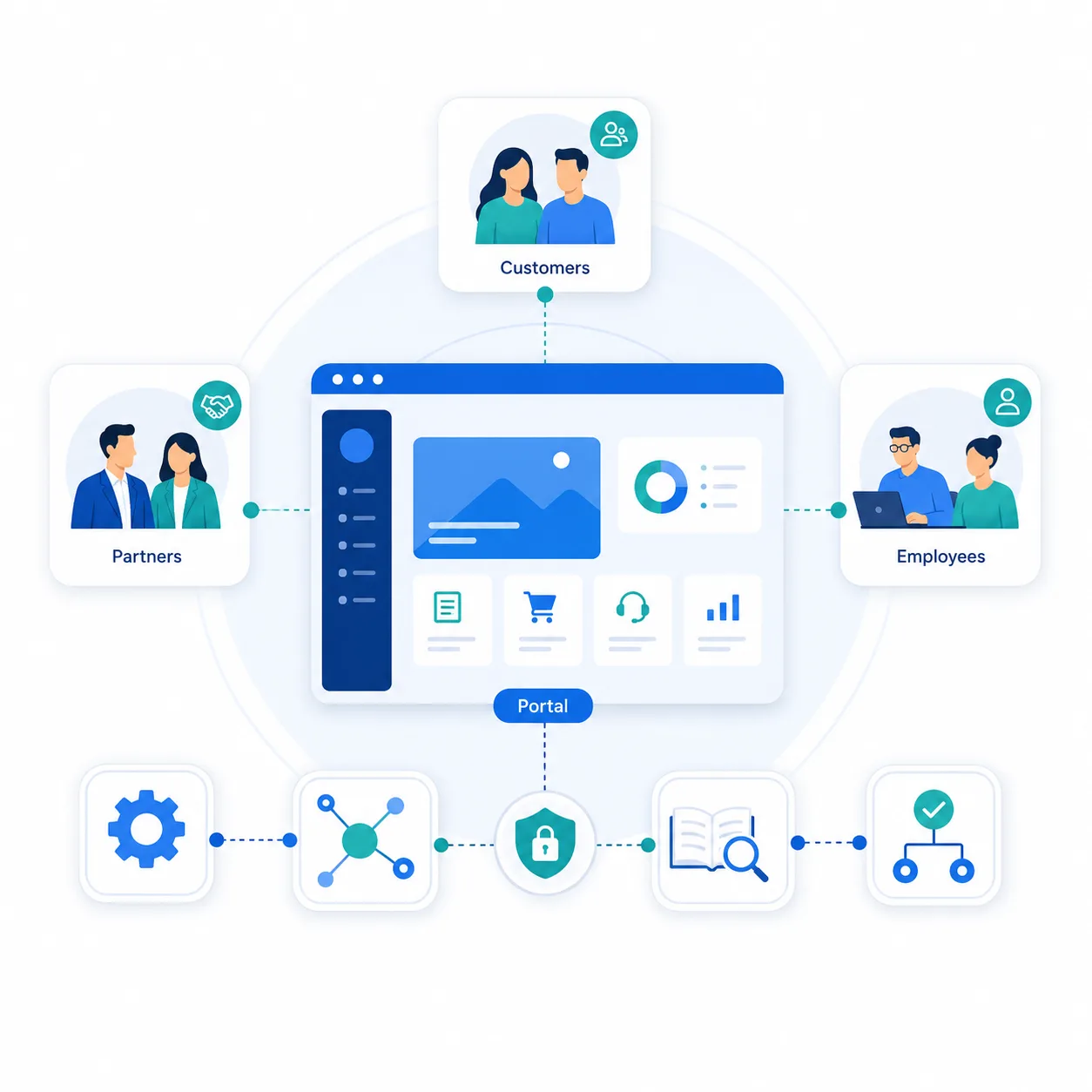
Customers want the flexibility to find answers independently. A self-service portal gives users access to knowledge articles, FAQs, support cases, account information, and community discussions from a single location. Since Experience Cloud integrates directly with Salesforce CRM, customer data remains accurate and accessible across every interaction.
An effective Salesforce Experience Cloud implementation enables businesses to deliver personalized experiences while maintaining high levels of security and performance.
Features of a Customer Portal
Salesforce Experience Cloud offers several features that improve customer engagement, including:
- Secure customer login and authentication
- Knowledge base access
- Case creation and tracking
- File sharing and document management
- Community forums
- Personalized dashboards
- Mobile-friendly experiences
- Automated notifications
These capabilities reduce response times while empowering customers to solve common issues on their own.
Beyond improving customer support, Experience Cloud also provides valuable insights through built-in reporting and analytics. Businesses can monitor portal usage, identify frequently accessed resources, track case resolution trends, and measure customer engagement. These insights enable continuous improvements, helping organizations optimize content, enhance user experiences, and make data-driven decisions that support long-term customer satisfaction.
Best Practices for Implementation
Every successful implementation begins with understanding customer needs. Businesses should identify common support requests, organize knowledge articles, and design an intuitive navigation structure.
Key implementation steps include:
- Defining customer journeys
- Designing a branded portal experience
- Configuring Salesforce objects and permissions
- Integrating third-party applications
- Testing across devices
- Training administrators and support teams
Following a structured implementation strategy helps organizations maximize user adoption and long-term value.
How SP Tech Supports Your Project
SP Tech works closely with organizations to build customer portals that align with business objectives. From planning and customization to integration and post-launch optimization, our team ensures every Experience Cloud solution delivers measurable business outcomes.
Our consultants focus on creating scalable portals that support future business growth while maintaining security, performance, and usability.
Conclusion
A successful Salesforce Experience Cloud implementation transforms customer service by giving users convenient access to the resources they need. Businesses benefit from lower support costs, faster issue resolution, and stronger customer loyalty. By partnering with SP Tech, organizations can build secure, engaging customer portals that deliver exceptional digital experiences and long-term business value.