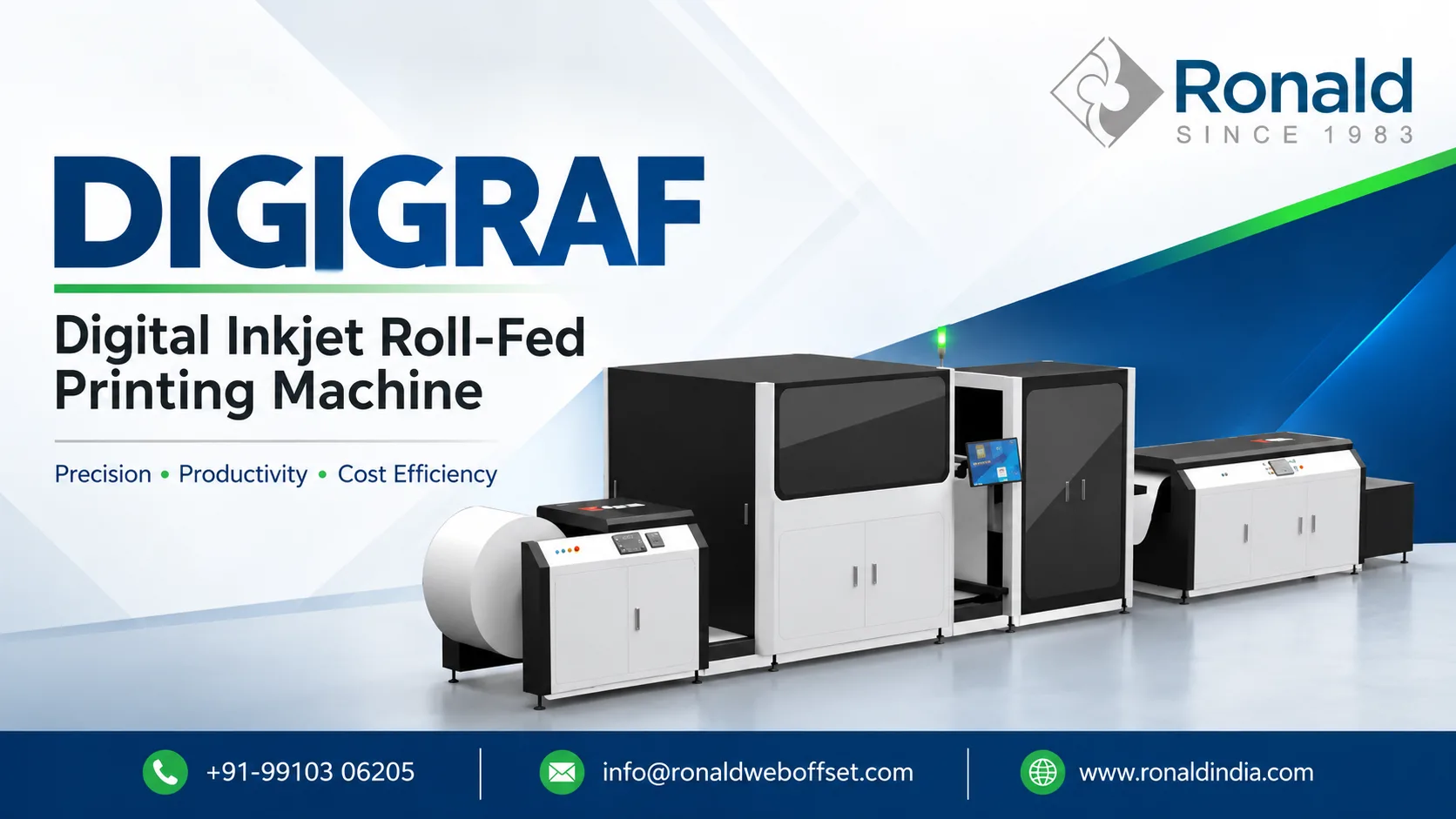
Printing technology continues to develop as manufacturers and printing businesses look for more flexible production methods. A roll-fed digital inkjet web press is designed to print on a continuous paper web rather than separate sheets. This configuration can be relevant to businesses planning production around continuous paper handling.
What Is a Digital Inkjet Web Press?
A web press processes a continuous length of paper as it moves through the printing system. In a digital inkjet configuration, the printing information comes from digital files and is transferred to the paper using inkjet technology.
This differs from sheet-fed printing, where individual sheets are transported through the machine. The choice between these configurations depends on the required format, production volume and finishing workflow.
Understanding Web Handling
Paper movement is a central part of a web printing system. Consistent transport and appropriate tension management help maintain stable operation.
Paper quality, roll condition, media weight and machine settings can affect production. Businesses should verify that the equipment supports the materials they intend to use.
Print Quality and Drying Requirements
The quality of printed output depends on printhead technology, ink properties, paper characteristics and operating settings. Businesses should evaluate the finished print under realistic production conditions.
Drying is also important because the printed paper may need to move into cutting or other finishing stages. The correct drying approach depends on the equipment, ink and substrate.
Introducing DIGIGRAF
DIGIGRAF from Ronald Web Offset Pvt. Ltd. is a digital inkjet roll-fed printing machine intended for industrial paper printing workflows.
Its stated specifications include industrial piezoelectric circulation-on-demand printhead technology, full servo motion control and intelligent infrared drying. The system's available printing widths, media compatibility and colour configurations should be checked against the current manufacturer specifications.
How to Evaluate a Web Printing System
Businesses should begin by identifying the required output, paper type, production volume and quality standards. They should then assess the machine's technical specifications and operating requirements.
Other considerations include ink consumption, maintenance, energy use, operator training and compatibility with downstream finishing processes.
A detailed assessment can help businesses compare different printing technologies using realistic operating costs rather than purchase price alone.
Conclusion
A roll-fed digital inkjet web press can be considered by printing businesses that require a continuous paper printing workflow. The right equipment depends on application suitability, media compatibility, output quality and the complete production process.
Discover DIGIGRAF and the printing solutions offered by Ronald Web Offset Pvt. Ltd. at https://www.ronaldindia.com/digigraf-digital-inkjet-roll-fed-printing-machine/.