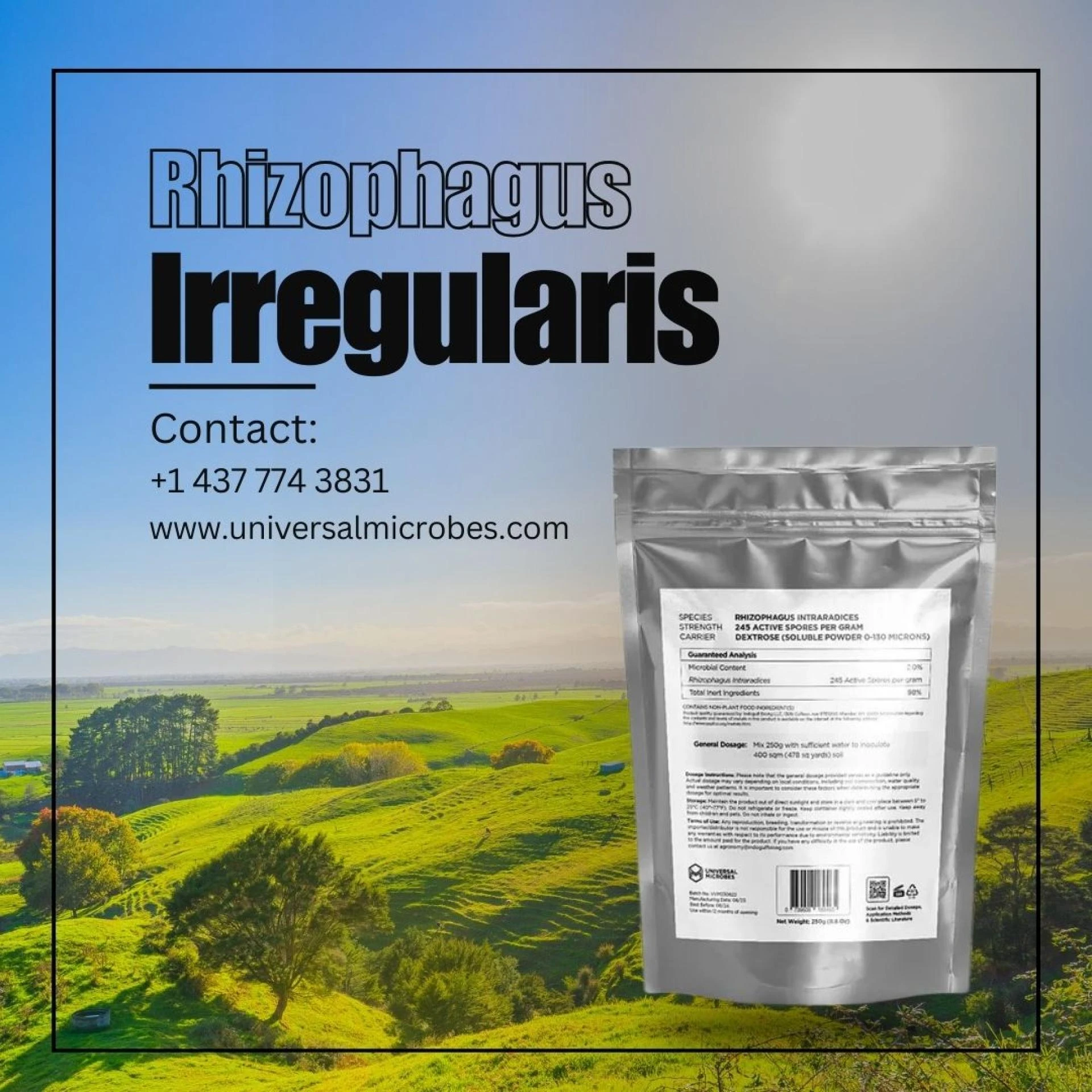
Rhizophagus intraradices, a species of arbuscular mycorrhizal fungi (AMF), plays a crucial role in plant nutrition, soil health, and sustainable agriculture. This fungus has been widely recognized for its ability to enhance plant growth by forming symbiotic relationships with roots. However, beyond its commonly known benefits, recent studies have uncovered unique and lesser-known aspects of its function that could revolutionize modern farming, environmental remediation, horticulture, and biofertilizer production.
Understanding the Symbiotic Relationship
Rhizophagus intraradices forms a mutualistic association with plant roots by colonizing the root cortex and developing highly specialized structures called arbuscules. These structures facilitate the exchange of nutrients between the fungus and the plant. The fungus absorbs phosphorus (P), nitrogen (N), and micronutrients from the soil and delivers them directly to the plant, while in return, it receives carbohydrates from the host plant.
Unique and Lesser-Known Functions
1. Enhanced Resistance to Heavy Metal Toxicity
While most mycorrhizal fungi improve nutrient uptake, Rhizophagus intraradices has a remarkable ability to detoxify heavy metals in contaminated soils. Recent studies have shown that this fungus can bioaccumulate toxic metals like cadmium (Cd), lead (Pb), and arsenic (As) in its hyphae, preventing these elements from reaching plant tissues. This makes it an essential tool for phytoremediation projects in environmental remediation.
2. Microbial Interactions and Soil Biodiversity Boost
Unlike many other AMF species, Rhizophagus intraradices promotes beneficial microbial communities in the rhizosphere. It enhances populations of nitrogen-fixing bacteria, plant growth-promoting rhizobacteria (PGPR), and suppresses soil-borne pathogens by competing for space and nutrients. This discovery suggests that using this fungus in biofertilizer formulations can improve overall soil biodiversity and crop yields.
3. Role in Drought and Salinity Tolerance
Recent experiments have revealed that plants colonized by Rhizophagus intraradices exhibit increased drought resistance due to enhanced water retention in root tissues. Additionally, it regulates osmolyte production, helping plants tolerate saline conditions better. This is particularly significant for regions with declining water availability and soil salinization problems, making it highly valuable in horticulture and agriculture.
4. Carbon Sequestration and Climate Change Mitigation
One of the most overlooked aspects of Rhizophagus intraradices is its role in carbon sequestration. By increasing root biomass and stabilizing soil aggregates, this fungus enhances carbon storage in the soil. It also promotes the formation of glomalin, a glycoprotein that helps in long-term carbon binding, reducing atmospheric CO₂ levels. This function is crucial in both sustainable farming and environmental conservation efforts.
Applications in Agriculture and Beyond
- Sustainable Farming: Using Rhizophagus intraradices-based biofertilizers can significantly reduce the dependency on synthetic fertilizers, leading to eco-friendly and cost-effective agriculture.
- Environmental Remediation: The fungus can be utilized in soil restoration projects to detoxify and rehabilitate contaminated lands, making it an essential component in ecological conservation.
- Horticulture: Promotes faster and healthier growth of fruit trees, ornamental plants, and forest species, improving overall plant health and yields.
- Biofertilizer Production: It serves as a critical ingredient in organic biofertilizers, enhancing nutrient absorption and plant immunity, thus replacing chemical fertilizers.
- Hydroponics and Soilless Cultivation: Studies indicate that this AMF can be successfully incorporated into hydroponic systems, providing a sustainable solution for nutrient absorption in controlled environments.
Rhizophagus intraradices and Rhizophagus irregularis are not just mycorrhizal fungi; they are game-changers for agriculture, soil health, and environmental sustainability. Their ability to improve nutrient uptake, detoxify soils, enhance microbial interactions, and contribute to climate change mitigation makes them among the most promising biological tools available today. Future research should focus on optimizing their application in different ecosystems to unlock their full potential.
By harnessing the power of Rhizophagus intraradices and Rhizophagus irregularis, we can move towards a more sustainable and resilient agricultural system, ensuring food security, environmental conservation, and innovative biofertilizer solutions for future generations.