Real estate has traditionally been viewed as a stable and valuable asset class, but investing in property has often required significant capital, extensive paperwork, and long holding periods. Buying, selling, and managing property can also involve intermediaries such as brokers, banks, lawyers, registrars, and asset managers. These factors can make real estate less accessible to smaller investors and limit the liquidity of property investments.
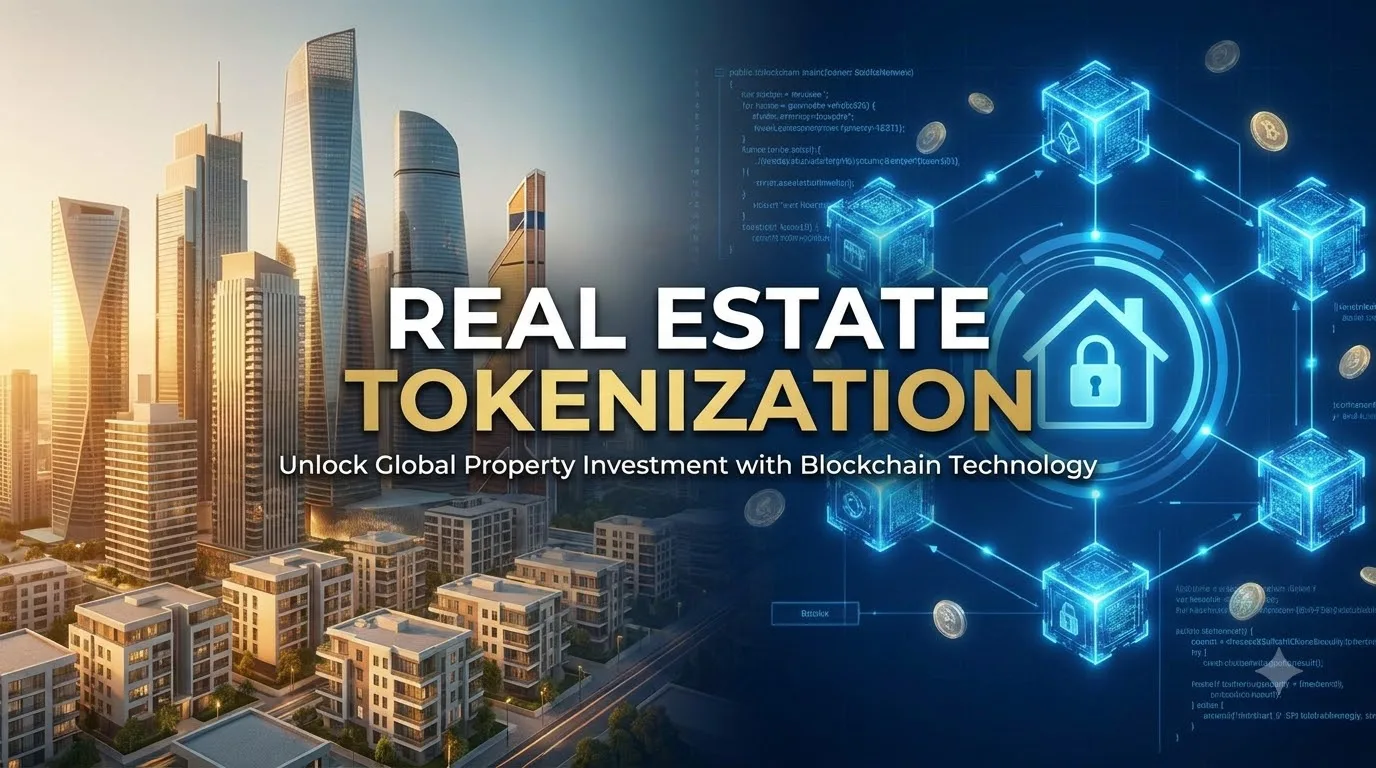
Blockchain technology is introducing a new approach through real estate tokenization, a process that represents ownership rights or economic interests in real-world property through digital tokens recorded on a blockchain. Instead of treating a property as one indivisible investment, tokenization can enable it to be divided into smaller digital units, allowing multiple investors to gain exposure to an asset.
The concept has attracted attention from property developers, investment firms, financial institutions, and technology companies because it combines the established value of real estate with the transparency, programmability, and digital infrastructure of blockchain. However, tokenization is not simply a matter of converting property ownership into cryptocurrency. Legal structures, regulatory compliance, investor protections, valuation, custody, and secondary-market liquidity all play critical roles in determining whether a tokenized real estate project can succeed.
This article explores the key benefits, challenges, and investment opportunities associated with real estate tokenization, while examining how blockchain infrastructure could influence the future of property investment.
What Is Real Estate Tokenization?
Real estate tokenization is the process of creating blockchain-based digital tokens that represent ownership, economic rights, or an interest connected to a real-world property or real estate investment vehicle.
For example, imagine an office building valued at $10 million. Instead of requiring one investor to purchase the entire property, a legally structured investment vehicle could hold the property while issuing 100,000 digital tokens representing proportional interests in that vehicle. Depending on the legal structure, token holders may receive a share of rental income, capital appreciation, or other economic benefits.
The blockchain records transactions involving these tokens, creating a digital ledger that can improve transparency and automate certain processes. Smart contracts can potentially manage functions such as token issuance, investor eligibility, distribution of rental income, and transfer restrictions.
It is important to understand that tokenization does not automatically change the underlying legal ownership of a property. The relationship between the token and the physical asset must be established through appropriate legal agreements and compliant ownership structures. In many cases, the property may be held by a special purpose vehicle (SPV), fund, trust, or other legal entity, with the tokens representing an interest in that structure.
This distinction is fundamental because the value of a tokenized real estate investment ultimately depends not only on the blockchain technology but also on the enforceability of the legal rights attached to the token.
How Does Real Estate Tokenization Work?
A typical tokenization process involves several stages, beginning with the selection and legal structuring of the property. The asset is assessed for its value, income potential, ownership status, and suitability for tokenization. Legal professionals then determine how investors will receive rights to the underlying asset.
The property may subsequently be placed within an appropriate legal entity. Digital tokens are then created on a blockchain, with the token design reflecting the rights and restrictions defined in the legal framework.
Smart contracts can support the operational side of the ecosystem. They may automate token issuance, maintain ownership records, enforce transfer rules, and facilitate distributions. Investors generally complete identity verification and other compliance procedures before purchasing tokens, particularly where securities regulations apply.
Once tokens are issued, eligible investors can acquire them through a primary offering. Depending on regulatory permissions and available infrastructure, investors may later be able to transfer their tokens through a compliant secondary marketplace.
The process can therefore be summarized as:
Property selection → Legal structuring → Asset valuation → Token design → Compliance and investor verification → Token issuance → Investment → Ongoing management → Potential secondary trading
The technology is important, but the success of the model depends on the integration of legal, financial, regulatory, and blockchain infrastructure.
Key Benefits of Real Estate Tokenization
Fractional Ownership Can Lower Investment Barriers
One of the most frequently discussed benefits of tokenization is fractional ownership. Traditional property investments can require substantial capital, which limits participation to high-net-worth individuals and institutional investors.
Tokenization can divide an investment into smaller units, potentially reducing the minimum investment requirement. For example, an investor who cannot afford to purchase an entire commercial property may be able to acquire a smaller interest in a professionally managed asset.
This does not necessarily make every property investment affordable to everyone. Minimum investment levels and investor eligibility remain dependent on the legal structure and applicable regulations. Nevertheless, fractionalization can create more flexible investment models and expand access to certain types of real estate.
Improved Transparency
Blockchain technology provides a shared digital record of transactions. When properly designed, this can improve visibility into token ownership, transaction history, and certain aspects of asset management.
Traditional real estate transactions often involve multiple systems and intermediaries, creating opportunities for delays or inconsistencies in recordkeeping. A blockchain-based system can provide a consistent source of transaction data, although it does not automatically guarantee that every piece of off-chain information is accurate.
For investors, better transparency can contribute to greater confidence when evaluating an investment opportunity.
Potential for Greater Liquidity
Real estate is generally considered an illiquid asset. Selling a property can take weeks or months, and transactions often involve negotiations, inspections, financing, and extensive documentation.
Tokenization introduces the possibility of representing real estate interests as transferable digital assets. If a compliant secondary market exists and sufficient buyers and sellers participate, investors may have more flexibility to transfer their interests.
However, this is an important area where expectations should remain realistic. Tokenization does not automatically create liquidity. A token can be technically transferable but still difficult to sell if there are few buyers, regulatory restrictions, or limited market infrastructure.
The real opportunity lies in developing compliant marketplaces with sufficient participation and transparent pricing mechanisms.
Automation Through Smart Contracts
Smart contracts can automate certain processes associated with real estate investment. Depending on the project structure, they may help manage distributions, enforce investor eligibility rules, or execute predefined transactions.
For example, rental income generated by a property could potentially be distributed to eligible token holders according to predefined rules. Automation can reduce manual administrative work and potentially improve operational efficiency.
Nevertheless, smart contracts cannot independently verify every real-world event. Property valuations, rental agreements, maintenance costs, and legal ownership still depend on off-chain data and trusted parties.
Global Investment Potential
Tokenized real estate could create new opportunities for investors to participate in property markets beyond their immediate geographic location. Digital investment infrastructure may simplify access to certain international opportunities, subject to local regulations and investor eligibility.
For property owners and developers, this could broaden the potential investor base. Instead of relying exclusively on traditional financing channels, they may explore blockchain-enabled fundraising models.
Cross-border investment, however, introduces additional regulatory complexity. Securities laws, tax rules, foreign ownership restrictions, currency regulations, and investor protection requirements vary significantly between jurisdictions.
Challenges and Risks of Real Estate Tokenization
The potential advantages of tokenization are significant, but the industry also faces several challenges.
Regulatory Uncertainty
Regulation remains one of the most important considerations. Depending on how a token is structured and marketed, it may be classified as a security or another regulated financial instrument.
This can trigger requirements involving investor verification, securities registration or exemptions, disclosures, reporting, custody, and transfer restrictions.
A successful tokenization project therefore requires legal and regulatory planning from the beginning. Simply creating a token and placing it on a blockchain does not establish legal ownership or regulatory compliance.
Legal Link Between Token and Property
Investors need to understand exactly what they own. A token might represent direct ownership, shares in an SPV, debt exposure, profit-sharing rights, or another contractual interest.
If the legal relationship between the digital token and physical asset is unclear, investors may face significant risks. Strong legal documentation and enforceable rights are therefore essential.
Limited Secondary-Market Liquidity
Although tokenization promises improved liquidity, the actual market may remain limited. A tokenized property requires an active network of buyers and sellers to create meaningful liquidity.
Restrictions on who can purchase or transfer tokens can also reduce the available market. As a result, investors should not assume that tokenized real estate can be sold as easily as highly liquid stocks or major cryptocurrencies.
Technology and Cybersecurity Risks
Blockchain-based systems introduce technical risks, including smart contract vulnerabilities, wallet security issues, private-key loss, and potential cyberattacks.
A poorly designed smart contract could create financial losses or disrupt the operation of a tokenized investment platform. This makes security audits, penetration testing, access controls, and ongoing monitoring important components of the infrastructure.
Valuation and Data Quality
Real estate valuation is inherently complex. Property values depend on location, economic conditions, rental income, interest rates, occupancy, and market demand.
Blockchain can record ownership and transactions, but it cannot independently determine whether a property is fairly valued. Reliable valuation professionals and trusted data sources remain essential.
Investment Opportunities in Tokenized Real Estate
The investment landscape surrounding tokenization extends beyond individual residential properties. Commercial buildings, hotels, industrial facilities, multifamily housing, land, and real estate funds can potentially be incorporated into tokenized investment structures.
For investors, one of the most attractive opportunities is diversification. Rather than concentrating capital in a single physical property, fractional investment models could enable exposure to multiple assets across different locations and property categories.
Institutional investors may also benefit from blockchain-based infrastructure that improves operational efficiency and asset-level transparency. Real estate investment managers could potentially use tokenization to create more flexible fund structures or expand access to carefully selected investor groups.
Property developers may see another opportunity in fundraising. Tokenization could provide an alternative financing mechanism by connecting eligible investors with specific development or income-generating projects.
However, investors should evaluate tokenized real estate using the same discipline applied to traditional property investments. Important factors include:
- The quality and location of the underlying property
- Rental income and occupancy rates
- Property valuation methodology
- Legal ownership structure
- Investor rights
- Regulatory compliance
- Fees and operating expenses
- Smart contract security
- Custody arrangements
- Exit and liquidity mechanisms
The presence of blockchain technology should never be treated as a substitute for fundamental investment analysis.
Real-World Examples and Market Development
The growth of tokenized real-world assets has demonstrated increasing interest in bringing traditional financial assets onto blockchain networks. Platforms and companies such as Securitize have explored blockchain-based infrastructure for regulated digital securities, while Centrifuge has focused on bringing real-world assets into decentralized financial infrastructure.
In real estate specifically, platforms such as RealT have demonstrated models where investors can gain fractional exposure to property-related investments through blockchain-based tokens.
These examples illustrate an important shift: tokenization is moving beyond the idea of simply creating digital representations of assets and toward building complete financial ecosystems around ownership, compliance, distribution, and settlement.
The broader tokenized real-world asset market has also gained attention from major financial institutions. Industry research from firms such as Boston Consulting Group has projected substantial long-term growth in tokenized assets, although forecasts vary considerably depending on adoption, regulation, and infrastructure development.
The most significant opportunity may therefore not be the token itself but the development of financial infrastructure that connects blockchain-based ownership with established legal and financial systems.
The Future of Real Estate Tokenization
The future of real estate tokenization will likely depend on the convergence of three major developments: regulatory clarity, institutional adoption, and improved blockchain infrastructure.
As regulations become clearer, businesses may gain more confidence in developing compliant tokenization models. Financial institutions could play an important role by providing custody, compliance, and settlement services.
At the same time, tokenization platforms are likely to become more sophisticated. Future systems may integrate blockchain networks with property management software, accounting systems, identity verification tools, automated compliance, and real-time reporting.
Artificial intelligence may also contribute to this ecosystem by supporting property analysis, risk assessment, market research, and investor analytics. However, technology should complement—not replace—professional due diligence.
Ultimately, successful real estate tokenization will be determined by whether it creates genuine value for property owners and investors. If tokenization can reduce administrative friction, improve transparency, enable efficient fractional ownership, and provide compliant access to investment opportunities, it could become an important part of the future real estate ecosystem.
How Businesses Can Approach Real Estate Tokenization
Organizations considering tokenization should begin with the asset and legal model rather than the technology. The first step is to determine what economic or ownership rights will be represented by the tokens and how those rights will be legally enforced.
Next, businesses should identify the applicable regulatory requirements and investor eligibility criteria. The technology architecture should then be designed around these requirements.
For companies building a complete ecosystem, Real estate tokenization development services can support the creation of blockchain-based token infrastructure, smart contracts, investor dashboards, compliance features, and asset management systems. Similarly, Real estate tokenization platform development services can help businesses develop end-to-end platforms designed to manage token issuance, investor onboarding, transactions, and potentially secondary-market functionality.
The most effective approach is one that combines blockchain development with legal expertise, financial structuring, cybersecurity, compliance, and real estate knowledge.
FAQs
1. What is real estate tokenization?
Real estate tokenization is the process of representing ownership rights or economic interests in property through blockchain-based digital tokens.
2. Is tokenized real estate a good investment?
It can offer diversification and fractional investment opportunities, but investors should carefully evaluate the property, legal structure, regulations, fees, and liquidity risks.
3. Does tokenization make real estate completely liquid?
No. Tokenization can make ownership interests easier to transfer, but actual liquidity depends on market demand, regulations, and the availability of compliant secondary markets.
4. What role does blockchain play in real estate tokenization?
Blockchain provides infrastructure for recording token ownership and transactions, while smart contracts can automate certain processes and enforce predefined rules.
5. How can businesses launch a tokenized real estate project?
Businesses typically need a suitable property, legal and regulatory framework, token design, compliant investor onboarding, secure smart contracts, and a platform for managing tokenized investments.
Conclusion
Real estate tokenization has the potential to reshape property investment by combining fractional ownership, blockchain transparency, smart contract automation, and digital investment infrastructure. While the model offers promising opportunities for investors, developers, and financial institutions, it also faces significant challenges involving regulation, legal enforceability, liquidity, cybersecurity, and asset valuation. The long-term success of the sector will depend on building trustworthy systems where digital tokens are supported by strong legal rights and high-quality underlying assets. As the industry continues to mature, businesses seeking to enter this space can benefit from experienced blockchain development partners, and Blockchain App Factory provides best services for businesses looking to build secure and scalable real estate tokenization solutions, helping transform innovative property investment concepts into technology-driven platforms.