Graduation complete chesina taruvatha “Software field lo career start cheyyacha?” ani chala mandi students ki doubt untundi. Especially current technology landscape fast ga change avutunna situation lo, degree complete ayyaka next step enti, which skills learn cheyyali, and how to become job-ready ani confusion common.
The good news is that graduates can still build a career in software development. However, having a degree alone may not be enough. Students need practical technical skills, project experience, problem-solving ability, and the confidence to explain what they have learned.
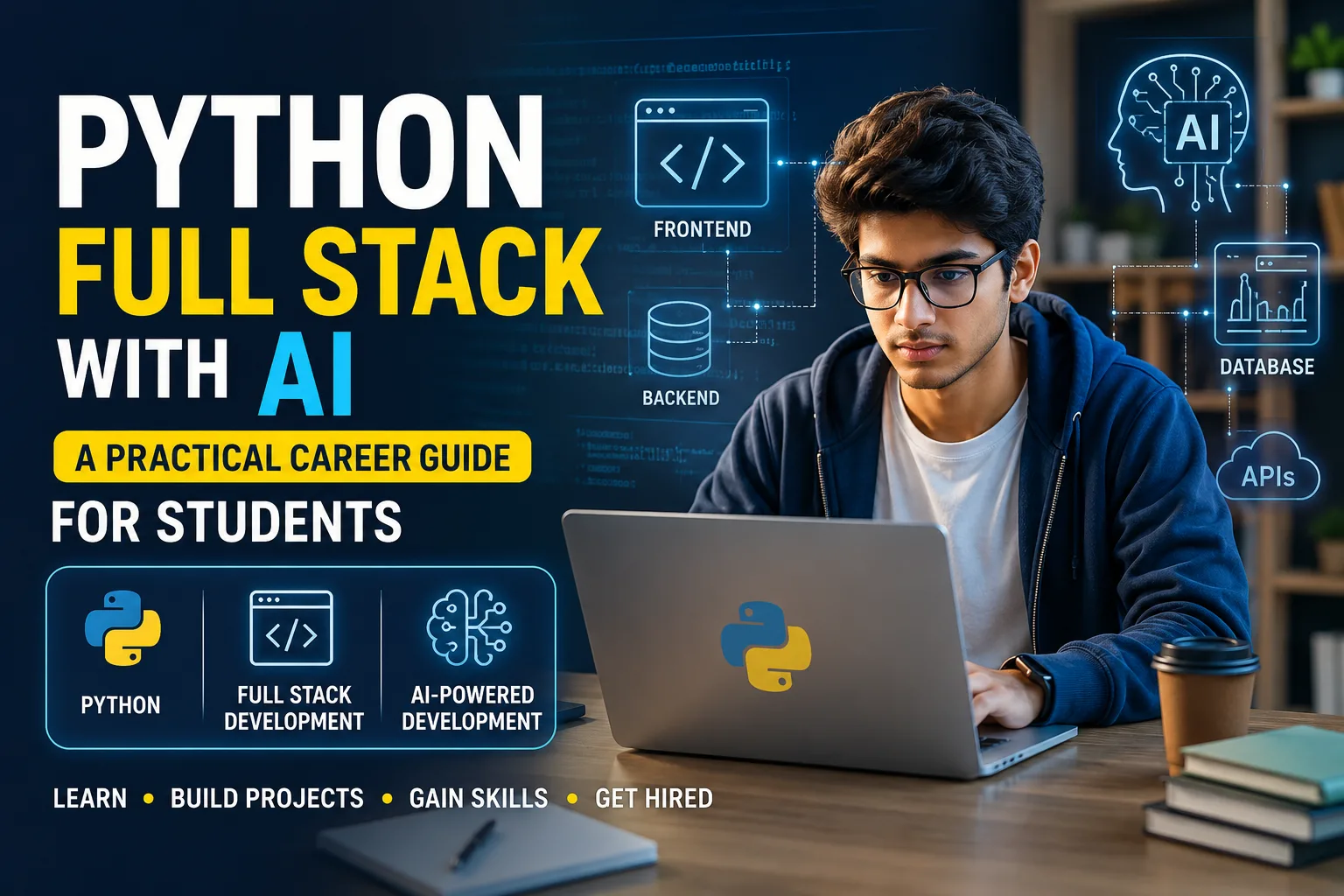
For students interested in software development, Full Stack Python with AI skills can be one practical learning path.
Why Should Students Consider Full Stack Python Development?
Python is widely used across software development, automation, web applications, data-related applications, and AI-based solutions. Its relatively simple syntax also makes it approachable for beginners who are starting their programming journey.
But learning Python alone does not make someone a full stack developer.
A Full Stack Python learning path can introduce students to different areas of application development, including:
Python programming
HTML and CSS
JavaScript
Front-end development
Backend development
Databases
APIs
Git and GitHub
Application development
AI-assisted development
This broader understanding can help students see how different parts of a software application work together.
Can a Graduate Start a Software Career After Graduation?
Yes, a graduate can move into software development after graduation by developing relevant technical skills and gaining practical experience.
Your degree provides an educational foundation, but employers also want to know what you can actually do.
For example, a student may complete a Python course and understand programming concepts, but if they cannot build or explain a basic application, demonstrating their ability during an interview can be difficult.
On the other hand, a student who can write Python code, work with databases, use APIs, build projects, solve programming problems, and explain their development process has practical evidence of their skills.
That is why graduates should focus on skills, projects, and interview preparation, rather than depending only on their academic qualification.
What Can Students Learn in a Full Stack Python Course?
A structured Full Stack Python program can help students progress from programming fundamentals to application development.
1. Python Programming
Students generally begin with core programming concepts such as:
Variables and data types
Conditional statements
Loops
Functions
Object-oriented programming
Exception handling
File handling
Modules and packages
These concepts create the foundation needed to develop applications using Python.
2. Front-End Development
Full stack development also requires an understanding of the user-facing side of a website or application.
Students can learn technologies such as:
HTML
CSS
JavaScript
Responsive web design
Basic user interface development
Understanding front-end technologies helps students see how users interact with an application.
3. Backend Development
The backend handles application logic, data processing, authentication, and communication between different components.
Students learning Python full stack development may work with frameworks such as Django or Flask and learn how to create functional web applications.
4. Databases and APIs
Modern software applications need to store, retrieve, and exchange information.
Students should understand concepts such as:
SQL
Database design
CRUD operations
Database connectivity
REST APIs
JSON
API integration
These skills help learners move from writing individual programs to developing connected applications.
How Does AI Fit Into Full Stack Development?
AI is changing how developers approach coding, testing, debugging, documentation, and repetitive development tasks.
For students, learning AI tools can be useful, but it should not replace programming fundamentals.
AI can assist developers with tasks such as:
Understanding unfamiliar code
Identifying possible errors
Generating basic code suggestions
Creating test cases
Explaining programming concepts
Supporting repetitive development tasks
However, students should learn to understand and verify AI-generated output rather than simply copying it.
A developer who understands Python, databases, APIs, and application logic can use AI more effectively because they can identify whether the generated solution actually works for their requirements.
What Projects Should Students Build?
Practical projects are important because they give students an opportunity to apply what they learn.
Instead of trying to create dozens of projects, focus on building a few projects that you can understand and explain confidently.
Beginner-Level Projects
Students can start with:
Student management system
To-do application
Calculator application
Personal portfolio website
Intermediate-Level Projects
After understanding the fundamentals, students can move towards:
Online course platform
E-commerce application
Job portal
Employee management system
Advanced Projects
Once the basics are strong, students can explore:
Full stack business applications
AI-assisted web applications
Recommendation-based applications
API-driven platforms
During interviews, being able to explain why you selected a particular technology, how the application works, what problems you faced, and how you solved them can be more valuable than simply listing projects on your resume.
What Should Students Do Along With Their Training?
Joining a course should only be the beginning of your preparation.
Practice Coding Regularly
Watching classes is not enough. Write code yourself and try solving problems without immediately looking for solutions.
Build a GitHub Profile
Upload your projects and maintain them properly. A well-organized GitHub profile can help demonstrate your practical work.
Improve Communication Skills
Software professionals need to explain technical concepts, project decisions, and problems clearly. Good communication can make a difference during interviews and team discussions.
Prepare for Technical Interviews
Practice questions related to:
Python
SQL
Programming fundamentals
Object-oriented programming
APIs
Projects
Problem-solving
Also prepare for common HR and behavioral questions.
Create a Focused Resume
Your resume should clearly highlight your technical skills, projects, internships, certifications, and relevant experience.
Avoid filling your resume with technologies that you have only studied briefly. Be prepared to answer questions about anything you mention.
Is a Python Certification Enough to Get a Software Job?
No. A certification by itself does not guarantee a software development job.
A certification can show that you completed a structured learning program, but employers may also evaluate your practical abilities.
You should be able to demonstrate:
Programming knowledge
Problem-solving skills
Database understanding
Project experience
Debugging ability
Communication skills
Understanding of the technologies mentioned on your resume
Think of certification as supporting evidence of your learning, while projects and practical skills demonstrate what you can actually do.
Who Can Consider Learning Full Stack Python?
Full Stack Python can be considered by different types of learners, including:
Recent graduates
Students interested in software development
Computer-related graduates
Graduates from other disciplines looking to transition into IT
Beginners starting their programming journey
Professionals planning a move towards software development
Your starting level may be different from someone else's. Therefore, focus on building skills progressively instead of comparing your learning speed with others.
A Simple Software Development Roadmap for Graduates
If you have completed graduation and want to work towards a software development career, you can follow a structured approach:
Step 1: Learn programming fundamentals
↓
Step 2: Build strong Python skills
↓
Step 3: Learn HTML, CSS, and JavaScript
↓
Step 4: Learn backend development
↓
Step 5: Understand SQL and databases
↓
Step 6: Learn APIs and Git
↓
Step 7: Build practical projects
↓
Step 8: Learn how to use AI development tools effectively
↓
Step 9: Build your resume and GitHub portfolio
↓
Step 10: Prepare for technical and HR interviews
Following a roadmap like this can give students a clear direction instead of trying to learn multiple technologies randomly.
Final Takeaway
Graduation does not have to be the end of your learning journey. It can be the starting point for building a software career.
If you are interested in software development, learning Full Stack Python along with modern AI-assisted development skills can help you understand programming, build web applications, work with databases and APIs, and develop practical projects.
However, remember that a course can provide direction, but your practice, projects, problem-solving ability, and consistency will determine how effectively you can apply what you learn.
So, if you have recently completed graduation and are wondering whether you can enter the software industry, don't ask only:
“Do I have the right degree?”
Ask yourself:
“What skills can I learn, what projects can I build, and what can I demonstrate to an employer?”
That change in approach can be the first practical step towards your software development career.