
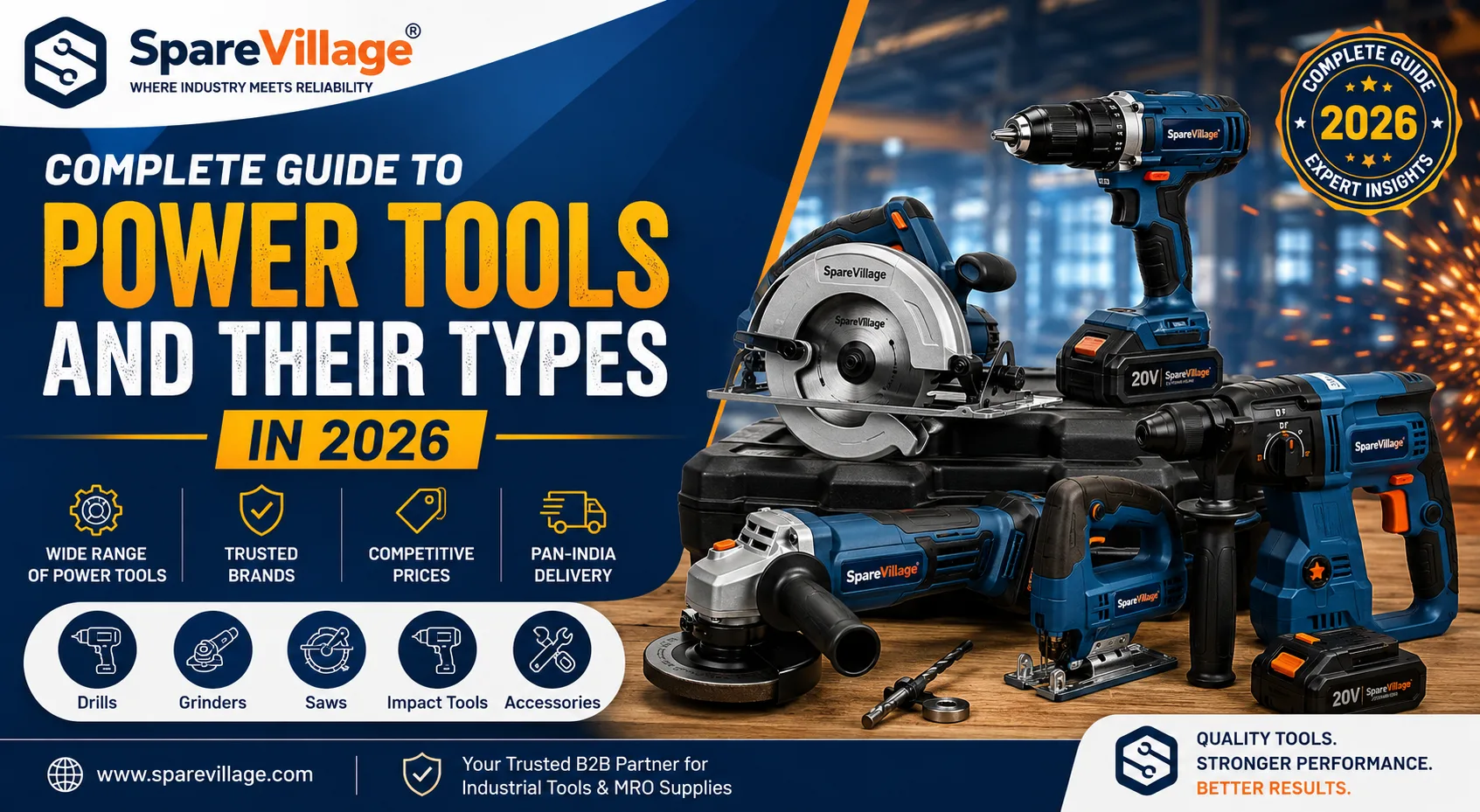
Power tools are essential for construction, manufacturing, workshops, automotive services, and industrial maintenance. They help professionals complete tasks faster, reduce manual effort, and improve productivity.
From drilling and cutting to grinding and fastening, the right power tool makes difficult jobs easier.
What Are Power Tools?
Power tools use an external energy source, such as electricity, rechargeable batteries, or compressed air, to perform different tasks.
They are commonly used for:
- Drilling
- Cutting
- Grinding
- Sanding
- Polishing
- Fastening
- Repair and maintenance
Common Types of Power Tools
1. Drilling Machines
Used to create holes in wood, metal, concrete, and other suitable materials.
2. Angle Grinders
Used for grinding, cutting, polishing, and metal surface preparation.
3. Circular Saws
Used for making straight cuts in wood and other suitable materials.
4. Jigsaws
Ideal for making straight, curved, and detailed cuts.
5. Reciprocating Saws
Used for cutting applications in construction, demolition, and repair work.
6. Sanders
Used to smooth and prepare surfaces. Common types include orbital, random orbital, and belt sanders.
7. Impact Wrenches
Used to loosen and tighten nuts and bolts in automotive and industrial applications.
8. Rotary Tools
Compact tools used for cutting, grinding, polishing, engraving, and finishing with suitable attachments.
Corded vs Cordless Power Tools
Corded power tools operate through an electrical cable. They are suitable for workshops and fixed work areas where a power supply is available.
Cordless power tools use rechargeable batteries. They offer greater mobility and are useful for on-site and remote work.
When choosing a cordless tool, check its battery capacity, charging time, operating time, and compatibility.
How to Choose the Right Power Tool
Before selecting a power tool, consider:
- Application: Choose a tool designed for your task.
- Material: Check whether it is suitable for wood, metal, concrete, or other materials.
- Performance: Review power, speed, torque, and operating capacity.
- Size and weight: Select a tool that is comfortable and practical to handle.
- Accessories: Ensure drill bits, blades, discs, and attachments are compatible.
- Durability: Consider workload, construction, and maintenance requirements.
- Supplier: Compare specifications, pricing, availability, warranty, and support.
Power Tools Used in Different Industries
Power tools are widely used in:
- Construction: Drilling, cutting, and installation
- Manufacturing: Assembly, fabrication, and maintenance
- Automotive: Vehicle repair and servicing
- Woodworking: Cutting, shaping, and finishing
- Metalworking: Grinding, polishing, and fabrication
- Industrial maintenance: Equipment repair and servicing
Power Tool Safety Tips
Always follow the manufacturer's instructions and workplace safety procedures.
- Wear suitable personal protective equipment.
- Inspect tools and accessories before use.
- Use the correct tool for the job.
- Keep hands away from moving parts.
- Secure the workpiece when required.
- Do not use damaged tools.
- Disconnect power before changing accessories when necessary.
- Store tools safely after use.
Why Choose SpareVillage for Power Tools?
SpareVillage is a B2B marketplace where businesses can explore power tools, industrial equipment, MRO products, and other professional supplies.
Businesses can discover products from suppliers and manufacturers according to their procurement requirements.
Explore Power Tools on SpareVillage for professional and industrial applications.
Conclusion
Power tools help professionals save time, reduce manual effort, and improve work efficiency. Choosing the right tool depends on the application, material, performance, safety requirements, and working conditions.
Whether you need drills, grinders, saws, sanders, or impact wrenches, selecting suitable equipment is essential for effective work.
Frequently Asked Questions
What are power tools?
Power tools use electricity, batteries, or other energy sources to perform tasks such as drilling, cutting, grinding, and fastening.
What are the most common power tools?
Drills, angle grinders, circular saws, jigsaws, sanders, impact wrenches, and rotary tools are commonly used power tools.
How do I choose the right power tool?
Consider the job, material, power, performance, accessories, durability, and safety requirements.
Are power tools suitable for industrial use?
Yes. Power tools are widely used in construction, manufacturing, automotive, woodworking, metalworking, and maintenance.