You need your car in another state. You don't want to drive 1,000 miles to get it there, and you definitely don't want to spend more on shipping than you have to.
That is exactly where open auto transport makes sense.
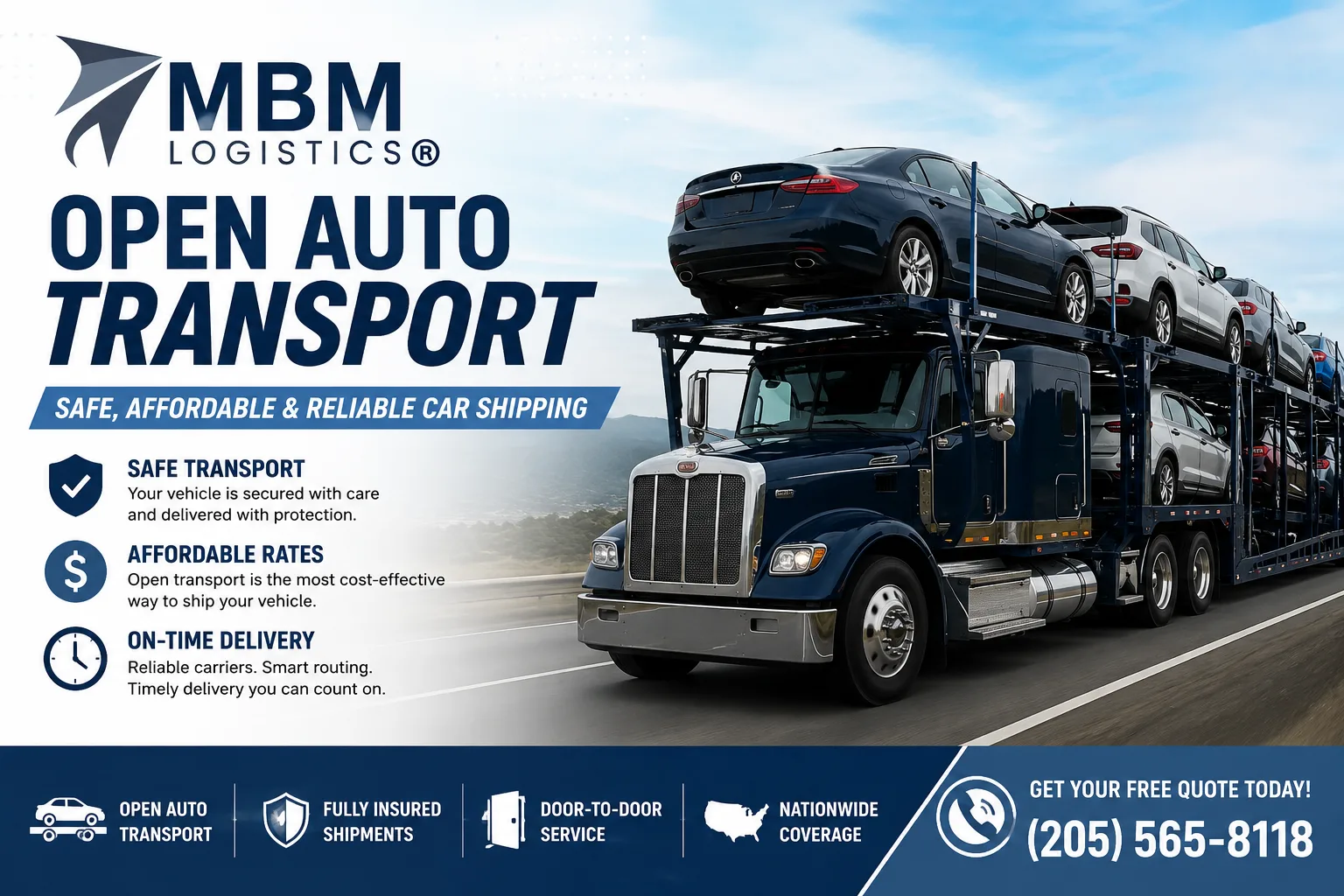
It is the familiar two-level car carrier you see on American highways. Your vehicle travels with several others instead of getting its own enclosed trailer. For everyday cars, SUVs, and pickup trucks, it is often the simplest and more affordable way to handle car shipping.
The important part is knowing what you are paying for—and what you are not.
What Does “Open” Actually Mean?
Your car is loaded onto an open-air carrier and secured for transportation. There are no walls or roof around the trailer, so the vehicle remains exposed to normal outdoor conditions during the trip.
That sounds like a drawback until you put it in perspective: most of these vehicles are already driven outside every day.
If you are shipping your family SUV, a used sedan you just bought, a work truck, or your son's car to college, open car transport is usually the option to look at first.
It is different for a restored classic, exotic car, rare collectible, or vehicle with a delicate custom finish. Those are situations where enclosed auto transport deserves serious consideration.
Why Pay for Enclosed Shipping If Your Car Doesn't Need It?
This is where many customers can overspend.
Enclosed shipping offers extra protection, but extra protection is not automatically necessary for every vehicle.
Say you are moving a 2022 Honda CR-V from Charlotte, North Carolina, to Orlando, Florida. It is your daily driver. You take it on highways, park it outside, and use it throughout the week. In that situation, paying a premium simply to put walls around the carrier may not give you much additional practical value.
An open carrier can move several vehicles on the same trip. That makes open car shipping a cost-conscious choice for people who simply need their vehicle moved from Point A to Point B.
It works particularly well when you are:
- Relocating for a new job
- Moving to another state
- Buying a car from an out-of-state dealer
- Sending a vehicle to a family member
- Moving a student's car to or from college
- Heading south for the winter
- Transporting dealership inventory
In other words, open transport fits normal cars and normal life.
Is Your Car Safe on an Open Carrier?
Yes, open carriers are designed specifically to transport vehicles. Your car is secured to the carrier for the trip rather than simply driven onto a trailer and left there.
What open transport cannot do is shield the car from rain, dust, bugs, or ordinary road exposure. That is the trade-off.
A smart customer should also document the vehicle before pickup. Take clear photos of the front, rear, both sides, wheels, and any existing scratches or dents. When the car arrives, inspect it again before signing off on delivery.
That simple habit is useful no matter which type of auto transport service you choose.
How Much Will It Cost to Ship Your Car?
This is usually the real reason people start searching.
Unfortunately, a nationwide flat price would be misleading. Your car shipping cost depends on the actual move.
For example, moving a sedan from Los Angeles to Phoenix is not priced the same way as moving a large pickup from rural Montana to South Florida. Even two trips covering similar mileage can have different prices because carrier availability is different.
The main things that affect your quote are:
- Pickup and delivery ZIP codes
- Total distance
- Vehicle year, make, and model
- Vehicle size and weight
- Whether the car runs and drives
- Time of year
- Route demand and carrier availability
- How flexible you are with pickup
This is why searching “how much does it cost to ship a car?” can only give you a rough idea. A useful car shipping quote needs your actual route and vehicle information.
What Happens After You Book?
The process is less complicated than many first-time customers expect.
You provide the pickup location, destination, vehicle information, and the date the car will be ready. Transportation is then arranged based on the route and your requirements.
At pickup, you and the driver check the vehicle's condition. The car is loaded and secured to the carrier. Once it reaches the destination, you inspect it again and complete delivery.
If you choose door-to-door car shipping, the carrier will aim to get as close as safely and legally possible to the addresses you provide.
That last part matters. A full-size car hauler cannot always squeeze into a narrow residential street, gated complex, or road with low-hanging trees. If your street is not accessible, you and the driver can meet at a nearby parking lot or another safe location.
Door-to-door should mean convenient—not forcing a 70-foot truck into a place it should not go.
Shipping From New York to Florida? Here Is the Bigger Picture
Imagine you are heading to Florida for the winter.
Driving from New York means putting well over a thousand miles on the car, paying for fuel and tolls, and spending a significant amount of time on the road. Depending on how you travel, you may also need meals and a hotel.
Now compare that with arranging vehicle shipping and flying to Florida.
The shipping quote may initially look like another expense, but the better comparison is not “shipping versus free.” The real comparison is shipping versus the time, mileage, fuel, tolls, wear, and effort of driving the vehicle yourself.
The same thinking applies when you need to ship a car to another state after buying it online or when relocating from California to Texas, Georgia to New Jersey, or anywhere else in the USA.
One Mistake to Avoid: Chasing the Lowest Number
Everybody wants an affordable price. That is reasonable.
But the lowest number on your screen is not automatically the best auto transport quote.
Before booking, make sure you understand what type of transportation you are getting, how pickup will be arranged, what happens at delivery, and who you can contact if your schedule changes.
A good car transport company should make the process easier to understand, not bury you in transportation jargon.
The goal is not to sell every customer the most expensive option. It is to match the shipping method to what the customer is actually moving.
Before Pickup, Spend 10 Minutes on Your Car
You do not need a complicated preparation checklist.
Take photos. Remove valuables. Make sure the driver knows about any mechanical problems. Tell the transport company beforehand if the vehicle is lowered, lifted, oversized, modified, or inoperable.
And do not hide important details to get a cheaper quote. If the vehicle cannot run or is significantly larger than the standard version, the carrier needs to know before arriving.
Accurate information makes pickup easier for everyone.
Should You Choose Open Auto Transport?
For a normal vehicle that you drive regularly, open auto transport is often the logical place to start. You get professional vehicle transportation without automatically paying the premium associated with an enclosed trailer.
For a valuable classic, exotic, collector vehicle, or special car where outside exposure is a major concern, compare enclosed service instead.
There is no need to make the decision complicated: choose according to the car you own, not according to which service sounds more expensive or impressive.
Ready to See What Your Route Costs?
Frequently Asked Questions
Is open auto transport safe for everyday cars?
Yes. Open auto transport is commonly used for everyday cars, SUVs, and pickup trucks. The vehicle is secured to a carrier for transportation but remains exposed to normal weather and road conditions.
What is the cheapest way to ship a car to another state?
For many standard vehicles, open car shipping is generally more affordable than enclosed transportation. The actual price still depends on the route, vehicle, timing, and available carriers.
How much does it cost to ship a car 1,000 miles?
There is no reliable flat rate for every 1,000-mile shipment. Vehicle size, pickup and delivery locations, season, route demand, and carrier availability can all change the price. Get a quote using your exact ZIP codes for a more relevant estimate.
Is door-to-door car shipping really door to door?
Usually, the carrier picks up and delivers as close to your requested addresses as safely and legally possible. If a large truck cannot access your street, the driver may arrange a nearby meeting point with you.
When should I use enclosed auto transport instead of open transport?
Consider enclosed car shipping when transporting an exotic, classic, collectible, rare, or especially valuable vehicle where added protection from weather and road exposure is important to you.