
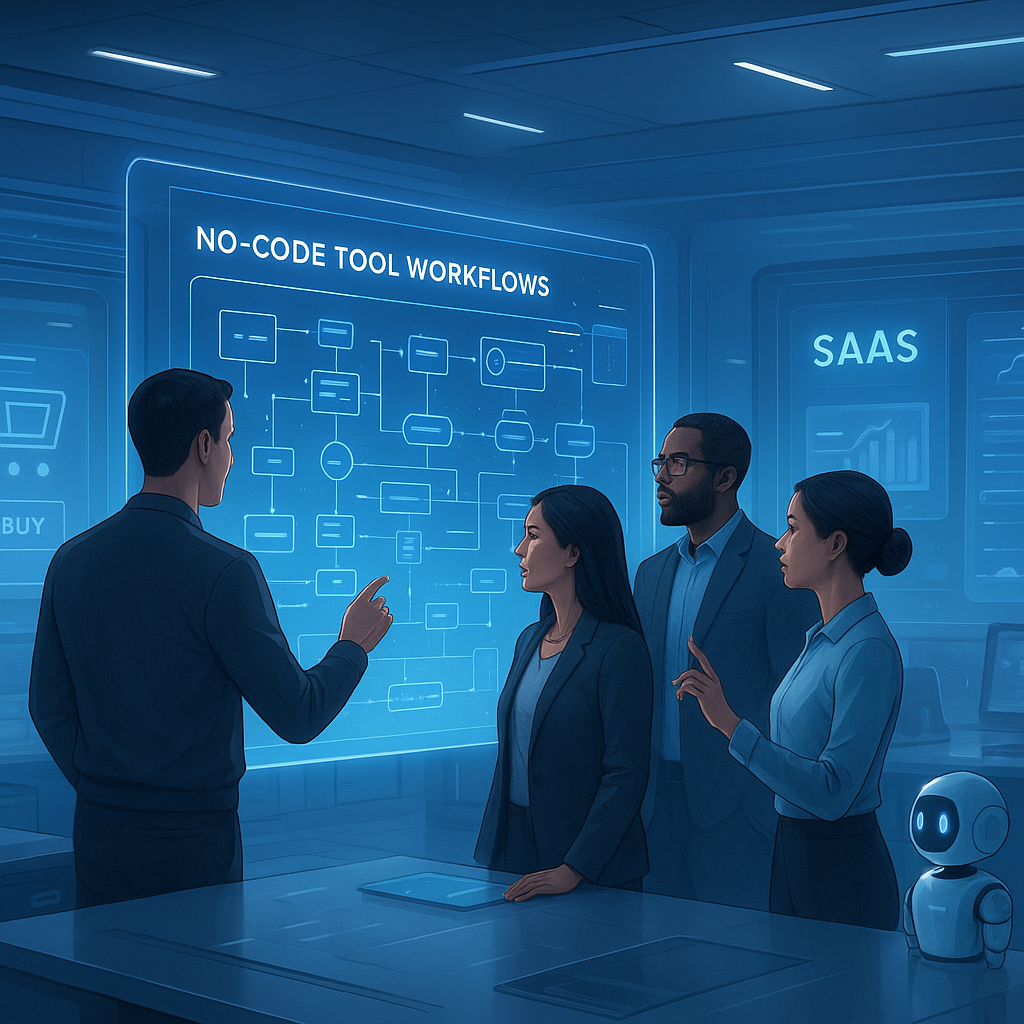
Unlocking Digital Potential: The Rise of No-Code Tools
In a bustling co-working space in San Francisco, a small team of entrepreneurs is building an eCommerce platform that rivals established giants — and they’ve never written a single line of code. This is the new reality ushered in by no-code tools, which have transformed from niche curiosities into essential engines powering innovation across eCommerce and SaaS sectors. According to industry estimates, the global no-code development platform market has ballooned to over $25 billion in 2026, marking a compound annual growth rate exceeding 30% since 2020. This surge reflects a profound shift in how businesses conceive, build, and scale digital products.
No-code tools are democratizing software creation, enabling individuals without traditional programming skills to develop complex applications, automate workflows, and launch scalable online stores. This phenomenon is not only accelerating time-to-market but also reshaping competitive dynamics within eCommerce and SaaS industries. As a result, startups and legacy organizations alike are leveraging these platforms to innovate rapidly and meet evolving customer expectations.
"No-code platforms have lowered the barriers to entry so dramatically that the line between consumer and creator is blurring," says Dr. Elena Ramirez, a technology strategist at the Silicon Valley Innovation Institute. "This is fundamentally altering the innovation ecosystem in digital commerce and cloud software."
From Early Visual Builders to Modern No-Code Giants: A Brief History
The journey of no-code tools begins in the early 2000s with visual website builders like Wix and Squarespace, which empowered users to design websites without HTML or CSS expertise. However, these early tools were limited to front-end design and lacked deep integration or backend capabilities. As cloud computing matured and APIs proliferated, a new breed of no-code platforms emerged, offering drag-and-drop interfaces to build entire applications, automate business processes, and integrate data sources.
Key milestones in this evolution include the launch of platforms such as Bubble (2012) and Webflow (2013), which brought sophisticated logic and data management to no-code development. The SaaS industry’s embrace of microservices and modular architectures further fueled no-code adoption, as platforms could now connect disparate services seamlessly.
By 2024, Gartner reported that nearly 80% of new applications were developed using low-code or no-code tools. This trend accelerated in the wake of the COVID-19 pandemic’s disruption, which forced businesses to pivot quickly to digital-first models. The integration of AI-powered assistants and natural language processing in 2025 further propelled no-code platforms, enabling users to create complex workflows simply by describing their needs in plain language.
"The no-code movement is less about eliminating developers and more about empowering a broader range of talent to participate in digital innovation," explains Rajesh Patel, CTO of CloudForge. "This has profound implications for eCommerce and SaaS, where agility and customer-centricity are paramount."
The Mechanics Behind No-Code Platforms: Data and Automation in Focus
Understanding why no-code tools have become indispensable in eCommerce and SaaS requires a look at their core functionalities. At their heart, these platforms offer:
- Visual Development Interfaces: Drag-and-drop builders that abstract away code, allowing users to assemble UI components, databases, and logic visually.
- Pre-Built Integrations: Connectors to popular services like Stripe for payments, Shopify for eCommerce, and Salesforce for CRM, enabling seamless data flow.
- Workflow Automation: Automated triggers and actions reduce manual tasks, improving operational efficiency.
- Real-Time Collaboration: Multi-user environments facilitate teamwork and iterative development.
In eCommerce, no-code tools enable merchants to create customizable storefronts, manage inventory, and implement AI-driven personalization without hiring full development teams. SaaS companies leverage these platforms to prototype new features, onboard customers with tailored portals, and automate support with chatbots.
According to a recent report by Forrester, companies using no-code platforms reduce development cycles by up to 70%, enabling faster experimentation and iteration. This is vital in sectors where customer preferences shift rapidly and time-to-market dictates survival.
Comparatively, traditional development often involves lengthy coding sprints, complex integration work, and costly debugging—barriers that no-code tools dramatically lower. Furthermore, the scalability of modern no-code platforms supports enterprise-grade applications, with some now capable of handling millions of transactions daily.
2026 Developments: AI-Driven No-Code and Industry Adoption
The year 2026 marks a critical inflection point for no-code adoption, driven largely by the integration of generative AI and enhanced cloud infrastructures. Platforms like Glide and Appgyver have integrated AI copilots that can generate app logic, database schemas, and even marketing copy based on user prompts. This further simplifies the creation process and opens doors for non-technical users to build sophisticated SaaS tools and eCommerce experiences.
Major SaaS vendors have also embraced no-code as part of their product ecosystems. Salesforce’s Einstein Studio now offers a no-code AI assistant that automates customer journey design, while Shopify Plus released an AI-powered no-code storefront builder optimized for mobile-first shopping. These developments underscore a trend where no-code is no longer an alternative but a core competency in digital business.
Moreover, regulatory changes in data privacy and security have prompted no-code platforms to embed compliance features natively. GDPR and CCPA compliance modules, automated audit trails, and role-based access controls are now standard, making these tools viable for regulated industries.
Key 2026 data points highlight this momentum:
- 45% of SMBs globally use no-code tools for at least one critical business application (Statista).
- 60% of SaaS startups launched in 2025 utilized no-code platforms for MVP development (Crunchbase data).
- 70% reduction in development costs reported by enterprises adopting no-code for internal tools (Forrester).
Expert Perspectives and Industry Impact
Industry leaders emphasize that no-code tools are not just technological innovations but catalysts for cultural change within organizations. They democratize innovation, reduce IT backlogs, and foster cross-functional collaboration.
"The most successful companies in eCommerce and SaaS are those that treat no-code as a strategic enabler rather than just a tool," notes Sarah Lin, Chief Product Officer at NexaCommerce. "They integrate citizen developers into their workflows, blending business expertise with technical skills to accelerate growth."
However, experts caution about governance and scalability challenges. Without proper oversight, no-code projects can lead to shadow IT risks and fragmented systems. Hence, many organizations are adopting hybrid models combining professional developers with citizen developers, supported by governance frameworks.
Moreover, the rise of no-code platforms is influencing talent dynamics. While demand for traditional developers persists, roles are shifting towards system integrators, automation architects, and no-code strategists — roles that blend technical proficiency with business acumen.
How No-Code Tools Are Driving Breakthroughs in eCommerce and SaaS explores these shifts in detail, highlighting transformative case studies and strategic insights.
Case Studies: Real-World Successes Fueling the No-Code Movement
Several companies exemplify how no-code tools have enabled breakthrough success in competitive markets. One standout example is LumiShop, a startup that launched a personalized skincare eCommerce platform in under three months using a no-code SaaS builder. By harnessing AI-driven product recommendations and seamless payment integrations, LumiShop achieved a 150% year-over-year revenue increase while maintaining lean operations.
Another case is TaskFlow, a SaaS startup providing workflow automation for legal firms. Using no-code platforms, TaskFlow built a robust MVP that attracted $15 million in Series A funding within nine months of launch. Their rapid development cycle contrasted sharply with competitors reliant on traditional software engineering.
Both cases highlight several critical factors driving no-code success:
- Speed: Rapid prototyping and deployment allowed agile responses to market feedback.
- Cost Efficiency: Reduced development and maintenance costs freed resources for marketing and customer acquisition.
- Customization: Flexible platforms enabled tailored customer experiences without extensive coding.
- Scalability: Modern no-code tools supported business growth without technical bottlenecks.
These real-world examples underscore themes explored in 8 No-Code Tools Transforming eCommerce and SaaS Innovation, which surveys leading platforms fueling these transformations in 2026.
What to Watch: The Future of No-Code in Digital Commerce and SaaS
Looking ahead, no-code tools are poised to further redefine how businesses innovate and compete. Key trends to monitor include:
- AI-First Development: Generative AI will continue to enhance no-code platforms, enabling even more intuitive and powerful application creation.
- Verticalized Solutions: Industry-specific no-code platforms tailored for sectors like healthcare, finance, and logistics will emerge, addressing unique compliance and workflow needs.
- Greater Interoperability: Enhanced standards and API ecosystems will allow no-code apps to seamlessly integrate across enterprise stacks.
- Governance and Security Innovations: Advances in automated compliance and risk management will reduce shadow IT risks.
- Hybrid Development Models: Collaboration between professional developers and citizen developers will become the norm, leveraging strengths of both groups.
For entrepreneurs and enterprises alike, embracing no-code is no longer optional but essential for agility and innovation. Strategies to harness no-code effectively include investing in training citizen developers, establishing governance frameworks, and aligning no-code initiatives with business objectives.
As explored in Unlocking Agility: How No-Code Tools Are Revolutionizing eCommerce and SaaS, organizations that master this balance will unlock unprecedented growth and resilience in an increasingly digital economy.