Have you ever felt pain in your lower back or near your hips when standing up, walking, or getting out of bed? Sometimes, the problem may be linked to the sacroiliac (SI) joints. These joints help connect your spine to your pelvis and play an important role in everyday movement. Sacroiliac joint pain can make simple daily activities uncomfortable and affect your ability to move freely.
When these joints become irritated or stop moving comfortably, simple activities can feel harder than usual. Sitting for a long time, climbing stairs, or even turning over in bed may cause discomfort. The good news is that understanding the cause of your pain can help you take the right steps toward better movement.
In this guide, we will explore what causes this discomfort, how to recognize common signs, and what you can do to support your comfort and mobility.
What Are the Sacroiliac Joints?
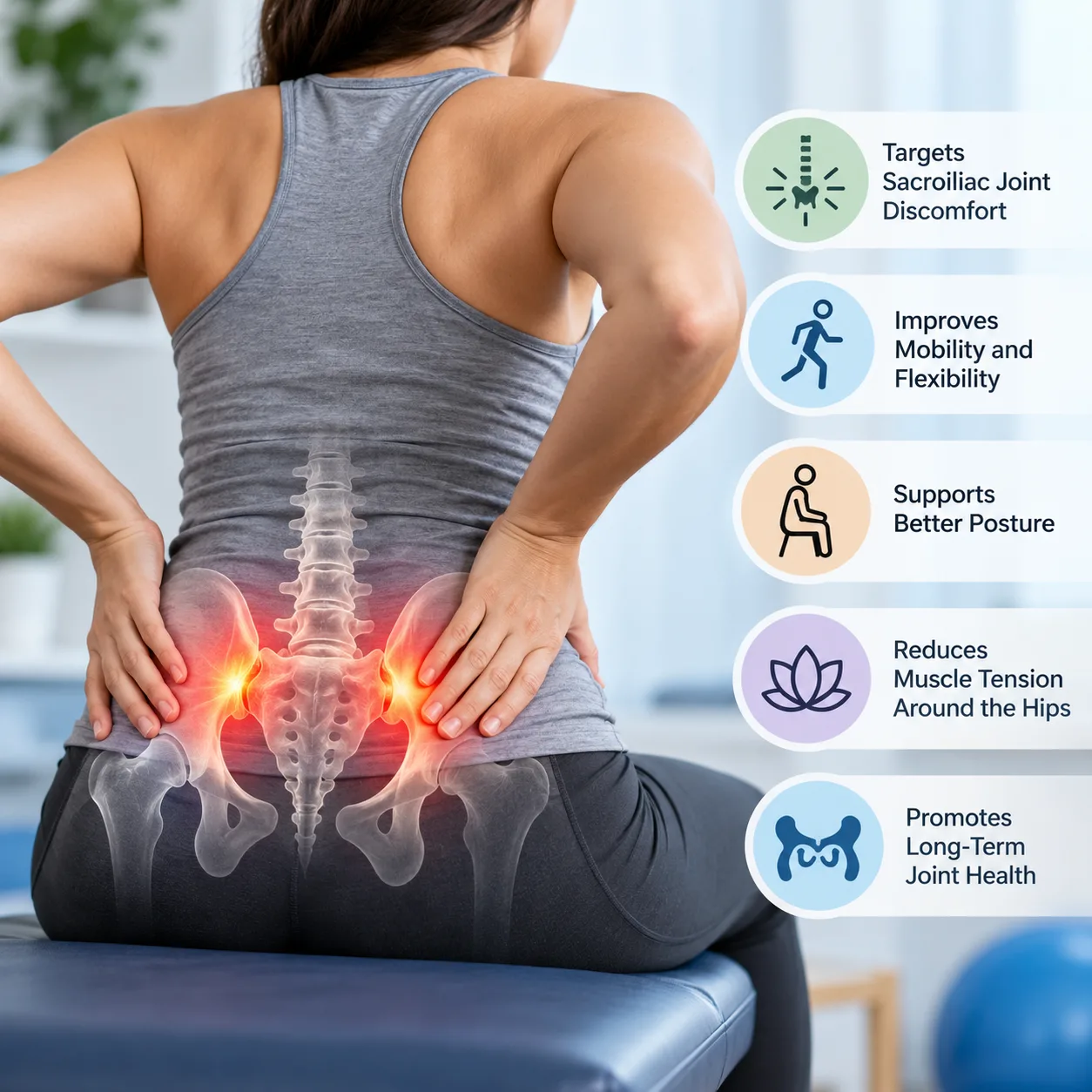
The sacroiliac joints are located on both sides of your lower spine, where the spine meets the pelvis. You have two of these joints, one on each side of your body.
Their main job is to transfer weight between your upper body and your legs. They also help keep your body steady when you walk, stand, bend, or change positions. Although these joints do not move as much as your knees or shoulders, they are important for smooth and balanced movement.
Here is why the SI joints matter:
- Support your body: They help transfer weight from your upper body to your legs.
- Improve stability: They help keep your pelvis steady during everyday activities.
- Support movement: They work with nearby muscles and ligaments when you walk, bend, or stand.
- Absorb force: They help manage the forces that travel through your body during movement.
When these joints or the tissues around them become irritated, you may notice pain in your lower back, buttocks, hips, or upper legs.
Understanding the Common Signs of SI Joint Pain
Not every case of lower back pain comes from the sacroiliac joints. However, certain symptoms may suggest that these joints are involved. The discomfort can feel different from one person to another. Some people experience a dull ache, while others notice sharp pain during specific movements. The pain may affect one side or both sides of the lower back.
Common signs include:
- Pain near the lower back, especially close to the dimples above the buttocks.
- Discomfort in one buttock or around the hip.
- Pain when standing up after sitting for a long time.
- Difficulty climbing stairs or standing on one leg.
- Increased discomfort when turning in bed or getting out of a car.
- Pain that sometimes spreads into the thigh or upper leg.
These symptoms can also occur with other conditions, such as muscle strain, hip problems, or issues involving the spinal discs. That is why a proper assessment is important before deciding on a treatment plan.
What Can Cause Sacroiliac Joint Pain?
Several factors can affect the SI joints and the tissues around them. Sometimes, the discomfort begins after an injury. In other cases, it develops slowly because of changes in movement, joint conditions, or repeated stress. Understanding the possible cause can help you make better choices about your next steps.
1. Injury or Sudden Movement
A fall, car accident, or sudden twisting movement may place stress on the pelvis and surrounding tissues. Sports and physical activities can also cause strain when the body moves beyond its usual limits.
2. Long Periods of Sitting
Spending hours at a desk or sitting in one position for too long may increase discomfort in the lower back and hips. Poor sitting habits may add to the problem, especially when combined with limited movement throughout the day.
3. Repeated Physical Stress
Lifting heavy objects, carrying loads unevenly, or repeating the same movement may place extra stress on the lower back and pelvis.
4. Pregnancy and Changes in the Pelvis
During pregnancy, hormonal changes affect ligaments, and the body experiences changes in weight distribution. These changes may contribute to discomfort around the SI joints in some people.
5. Joint Inflammation or Other Conditions
Certain inflammatory conditions, including some forms of arthritis, can affect the sacroiliac joints. Pain in this area may also come from nearby muscles, nerves, or other structures.
Simple Ways to Support Better Movement
You do not always need a complicated routine to start improving your daily movement habits. Small, consistent changes can help you stay active while avoiding unnecessary strain.
Try adding these practical steps to your day:
- Take regular movement breaks: If you work at a desk, stand up and walk around every 30 to 60 minutes when possible.
- Change positions often: Avoid remaining in the same sitting or standing position for long periods.
- Use comfortable sitting support: Choose a chair that supports your back and allows your feet to rest comfortably on the floor.
- Walk at a comfortable pace: Short walks may help you maintain mobility without placing too much stress on your body.
- Lift carefully: Keep objects close to your body and avoid sudden twisting while carrying heavy items.
- Build strength gradually: With appropriate guidance, exercises for the abdominal, back, and hip muscles may help support the pelvis.
- Respect your pain levels: Reduce or stop activities that cause sharp or worsening pain.
The goal is not to push through every uncomfortable movement. Instead, focus on gentle activity and gradual progress that suits your needs.
How Chiropractic Care May Fit Into Your Recovery Plan
When pain affects your ability to move comfortably, professional guidance can help you understand your options. Depending on the cause of your symptoms, chiropractic care for injury may be considered as part of a broader plan to support movement and manage musculoskeletal discomfort.
A chiropractor may review your health history, ask about your symptoms, assess your movement, and perform appropriate physical tests. This process helps determine whether chiropractic treatment may be suitable or whether you need another type of assessment.
A personalized care plan may include:
- Movement assessment: Checking how your back, hips, and pelvis move during everyday activities.
- Manual therapy: Using appropriate hands-on techniques to address certain types of joint or muscle discomfort.
- Mobility exercises: Practicing gentle movements that support comfortable activity.
- Strength exercises: Building strength in muscles that help support the pelvis and lower back.
- Posture and movement advice: Learning ways to sit, stand, bend, and lift with less strain.
- Progress reviews: Checking how your symptoms respond and adjusting the plan when needed.
Treatment should always match the person's condition, comfort level, and health needs. Chiropractic care is not a guaranteed solution, and not every person with lower back pain needs spinal manipulation. A healthcare professional can help you understand the benefits, risks, and alternatives.
When Should You Seek Professional Help?
It is sensible to seek an assessment if your pain continues, returns frequently, or begins to interfere with work, sleep, exercise, or other daily activities. A healthcare professional can check for possible causes and help you choose an appropriate treatment approach.
Arrange a medical assessment if you notice:
- Pain that does not improve or keeps getting worse.
- Repeated discomfort that limits walking or other daily activities.
- Pain following a fall, accident, or other injury.
- Fever, unexplained weight loss, or feeling generally unwell alongside back pain.
- Pain that spreads down the leg, particularly if it is becoming more severe.
Seek emergency medical care if back pain occurs with new loss of bladder or bowel control, difficulty passing urine, numbness around the groin or saddle area, or significant or worsening leg weakness. These symptoms can indicate a serious problem that needs urgent assessment. Getting help early can make it easier to understand your symptoms and avoid relying on treatments that may not address the real cause.
Daily Habits That May Help You Feel More Confident
Recovery is not only about appointments or exercises. Your everyday routine also plays a role in how comfortably you move.
Instead of trying to change everything at once, start with a few manageable habits. Notice which activities make you feel better and which ones increase discomfort. This information can also help your healthcare professional guide your care.
Consider these simple habits:
- Start your morning gently: Give your body time to adjust before doing demanding activities.
- Keep moving throughout the day: Choose short, comfortable walks rather than remaining inactive for long periods.
- Prioritize good sleep: Use a sleeping position and pillow arrangement that feels comfortable for your back and hips.
- Avoid sudden increases in activity: Build up exercise time and intensity gradually.
- Follow your exercise plan: Practice recommended movements consistently, without forcing painful positions.
- Track your progress: Note changes in pain, sleep, walking, and your ability to complete daily tasks.
Progress may be gradual, and some days may feel easier than others. Focus on steady improvement instead of expecting overnight results.
Take the First Step Toward Comfortable Movement
Pain around the pelvis and lower back can make everyday life frustrating, especially when simple tasks become difficult. However, learning about the SI joints, understanding your symptoms, and making thoughtful changes can help you take a more confident approach to your health.
If you are experiencing SI joint pain, remember that the right plan depends on the cause of your discomfort. Gentle movement, suitable exercises, professional assessment, and an appropriate treatment approach may all play a role in managing symptoms.
You do not have to guess your way through recovery. Start by paying attention to your body, seeking reliable guidance, and choosing realistic steps that support your daily activities.