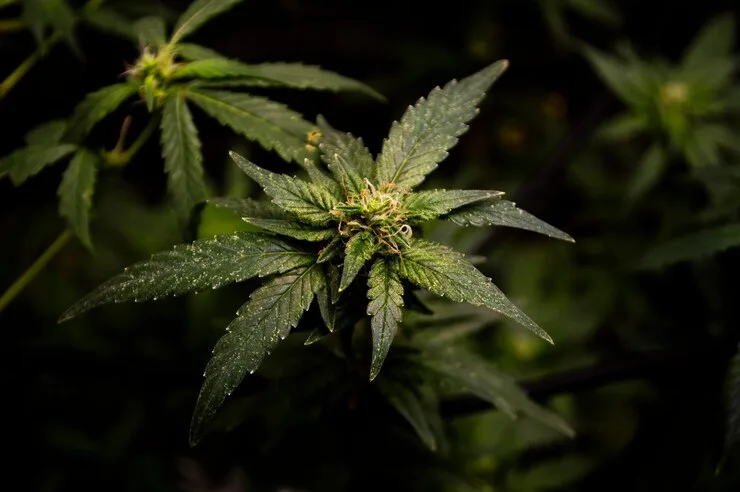
When the Trump administration moved to reclassify medical marijuana from Schedule I to Schedule III last month, millions of Americans with medical cannabis cards felt like things were finally shifting in their direction. Federally legal. Protected. Legitimate.
For most people that reaction made sense. But for anyone who works in a federally regulated transportation job, that sense of relief came with a catch nobody talked about clearly enough.
The Department of Transportation has now made its position official: rescheduling changes nothing for truck drivers, airline pilots, railroad workers, transit operators, pipeline workers, or anyone else in a safety-sensitive transportation role. If you test positive for cannabis, it still counts. A state medical marijuana card still does not protect you. A doctor's recommendation still does not protect you.
Here is what is actually happening and why it matters for workers in California and across the country.
What DOT Actually Said
The Department of Transportation published a formal notice making clear that marijuana use remains incompatible with safety-sensitive transportation functions, full stop.
The specific guidance addresses medical review officers, the professionals who evaluate drug test results from federally regulated workers. Under the new guidance, those officers cannot mark a cannabis-positive test as negative just because a worker says it came from state-licensed medical marijuana use.
DOT was direct about why. Even though state-regulated medical cannabis now sits at Schedule III, it has not been approved by the Food and Drug Administration as a prescription medication. Without FDA approval, cannabis cannot be legally prescribed under federal law. Without a legal prescription, there is no such thing as a legitimate medical explanation for a positive drug test under DOT rules.
In other words, a California medical marijuana card means something meaningful at the state level and increasingly at the federal level for many purposes. But it does not satisfy the specific legal definition that DOT requires for a worker to justify a positive drug test result.
Why This Creates a Real Problem for Workers
The core tension here is one that cannabis advocates have raised for years and that rescheduling has not resolved.
Drug tests for cannabis do not measure impairment. They measure the presence of cannabis metabolites, compounds the body produces after processing THC. Those metabolites can remain detectable in urine for weeks after use, long after any psychoactive effects have worn off.
A truck driver who uses medical cannabis on a Saturday night, experiences no impairment by Monday morning, and then gets randomly tested on Tuesday can still fail that test. Under DOT's current rules, that positive result stands regardless of when the cannabis was used, regardless of whether the driver holds a valid medical card, and regardless of whether any actual impairment existed.
For California's large commercial trucking workforce and the many transportation workers across the state who hold medical cannabis cards, this is not a theoretical concern. It is a real employment risk that rescheduling has done nothing to reduce.
How DOT Stands Apart From Other Federal Agencies
What makes DOT's position notable is how it contrasts with how other federal agencies are responding to the same rescheduling decision.
The ATF updated its gun purchase form to acknowledge the federally legal status of medical marijuana, specifically removing language that had treated medical cannabis users as federally prohibited from purchasing firearms.
The IRS and Treasury Department announced plans to issue new tax guidance that will benefit state-licensed cannabis businesses by removing restrictions tied to the old Schedule I classification.
Even the DEA, which has historically opposed cannabis reform and was accused of stalling the rescheduling process, has launched a registration process for state-legal cannabis businesses to access federal benefits that come with Schedule III status.
DOT is the outlier. Every other major federal agency appears to be finding ways to acknowledge what rescheduling means in practical terms. DOT is holding its position that for transportation workers, rescheduling changes essentially nothing.
The Argument DOT Is Making
To understand why DOT is taking this position, it helps to understand what they are actually worried about.
Safety-sensitive transportation jobs involve real public safety stakes. A truck driver carrying thousands of pounds of cargo at highway speeds, an airline pilot responsible for hundreds of passengers, a railroad operator managing heavy equipment and fixed tracks. The consequences of impairment in these roles are severe and affect people who have no say in the matter.
DOT's argument is that no reliable test currently exists to measure cannabis impairment at the time of a function, as opposed to past use. Until such a test exists, the agency's position is that a positive result for cannabis metabolites must be treated as disqualifying regardless of when or why the cannabis was used.
Transportation Secretary Sean Duffy went further last October, saying cannabis is "really addictive" and that reform sends a "dangerous" message, particularly at a time when, in his words, culture is celebrating marijuana use without discussing its risks.
That framing is debatable and has been disputed by researchers. But it reflects the genuine philosophical position inside DOT that rescheduling is a policy change about access and taxation, not a medical determination that cannabis is compatible with safety-sensitive work.
What This Means for California Workers Right Now
California has more commercial trucking, transit, rail, and aviation employment than almost any other state. The state also has one of the most developed medical cannabis programs in the country, with hundreds of thousands of active medical card holders.
The gap between those two realities is where the problem lives. A California resident can legally obtain a medical cannabis recommendation, including through an online MMJ card California process, legally purchase cannabis from a licensed dispensary, and legally use it under state law. None of that provides any protection if they hold a DOT-regulated transportation job and test positive.
The practical advice for federally regulated transportation workers has not changed with rescheduling. Cannabis use, medical or otherwise, carries real employment risk for anyone subject to DOT drug testing requirements. That remains true regardless of California law, regardless of a medical card, and regardless of whether rescheduling continues to progress.
What Would Actually Change This
For DOT's position to shift in a meaningful way, two things would likely need to happen.
First, a reliable test for real-time cannabis impairment would need to exist and be validated for use in employment settings. Several companies and research institutions are working on this, but nothing has been approved or widely adopted. Until a test can measure whether someone is actually impaired at the moment of testing rather than detecting past use, DOT will likely continue treating any positive result as disqualifying.
Second, Congress would need to explicitly address transportation employment in cannabis legislation. Rescheduling happened through executive and regulatory action. DOT's drug testing rules are grounded in specific federal statutes, and changing how cannabis is treated in those contexts likely requires legislative action, not just rescheduling.
Neither of those developments appears imminent. In the meantime, the rescheduling that felt like a major step forward for many medical cannabis patients has a significant blind spot when it comes to the workers who drive the trucks, fly the planes, and run the trains that keep the country moving.
This article is for informational purposes only and does not constitute legal advice. Employment law and drug testing requirements vary by role and employer. Consult an employment attorney for guidance specific to your situation.